By Philipp — Rollbook
IBJJF Illegal Techniques by Belt: What's Legal at White, Blue, Purple, Brown & Black (2026)
A complete breakdown of IBJJF illegal and legal techniques by belt and age division. Learn which leg locks, slams, and submissions get you disqualified at white, blue, purple, brown, and black belt.
On this page
Why Illegal Techniques Matter More Than You Think
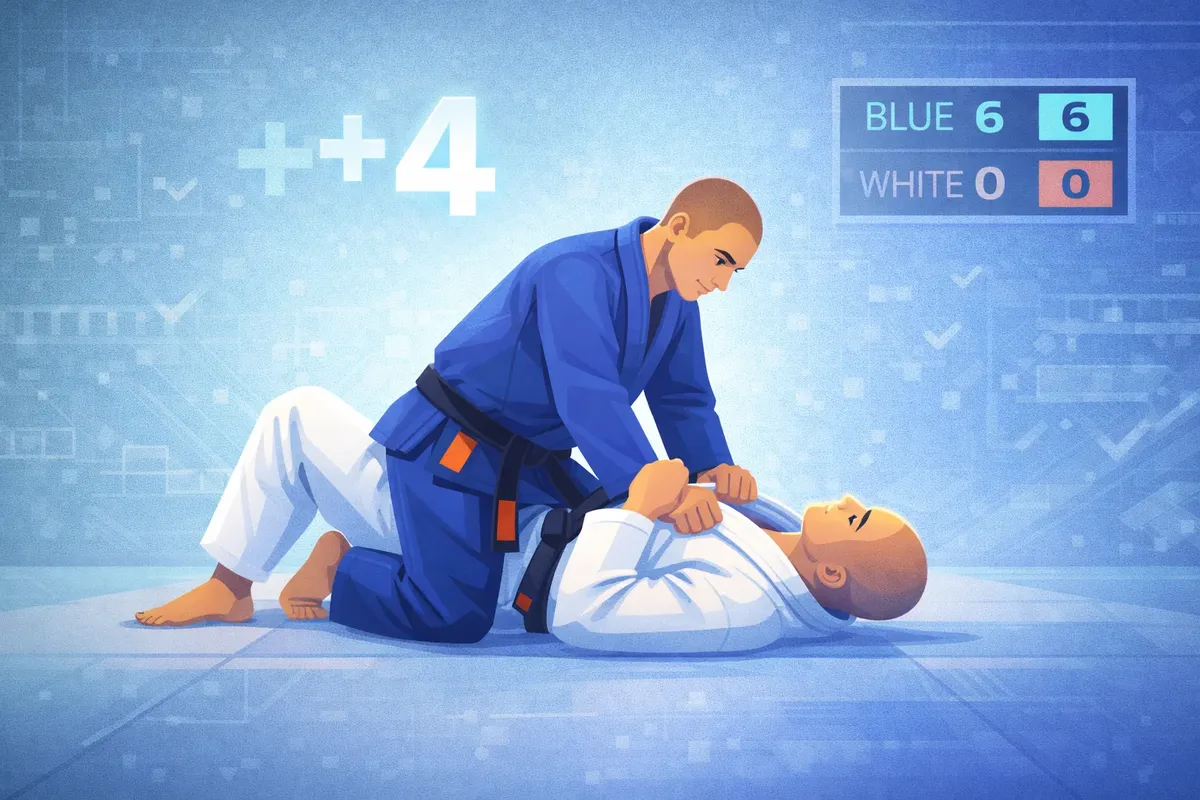
Nothing ends a tournament day faster than a disqualification. You can be up 6-0 with thirty seconds left, reach for the wrong submission, and lose instantly. IBJJF rules are progressive -- a technique that is perfectly legal for a black belt can get a blue belt disqualified -- so knowing exactly what you can and cannot do at your belt and age division is just as important as knowing the IBJJF points system.
This guide breaks down every illegal technique in IBJJF competition: the universal bans that apply to everyone, and the belt-by-belt restrictions on leg locks, wrist locks, and compression locks. For the full rulebook overview -- penalties, advantages, match structure -- see our complete IBJJF rules guide.
The key principle: IBJJF rules get less restrictive as you move up in belt. Lower belts are limited to techniques that are hardest to injure an opponent with by accident. The big dividing line is brown belt, where most leg attacks finally open up.
Universal Bans: Illegal at Every Belt and Age
These techniques are always illegal, from a 16-year-old white belt to a multiple-time black belt world champion. Using any of them results in an immediate disqualification.
| Illegal action | Why it's banned |
|---|---|
| Slamming (to escape a submission or from guard) | High spinal/head injury risk |
| Spiking an opponent on their head | Catastrophic neck risk |
| Heel hooks (Gi, all belts) | Rotational knee force |
| Cervical neck cranks (can opener, etc.) | Direct spinal pressure |
| Flying scissor takedown (jumping kani basami) | History of leg fractures |
| Striking, biting, eye-gouging, hair pulling | Not jiu-jitsu |
| Slamming from a closed-guard submission | Spinal/head injury risk |
Warning: The rear naked choke and other blood chokes are not neck cranks and are legal at every belt. The ban is on cervical cranks -- techniques that hyperextend or twist the spine, like the can opener (cervical crank from closed guard). When in doubt, attack the artery, not the spine.
The Belt-by-Belt Breakdown
IBJJF groups its legal-technique rules into three tiers. Here is the master reference, then we'll go through each one.
| Technique | White (Adult) & Juvenile | Blue & Purple (Adult) | Brown & Black (Adult) |
|---|---|---|---|
| Straight ankle lock | ✅ Legal | ✅ Legal | ✅ Legal |
| Wrist locks | ❌ Illegal | ✅ Legal (Blue+) | ✅ Legal |
| Knee bar | ❌ Illegal | ❌ Illegal | ✅ Legal |
| Toe hold (figure-four) | ❌ Illegal | ❌ Illegal | ✅ Legal |
| Bicep slicer | ❌ Illegal | ❌ Illegal | ✅ Legal |
| Calf slicer (knee spreader) | ❌ Illegal | ❌ Illegal | ✅ Legal |
| Heel hook (No-Gi only) | ❌ Illegal | ❌ Illegal | ✅ Legal (No-Gi) |
| Knee reaping | ❌ Illegal | ❌ Illegal | ✅ Legal (No-Gi only) |
Pro Tip: The single most common DQ at white and blue belt is a "straight ankle lock" that rotates into a footlock with a twisting component. If the opponent's foot turns sideways, the referee can read it as a banned twisting knee lock. Keep the foot vertical and the pressure straight.
White Belts (Adult) and All Juvenile Divisions
This is the most restricted group. It includes adult and senior white belts plus 16-17 year-old juvenile white and blue belts. Only the straight ankle lock is a legal leg attack. Everything that twists or compresses is banned:
- ❌ No heel hooks or any twisting knee locks
- ❌ No knee bars
- ❌ No toe holds (figure-four foot lock)
- ❌ No bicep slicers
- ❌ No calf slicers (knee spreaders)
- ❌ No wrist locks
- ❌ No scissor takedowns
- ✅ Allowed: armbars, shoulder locks (kimura, americana), all legal chokes, the straight ankle lock
Track every roll — log sessions and techniques for free
Blue and Purple Belts (Adult)
Blue and purple belts share the same submission ruleset for leg attacks. The one thing that opens up compared to white belt is the wrist lock:
- ✅ Wrist locks are now legal (blue belt and up)
- ✅ Straight ankle lock remains legal
- ❌ Still no knee bars, toe holds, bicep slicers, or calf slicers
- ❌ Still no heel hooks (Gi or No-Gi)
Warning: Purple belt does not unlock knee bars or toe holds in IBJJF competition -- a common misconception. Those remain brown-belt-and-above techniques. If you drill kneebars and toe holds in class, remember you cannot legally hit them in an IBJJF bracket until brown belt.
Brown and Black Belts (Adult)
This is where the leg-lock game finally opens up. Brown and black belts can use the full compression-and-rotation arsenal -- with one major caveat about heel hooks:
- ✅ Knee bars
- ✅ Toe holds (figure-four)
- ✅ Bicep slicers
- ✅ Calf slicers / knee compression
- ✅ Heel hooks and knee reaping -- but in No-Gi divisions only
- ❌ Heel hooks remain illegal in the Gi for everyone, including black belts
The heel hook allowance is the most significant rule change of the modern era. As of January 1, 2021, the IBJJF began permitting heel hooks and knee reaping for adult brown and black belts in No-Gi competition only. We cover the safety and technique side in our heel hook defense guide and the broader leg locks guide.
Gi vs No-Gi is the dividing line: Even at black belt, the legal submission set changes depending on whether you're in a Gi or No-Gi bracket. Heel hooks and reaping are a No-Gi-only privilege. For the full comparison, see No-Gi vs Gi BJJ.
Knee Reaping: The Rule Everyone Gets Wrong
Knee reaping ("reaping" or reaping the knee) is when your leg crosses the centerline of your opponent's body and applies lateral pressure to the outside of their knee -- the setup position for many heel hooks. In the Gi, reaping is illegal at every belt. In No-Gi, it became legal for adult brown and black belts in 2021 alongside the heel hook.
For white through purple belts, reaping is an automatic penalty (and a DQ if not corrected), even in No-Gi. This is why lower-belt No-Gi competitors must be extremely careful in 50/50 and other leg entanglements.
Age Division Differences
Restrictions get tighter at both ends of the age spectrum:
- Juvenile (16-17): Treated like the white-belt group for leg locks regardless of their actual belt -- straight ankle lock only.
- Masters: Follow the same belt-based rules as adults, but with shorter match times. Important: the 2021 heel hook and reaping allowance applies to the adult brown/black No-Gi divisions only -- Masters competitors do not get the heel-hook/reaping privilege even at brown/black. See our masters age divisions guide.
- Kids (4-15): The most restricted of all -- no leg locks of any kind, and referees stop dangerous positions early.
How to Avoid a Disqualification
Pro Tip: Build your competition game around techniques that are legal two belts below you. That way, even if you get promoted right before an event or land in a mixed bracket, your A-game never crosses a line. Most elite Gi competitors win with passing, mount, and back control -- positions that score big and carry zero DQ risk.
Three habits that keep you safe on competition day:
- Know your exact division's ruleset -- belt and age, Gi vs No-Gi.
- Apply leg locks slowly and with control -- many DQs come from a legal technique applied with a banned twisting motion.
- When you feel a reap or twist developing, back out -- a referee won't wait for the injury.
Official Sources
- IBJJF Rules Book & Videos - Official, authoritative ruleset for all divisions
- IBJJF New Rules Updates (2021 heel hook / reaping change) - The brown/black No-Gi leg-lock allowance
- FloGrappling: The New IBJJF Rules For Heel Hooks And Leg Reaping - Plain-language explainer of the 2021 change
Train your competition game with confidence using Rollbook. Log every technique, tag the submissions you're drilling for your next bracket, and walk onto the mat knowing exactly what's in your legal arsenal. Start tracking your jiu-jitsu journey today.
Oss!