By Philipp — Rollbook
ADCC vs IBJJF: Rules, Scoring & Format Compared
ADCC and IBJJF are the two biggest names in grappling -- but their rules could hardly be more different. A side-by-side comparison of scoring, leg locks, match length, and format.
On this page
Two Giants, Two Philosophies
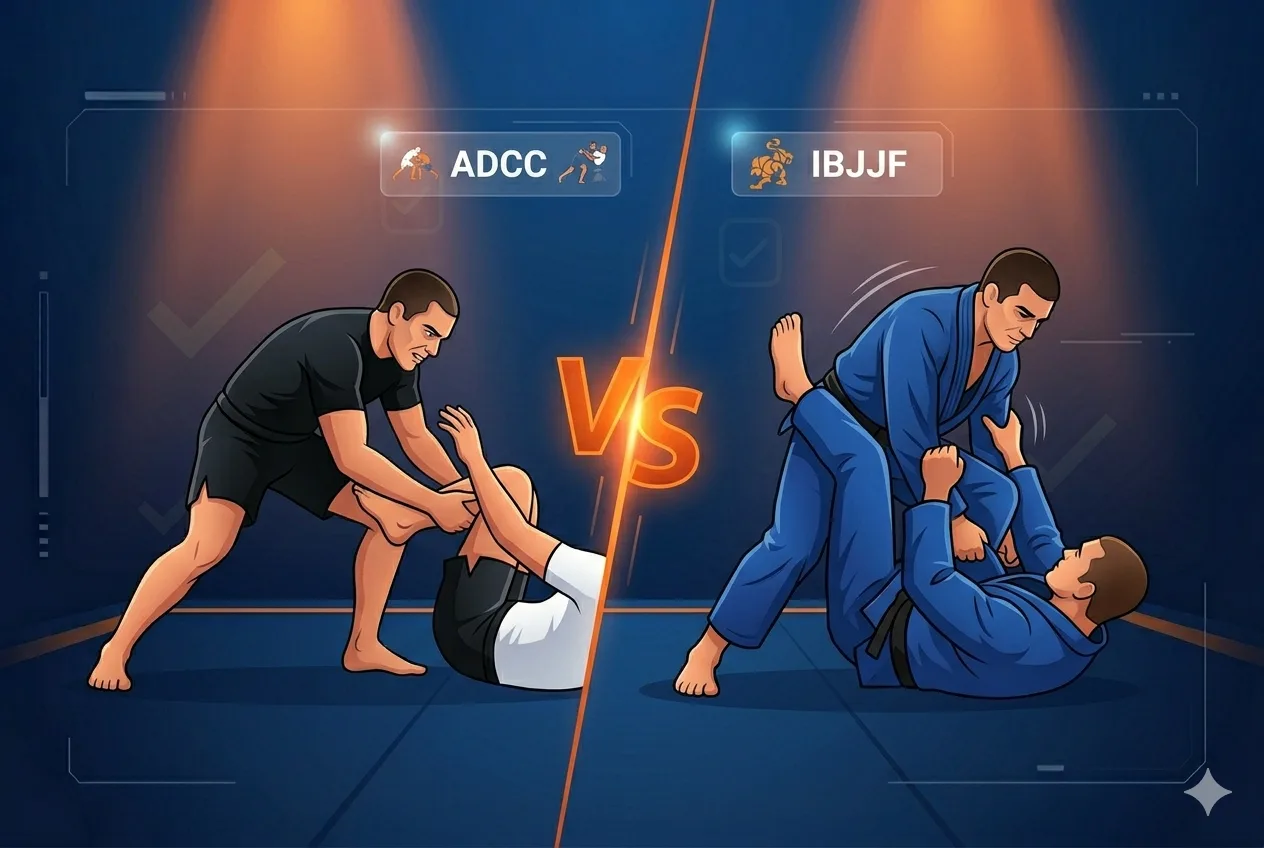
IBJJF and ADCC are the two most prestigious organizations in competitive grappling -- but they're built on opposite philosophies. IBJJF rewards positional control and technical precision across a structured belt-and-weight system. ADCC rewards aggression, submissions, and the willingness to risk everything in a longer, points-delayed format.
If you compete in or watch both, understanding the differences is essential. This guide puts them side by side. For the deep dives, see our complete IBJJF rules guide and our ADCC rules and format explainer.
The one-line summary: IBJJF is a points-first, belt-tiered, year-round sport in gi and no-gi. ADCC is a submission-first, open-ruleset, every-two-years no-gi event with delayed scoring and longer matches.
The Big Picture
| Aspect | IBJJF | ADCC |
|---|---|---|
| Gi or No-Gi | Both (separate events) | No-Gi only |
| When points count | Entire match | Second half only |
| Match length (top division) | 10 min (black belt) | 20 min (finals) + overtime |
| Leg locks | Restricted by belt | All legal, no restrictions |
| Heel hooks | No-Gi brown/black only | Legal for everyone |
| Guard pulling | Allowed (neutral) | Penalized (negative point) |
| Tiebreaker | Advantages, then referee | Referee decision |
| Divisions | Belt + age + weight | Weight only (elite/invite) |
| Frequency | Year-round | Every 2 years (Worlds) |
Scoring: The Biggest Difference
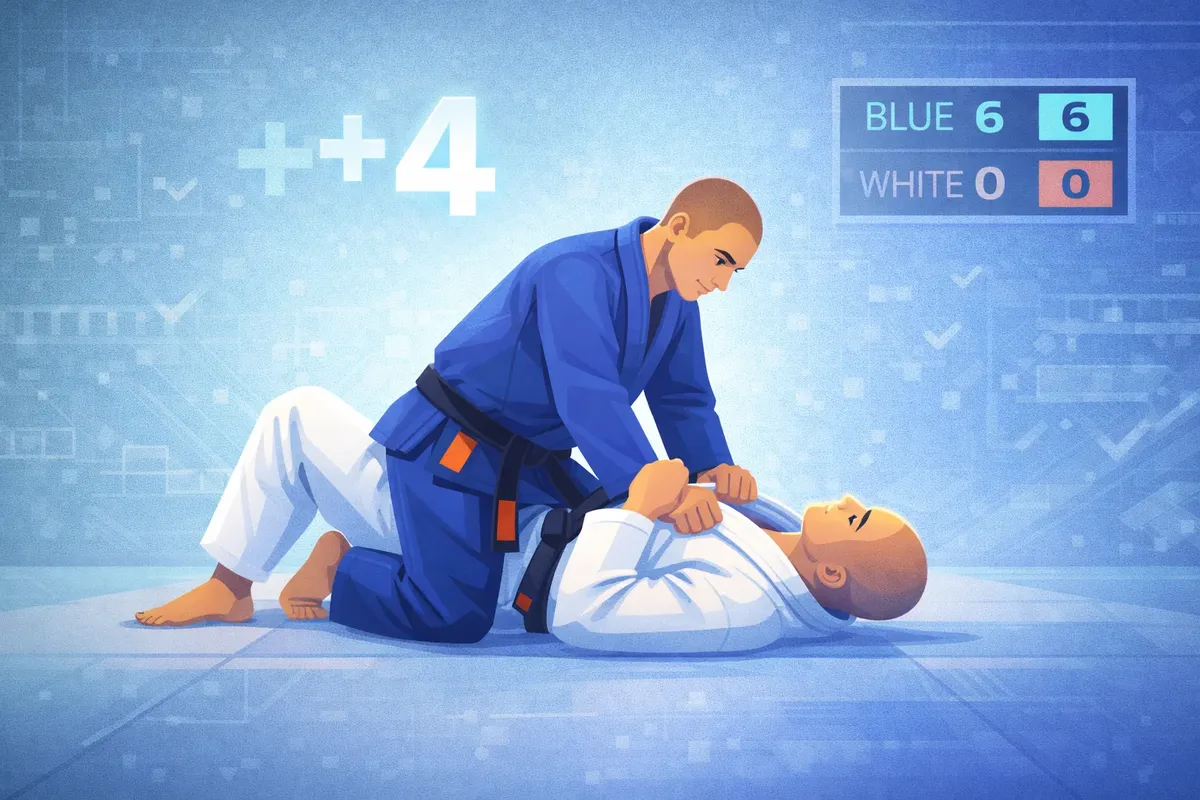
In IBJJF, points are live from the first whistle to the last. You can score a takedown in the opening seconds and manage that lead for the rest of the match. The IBJJF points system is: takedown 2, sweep 2, knee on belly 2, guard pass 3, mount 4, back control 4.
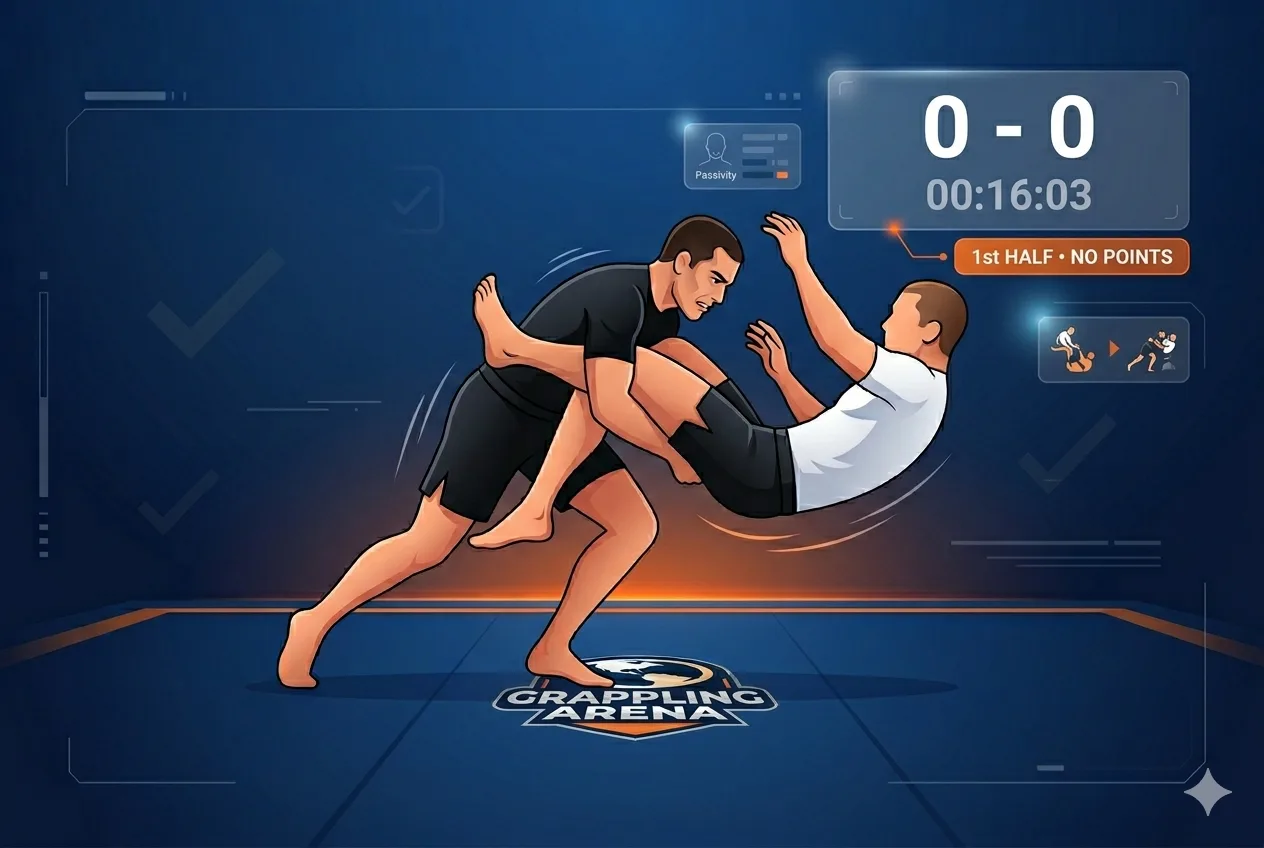
In ADCC, the first half of every match has no positive points -- only penalties. Points switch on for the second half. This single rule changes everything: it discourages early stalling and pushes athletes to chase the finish.
The point values differ too, with ADCC rewarding "clean" finishes that bypass the guard:
| Action | IBJJF | ADCC |
|---|---|---|
| Takedown (to guard/half) | 2 | 2 |
| Clean takedown (past guard) | -- | 4 |
| Guard pass | 3 | 3 |
| Knee on belly | 2 | 2 |
| Mount | 4 | 2 |
| Back control | 4 | 3 (with hooks) |
| Sweep (to guard/half) | 2 | 2 |
| Clean sweep (past guard) | -- | 4 |
Pro Tip: Notice mount is worth 4 in IBJJF but only 2 in ADCC, while a clean takedown past the guard is worth 4 in ADCC and doesn't exist as a category in IBJJF. The two systems literally reward different things -- IBJJF prizes the dominant pin, ADCC prizes the dynamic, position-skipping finish.
Track every roll — log sessions and techniques for free
Leg Locks: Open vs Restricted
This is the difference that defines the modern grappling landscape.
ADCC: Every leg lock is legal for every competitor -- heel hooks, knee bars, toe holds, with no belt restrictions (ADCC has no belts). It's the proving ground for the world's best leg-lockers.
IBJJF: Leg locks are tightly controlled by belt. The straight ankle lock is the only leg attack at white belt; knee bars and toe holds open up at brown belt; and heel hooks are legal only in no-gi for adult brown and black belts (since 2021), and never in the gi. See the full breakdown in our illegal techniques by belt guide.
Warning: If you train primarily for IBJJF and cross over to an ADCC-rules event, you'll suddenly be exposed to heel hooks you've never had to defend in competition. The reverse is also true -- ADCC specialists entering IBJJF must holster their best leg attacks. Know the ruleset before you step on the mat.
Match Length and Pace
IBJJF matches are short and belt-dependent: 5 minutes at white belt up to 10 minutes for adult black belts. ADCC matches are marathons by comparison -- 10 minutes in the qualifying rounds and 20 minutes in the finals, with lengthy overtime periods if tied. The longer clock, combined with the no-points first half, demands a different kind of conditioning and patience.
Format and Access
IBJJF is open and structured: anyone with a membership can enter the appropriate belt, age, and weight division, and events run all year around the world. Black belts must accumulate ranking points to enter the biggest championships.
ADCC is exclusive: the World Championship happens once every two years with a small, elite bracket. Athletes earn their place by winning a global series of ADCC Trials or by direct invitation. The next edition is the 2026 World Championship in Kraków.
Which Should You Watch (or Compete In)?
- Watch IBJJF for technical, positional jiu-jitsu and the deepest fields in the sport across every belt and division.
- Watch ADCC for high-stakes, submission-hunting grappling between the absolute elite, with the leg-lock game fully unleashed.
- Compete in IBJJF to build a structured competitive record at your exact belt and weight.
- Chase ADCC if you're an elite no-gi competitor ready to test yourself under the sport's most demanding ruleset.
Both reward a complete game. Whichever you target, knowing the rules cold is the first step. Compare the no-gi-specific differences in our No-Gi vs Gi guide.
Official Sources
- ADCC Official Rules - ADCC ruleset and scoring
- ADCC Rules & Regulations (ADCC News) - Detailed ADCC time limits and points
- IBJJF Rules Book & Videos - Official IBJJF ruleset
Train for both rulesets with Rollbook. Tag your sessions, track your leg-lock and positional games separately, and build the well-rounded skill set that wins under any rules. Start your free trial today.
Oss!