By Philipp — Rollbook · Updated November 6, 2026
Jiu-Jitsu vs Judo: How BJJ and Judo Differ, and Which to Train
BJJ grew out of judo, but the two now reward different things: judo the clean throw, BJJ the submission on the ground. How their rules, training and belts differ, and how to choose.
On this page
Brazilian jiu-jitsu began as judo. Mitsuyo Maeda, the man who brought it to Brazil, was a judoka from Kanō Jigorō's Kodokan in Tokyo. When he arrived in 1914, Brazilian newspapers billed his art as "jiu-jitsu", the name judo still went by outside Japan.
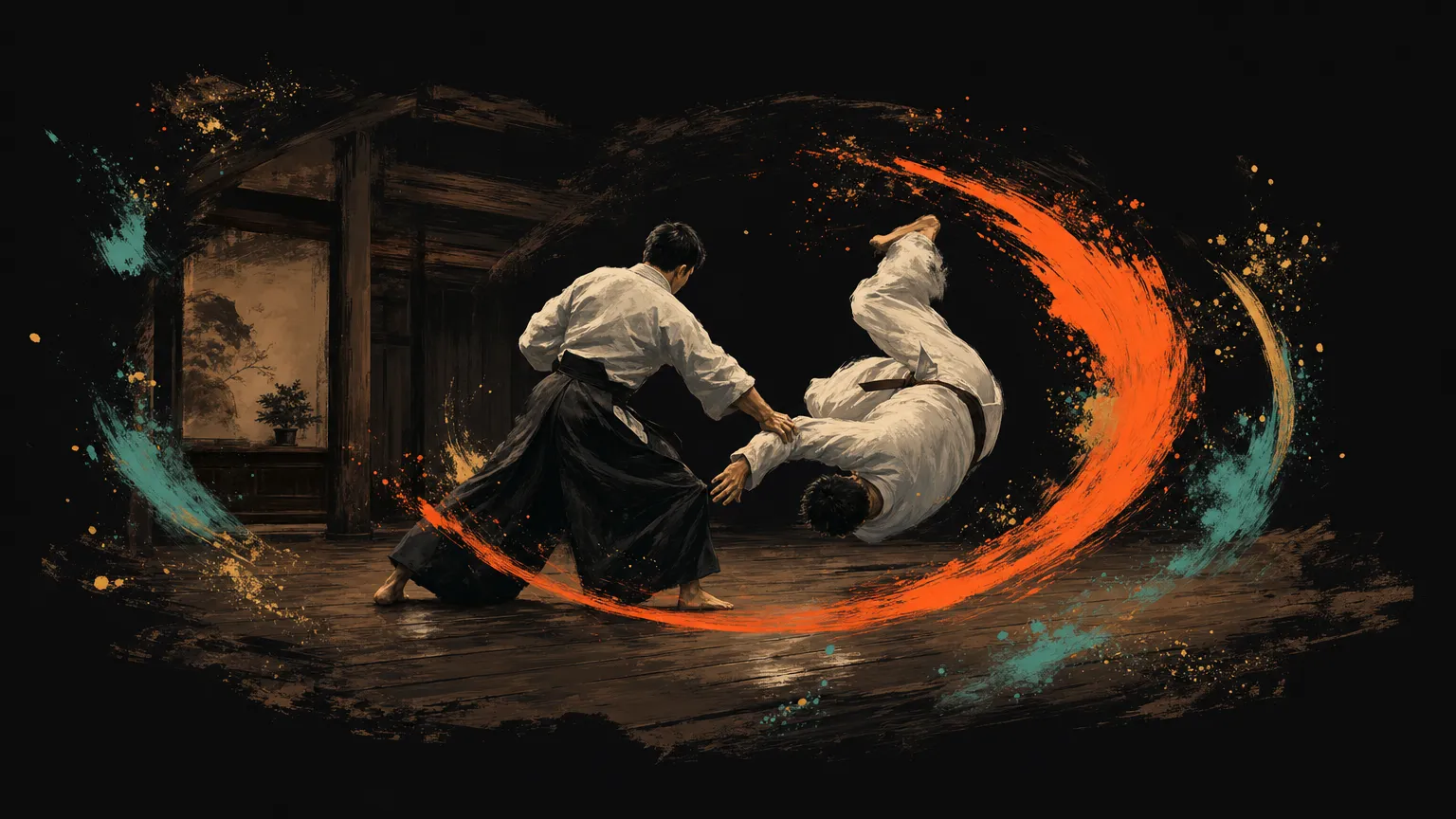
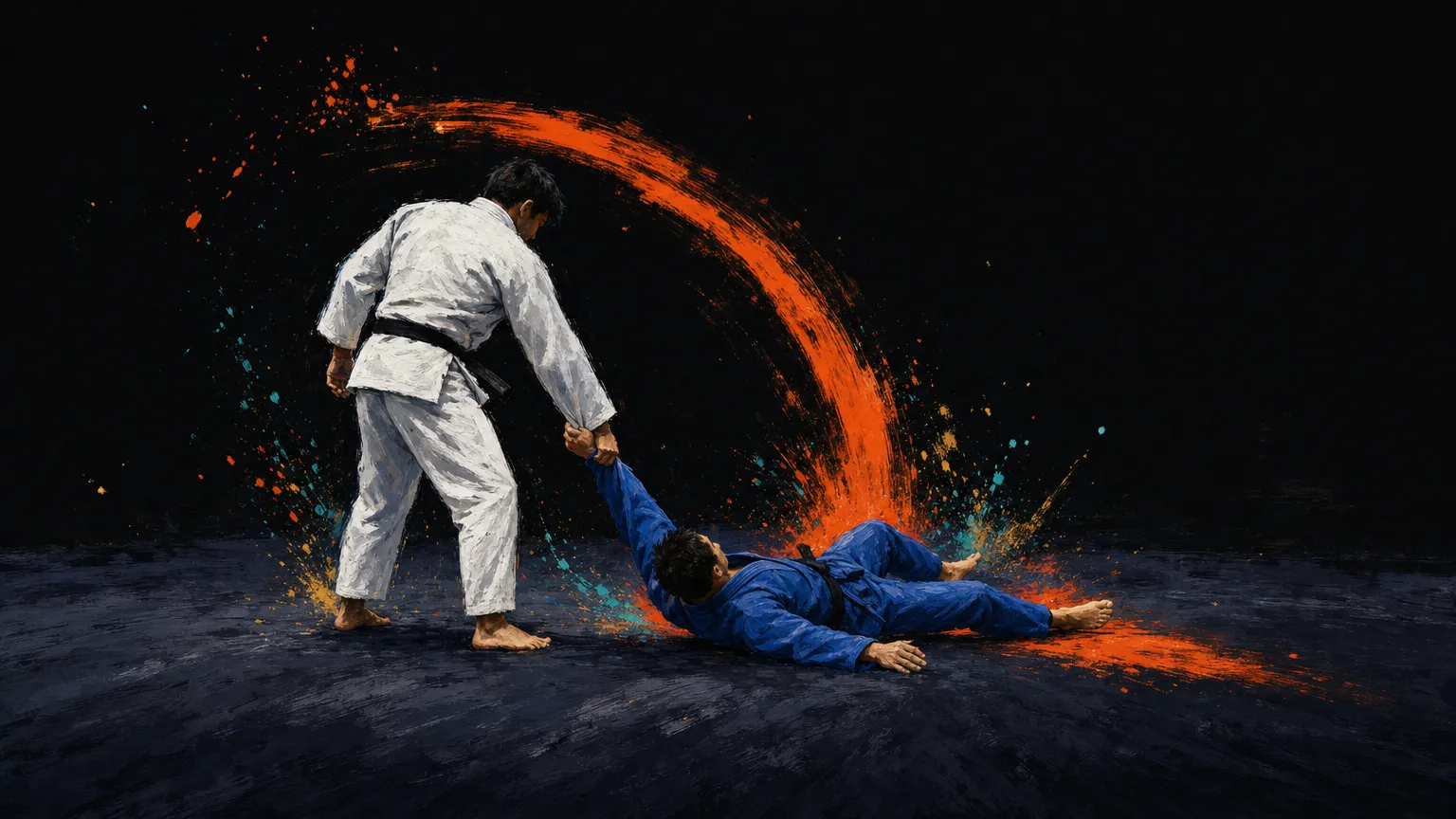
A century later the two look very different on the mat. Judo rewards the clean throw, and a perfect one ends the match on the spot. BJJ rewards control on the ground, and most matches are decided by points for positions or by a submission.
This guide covers where BJJ split from judo, how the rules, training, gis and belts differ, and how to choose between them.
Judo vs BJJ at a Glance
- Main goal: judo throws the opponent onto their back. BJJ takes them down, passes their guard and finishes with a choke or a joint lock.
- Where matches are won: judo mostly on the feet, BJJ mostly on the ground.
- Groundwork: judo referees stand you back up when groundwork stalls. BJJ lets it run, and you can fight off your back from guard.
- Submissions: judo allows chokes and elbow locks only. BJJ adds shoulder locks, wrist locks and leg locks, with the riskier ones saved for higher belts.
- Leg grabs: penalized in judo, allowed in BJJ.
- Olympics: judo has been an Olympic sport since 1964. BJJ isn't.
- Belts: judo uses kyu grades and black-belt dan grades. BJJ adults go white, blue, purple, brown, black, with years between belts.
How Judo Became Brazilian Jiu-Jitsu
Kanō founded judo in 1882. He built it from older jujutsu schools, mainly Tenjin Shin'yō-ryū and Kitō-ryū, and changed two things: he dropped the strikes and weapons from free practice, and he made randori, live sparring, the center of training. That made judo safe enough to practice at full speed, and judo went on to beat the established jujutsu schools in tournaments held by the Tokyo police.
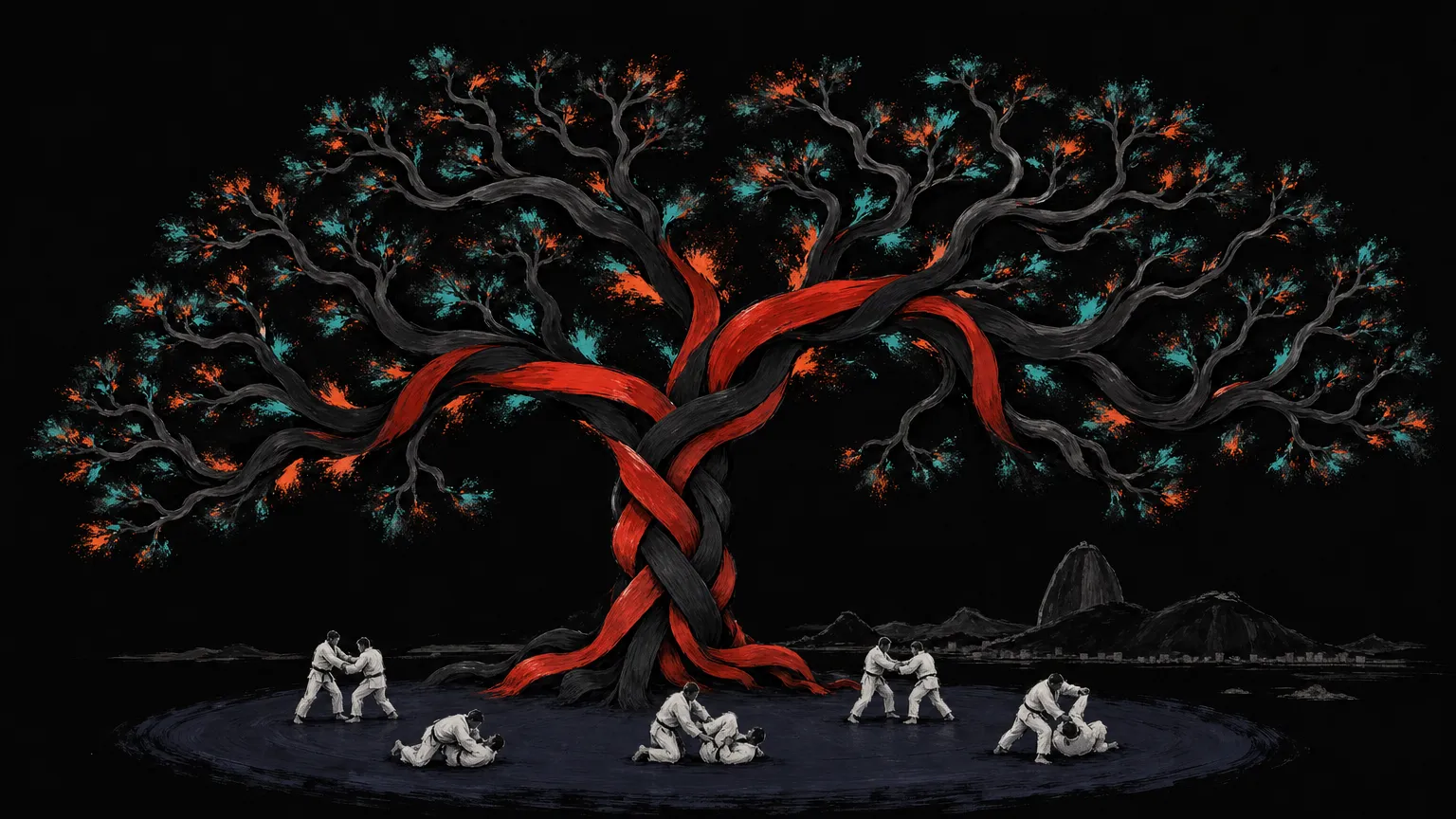
Maeda left Japan in 1904 to show judo abroad, taking on wrestlers, boxers and other fighters along the way. He reached Brazil in 1914. In 1917, in Belém, 14-year-old Carlos Gracie watched one of his demonstrations and started learning the art. Carlos taught his brothers, among them Hélio. Hélio was small and struggled with the throws, so he leaned on groundwork and leverage. That emphasis became Gracie jiu-jitsu, and later Brazilian jiu-jitsu. Our Gracie family tree has the full story.
The names split too. In 1925 the Japanese government made "judo" the official name for the art taught in its schools, but in Brazil it stayed "jiu-jitsu". Hélio Gracie said in 1994 that he didn't know the word judo until the sport reached Brazil in the 1950s.
The two arts met again in October 1951, when the judo champion Masahiko Kimura beat Hélio at the Maracanã Stadium in Rio with the shoulder lock BJJ now calls the kimura.
Over the 20th century, judo's rule changes made it more of a standing sport, with less groundwork and fewer joint locks. BJJ never followed those rules and went the other way.
How the Rules Differ
Judo: The Throw Comes First
Under the International Judo Federation (IJF) rules in use since 2025, a throw scores at one of three levels:
- Ippon: the opponent lands on their back with force, speed and control. It ends the match.
- Waza-ari: the opponent lands past the side, toward their back. Two waza-ari make an ippon.
- Yuko: the opponent lands on their side, their elbow or their seat. The IJF brought yuko back in 2025, after dropping it in 2017.
On the ground, a pin (osaekomi) scores the same way: 20 seconds is ippon, 10 to 19 seconds waza-ari and 5 to 9 seconds yuko. A choke or an elbow lock that makes the opponent tap is also ippon.
Judo also limits what you can do:
- Joint locks are allowed only on the elbow. No leg locks, no wrist locks, no shoulder locks.
- Grabbing or hooking the legs below the top of the thigh gets a penalty (shido).
- After taking a grip, you have 30 seconds to attack, or you get a shido for passivity. Three shidos lose the match.
- If the groundwork stalls, the referee calls mate and restarts the match standing.
BJJ: Position, Then Submission
An IBJJF match ends before time only with a submission or a disqualification. Otherwise it's decided on points, as our IBJJF points guide explains:
- 2 points: a takedown, a sweep or knee on belly.
- 3 points: a guard pass.
- 4 points: mount or back control.
A throw that would end a judo match scores 2 points in BJJ, and the match goes on. You can also pull guard and start the fight from your back, which would make no sense in judo. Matches run from 5 minutes at adult white belt to 10 at black belt.
BJJ also allows techniques judo bans: grabs at the legs, leg locks, and, for adult brown and black belts in no-gi, heel hooks. Our guide to IBJJF illegal techniques has the full list by belt.
How Training Differs
A judo class spends most of its time standing. You learn to fall safely (ukemi) before anything else, then drill throws and spar standing in randori. Some groundwork (ne-waza) is trained too, but a match rarely stays on the ground for long.
A BJJ class spends most of its time on the ground. Most rolls start on the knees, so you take far fewer hard falls than in judo. Classes usually mix technique, positional sparring from a set position like guard or side control, and free rolling.
Judo also keeps kata, pre-arranged forms, alongside randori. Most BJJ gyms have no kata.
Gis and Belts
The BJJ gi descends from the judogi and looks much the same. It's usually made of lighter material and cut closer, with tighter cuffs on the sleeves and pants, which leaves less fabric for the opponent to grip. Our IBJJF gi rules guide covers the competition specs. Judo is trained in the gi, while BJJ is also trained without it, in shorts and a rash guard. Our guide to gi and no-gi BJJ compares the two.
Judo ranks students in kyu grades, then black-belt dan grades, a system Kanō borrowed from the board game Go. The colored belts between white and black first appeared in Europe, at London's Budokwai club in the 1920s.
BJJ has five adult belts: white, blue, purple, brown and black. Each takes years, and IBJJF sets minimum times between them. Our belt progression guide has the details. A judo black belt who starts BJJ starts at white belt, but usually moves up faster.
Which Is Better for Self-Defense?
Both are good, and they cover different ranges.
- Judo keeps you on your feet. You learn to grip, off-balance and throw someone onto a hard floor, and to stay standing yourself.
- BJJ takes over once the fight is on the ground. You learn to control someone, escape from underneath a bigger person and finish from your back.
Neither teaches you to deal with punches, though. If self-defense is the goal, look for a gym that spars live, and add striking or a self-defense class.
What Carries Over When You Cross-Train
A lot. Judo players bring throws, grip fighting and balance to BJJ, and they're hard to take down. In gi BJJ a good judo throw usually lands you on top, ready to pass. BJJ players bring a deep ground game to judo's ne-waza.
Some habits need unlearning. In judo, turning onto your stomach is a common way to avoid a pin. In BJJ it gives up your back, and the rear naked choke comes next.
Travis Stevens shows how well the two fit together. He won Olympic judo silver at 81 kg in 2016 and holds a BJJ black belt from John Danaher and Renzo Gracie, awarded in 2013.
Which Should You Train?
Choose judo if you like throws and fast, explosive matches, want an Olympic sport, or want to spend most of your time standing.
Choose BJJ if you want to learn the ground, prefer longer and more technical rolls, or want fewer hard falls. Rolls starting from the knees make BJJ easier to start later in life.
Or train both. They share the same roots, and the skills feed each other.
Whichever you pick, try a few classes first. Our beginner's guide to BJJ covers your first months, and the gym directory lists BJJ gyms near you.
Jiu-Jitsu vs Judo FAQ
Did BJJ come from judo?
Yes. Mitsuyo Maeda, who taught the Gracie family in Brazil, was a Kodokan judoka. Back then judo was still widely called "jiu-jitsu" outside Japan, and the name stuck in Brazil.
Is judo or BJJ better for self-defense?
They cover different ranges. Judo is better at staying on your feet and putting someone on the ground. BJJ is better once you're on the ground, especially underneath someone bigger.
Are leg locks allowed in judo?
No. In judo competition the only joint locks allowed are on the elbow. BJJ allows leg locks, with the twisting ones reserved for adult brown and black belts in IBJJF no-gi.
Does a judo black belt count in BJJ?
No. You start BJJ at white belt, though judo players usually move up faster because they already know how to grip, balance and stay calm under pressure.
Can you train judo and BJJ at the same time?
Yes, and many people do. Just keep the rule differences in mind: turtling is safe in judo but gives up your back in BJJ, and pulling guard costs nothing in BJJ but draws a penalty in judo.
Sources
- Judo (Wikipedia): Kanō and the Kodokan, randori, elbow-only joint locks, Olympic status since 1964, the kyu–dan grades and colored belts
- Brazilian jiu-jitsu (Wikipedia): Maeda in Brazil, the "jiu-jitsu" name, Hélio's ground focus and how BJJ diverged from judo's rules
- Mitsuyo Maeda (Wikipedia): his travels from 1904, his 1914 arrival in Brazil and Carlos Gracie in Belém in 1917
- New Rules: What to Remember (IJF, December 2024): the 2025 rules, the return of yuko and the ban on leg grips
- 2025 Contest Rules (British Judo, January 2025): which landings score yuko and waza-ari, and the 30-second passivity limit
- Travis Stevens (Wikipedia): his 2016 Olympic silver and BJJ black belt
- IBJJF points system explained: BJJ scoring
Training both? Log your judo and BJJ sessions side by side in your Rollbook training journal, and see which throws and submissions actually work for you in sparring. Rollbook is free on iOS and Android.
Oss!