By Philipp — Rollbook · Updated November 4, 2026
The Kimura Lock: How It Works, Setups and Defense in BJJ
The kimura is a figure-four shoulder lock you can hit from guard, half guard, side control and the back. How it works, how to finish it safely, the best setups, how to defend it, and how a 1951 match gave it its name.
On this page
What Is the Kimura?
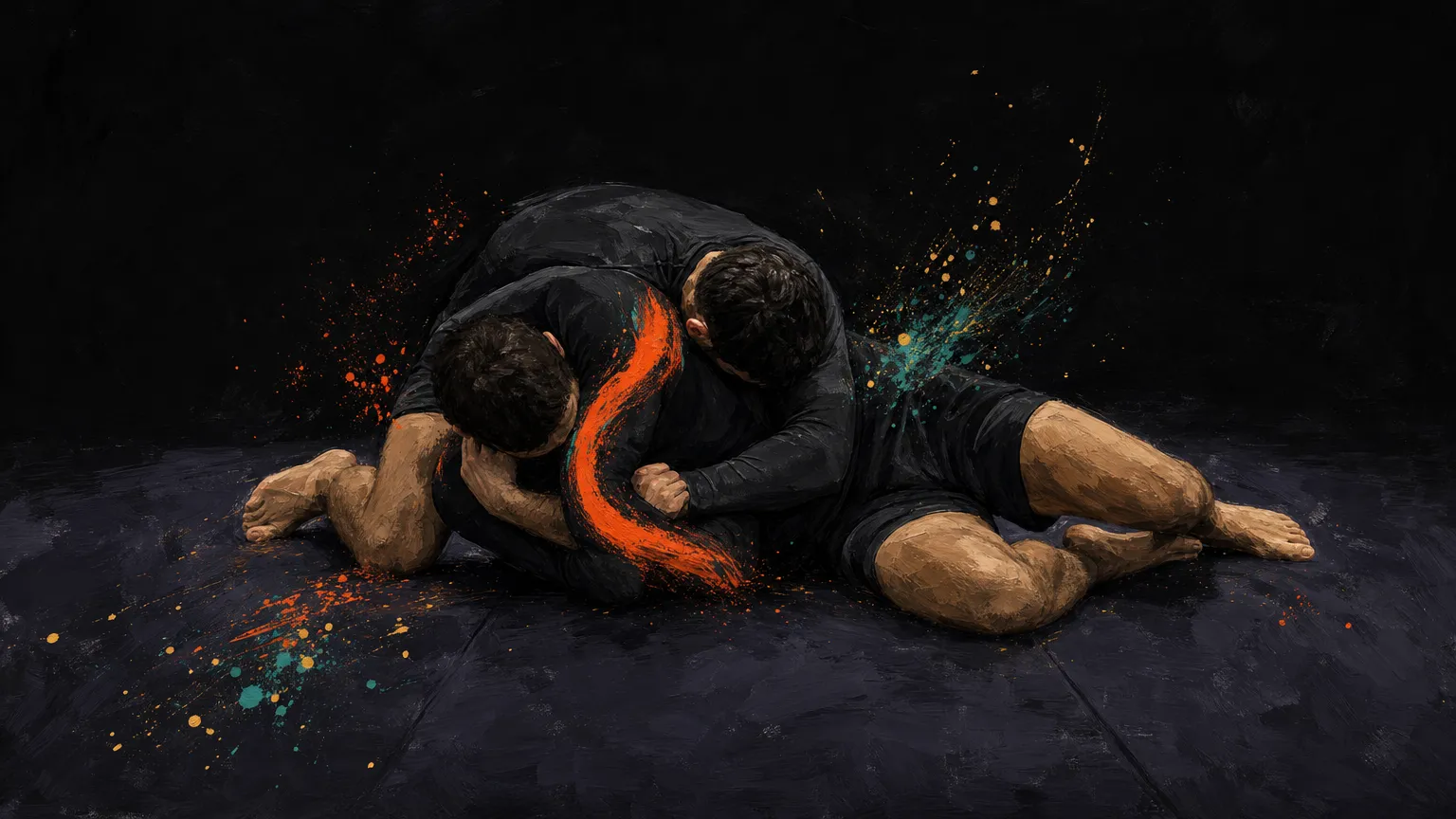
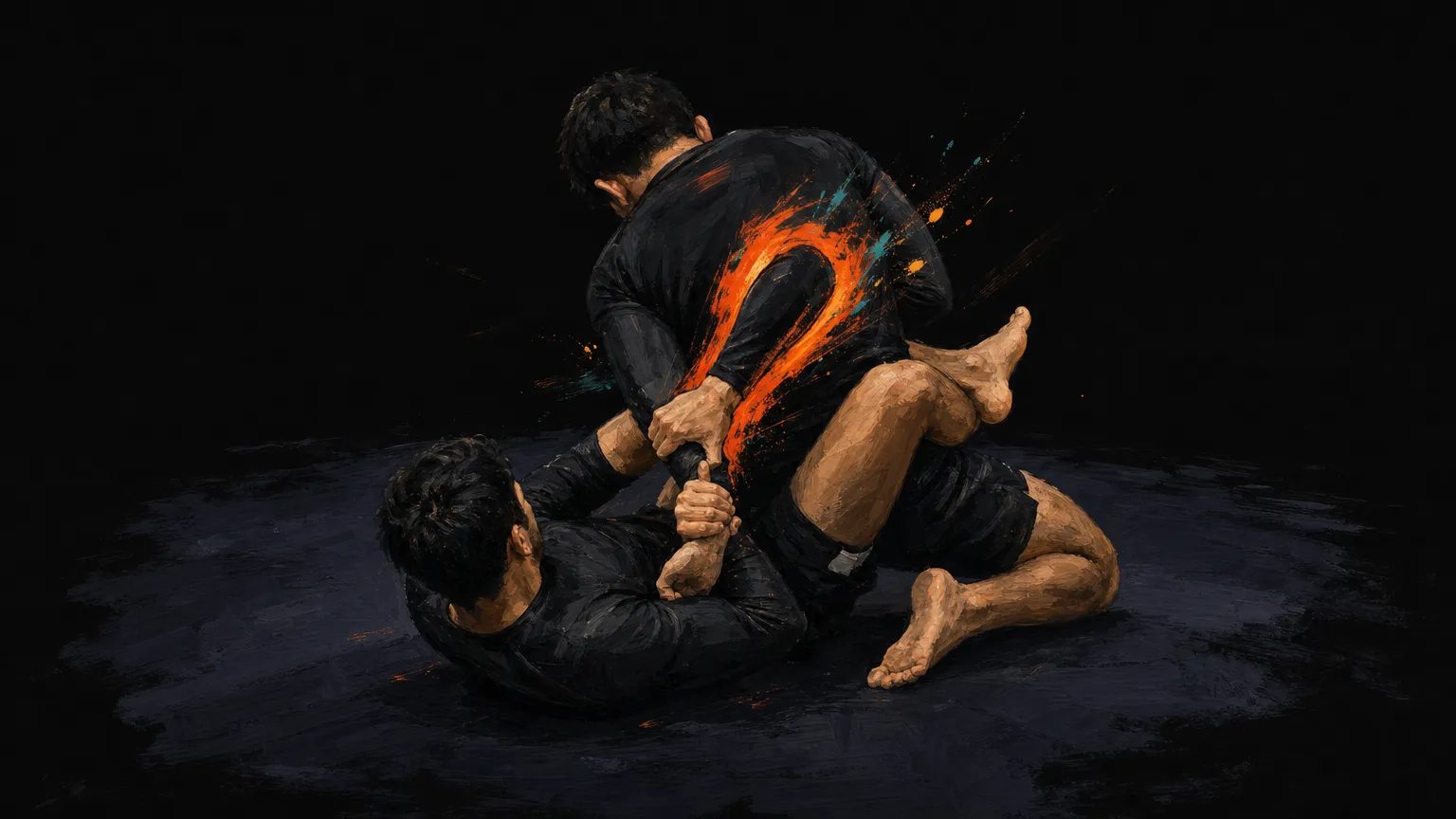
The kimura is a shoulder lock. You grab your opponent's wrist, wrap your other arm around their arm and grab your own wrist, making a figure-four grip. Then you rotate their bent arm behind their back. That twists the shoulder joint inward, and if they don't tap, it can tear the shoulder.
It works in the gi and without it, from the top and from the bottom. You'll see it from closed guard, half guard, side control, north-south and the back. Even when it doesn't finish, the grip gives you control of your opponent's arm and body, which is why many players use it to sweep or to take the back. It still wins titles too: Aurélie Le Vern won the first UFC BJJ women's featherweight title with a kimura over Raquel Canuto.
The kimura in one sentence: a figure-four grip on their wrist, their elbow bent to about 90 degrees, and their hand turned up behind their back.
Why It's Called the Kimura
The lock is named after Masahiko Kimura, a Japanese judoka who won the All-Japan Judo Championships three years in a row, from 1937 to 1939. In 1951 he toured Brazil, and Hélio Gracie challenged him. The match was fought under Gracie rules, where throws and pins didn't count and only a submission or loss of consciousness could win.
They met in October 1951 at the Maracanã Stadium in Rio de Janeiro, in front of about 20,000 people, including Brazil's president, Getúlio Vargas. Kimura threw Hélio again and again, then took him down and pinned him. When Hélio pushed with his arm to escape, Kimura caught it in the lock judo calls gyaku ude-garami, the reverse arm entanglement. Hélio refused to tap, and his arm broke. Then his corner threw in the towel.
Jiu-jitsu named the technique after the man who beat one of its founders. Catch wrestlers call it the double wristlock. For more on Hélio and his family, see our Gracie family tree.
How to Finish the Kimura
- Grab the wrist. Your hand on the same side grips their wrist, thumb wrapped around it.
- Make the figure-four. Your other arm goes over their upper arm, comes up under it, and grabs your own wrist.
- Keep the elbow bent. Their elbow should stay at about 90 degrees. If their arm straightens, the lock loses its leverage.
- Pin their body. Their shoulder can't be free to roll away. From guard, angle your hips out to the side of the arm and throw your leg over their back. From the top, keep your chest on them.
- Rotate the hand behind their back. Turn their hand up and away, like painting an arc on the mat, toward the back of their head. The shoulder is under pressure from the start of the turn.
- Go slowly. The shoulder can be injured before the pain arrives. Rotate gradually in training and stop the moment your partner taps.
Safety: Shoulder injuries take months to heal. Don't snap the kimura in training. If your partner is stuck and won't tap, back off and work the position instead.
Kimura Setups
From Closed Guard
The classic entry. When your opponent posts a hand on the mat to keep their balance, sit up, grab that wrist, and reach over their shoulder for the figure-four. Then fall back, angle your hips toward the arm and finish.
The kimura chains with the hip bump sweep: if they pull their arm back, bump them over. If they post again, the kimura is back on. Our closed guard attack system shows the full chain.
From Half Guard
From the bottom, the kimura is your answer to a top player who posts a hand or reaches for an underhook. From the top, it catches a bottom player who leaves their arm away from their body. In both, the kimura grip also sets up sweeps and back takes when the arm won't come off.
From Side Control and North-South
From side control, attack the far arm when they push on your hips or reach around your neck. Trap the wrist on the mat, make the figure-four, and step around toward their head to north-south to finish. North-south is one of the strongest kimura positions, because their shoulder is already pinned.
From the Back and Turtle
When your opponent turtles, a kimura grip on the near arm lets you control them. You can roll them, take the back, or finish the shoulder. Many players use the grip this way as a control position first and a submission second.
Standing
In no-gi and MMA, a kimura grip from a clinch can lead to a trip or a takedown, and sometimes a finish as you land.
Common Kimura Mistakes
- Letting the elbow straighten. A straight arm can't be rotated. Keep the elbow near 90 degrees.
- No body control. If their back is free, they roll out of the lock. Pin the shoulder first.
- Pulling instead of rotating. The lock comes from the turn of the hand behind the back, not from yanking the arm.
- A loose figure-four. Squeeze your grip tight to their arm, so their elbow can't slip out.
- Cranking it fast. That's how training partners get hurt. Slow and steady finishes just as well.
How to Defend the Kimura
Before the grip:
- Don't leave a hand posted on the mat in someone's closed guard or half guard.
- Keep your elbows tight to your body, especially when you're turtled or flat on your back.
Once they have the figure-four:
- Grab something: your own belt or gi in the gi, or clasp your hands or grab your own leg in no-gi. Your arm can't be rotated if it's tied to the rest of your body.
- Straighten your arm. A straight arm can't be put behind your back.
- Pressure into them and posture up. If you're in their guard, drive forward and bring your elbow back toward your hip, so they can't angle their hips out.
When the lock is on:
- Tap. A late kimura escape risks the shoulder, and a torn shoulder can cost you months off the mat.
Is the Kimura Legal in IBJJF?
Yes, at every belt and every age. IBJJF's table of illegal techniques doesn't list the kimura at all, so it's legal for kids, teenagers and adults alike, in the gi and in no-gi. Compare the omoplata, another shoulder lock, which the same table bans for kids aged 4 to 15. For every banned technique by belt and age, see our IBJJF illegal techniques guide.
Kimura vs Americana
Both are shoulder locks with a figure-four grip, and both bend the arm at 90 degrees. They turn the arm in opposite directions:
- Kimura: the hand turns up behind their back, turning the shoulder inward. It's usually applied from the side, from guard or from north-south.
- Americana: their hand is pinned on the mat near their head, then slides down toward their hip as you lift the elbow, turning the shoulder outward. It's usually applied from mount or side control.
If one doesn't work, the other is often right there. An opponent who bends their arm toward their head to escape the kimura gives you the americana, and the reverse.
Kimura FAQ
Why is it called the kimura?
After Masahiko Kimura, the Japanese judoka who beat Hélio Gracie with the lock in October 1951 at the Maracanã Stadium in Rio de Janeiro.
What is the kimura called in judo?
Gyaku ude-garami, the reverse arm entanglement. Catch wrestlers call it the double wristlock.
Is the kimura a shoulder lock or an arm lock?
A shoulder lock. It rotates the shoulder joint inward. If the arm isn't bent at 90 degrees, the elbow can be stressed too.
Is the kimura legal for kids?
Yes, under IBJJF rules it's legal at every age and belt. The omoplata, by contrast, is illegal for kids aged 4 to 15.
What's the difference between a kimura and an americana?
The direction of the turn. The kimura turns the hand up behind the back, rotating the shoulder inward. The americana slides the hand from near the head toward the hip while lifting the elbow, rotating it outward.
How do you escape a kimura?
Grab your own belt, gi or leg before the arm turns, keep the arm straight, and pressure into your opponent. Once the lock is fully on, tap.
Sources
- Masahiko Kimura (Wikipedia): his judo record and the 1951 match with Hélio Gracie
- Figure-four grappling holds (Wikipedia): the double wristlock and the kimura
- IBJJF Books & Videos: the rules book and the "Illegal moves by age and category" table (January 2024 edition)
- UFC BJJ 2026 results: Aurélie Le Vern's kimura for the women's featherweight title
Working on your kimura game? Log your closed guard and half guard rounds in your Rollbook technique journal, and see which setups land in sparring. Rollbook is free on iOS and Android.
Oss!