By Philipp — Rollbook · Updated November 7, 2026
The Peruvian Necktie: How It Works, Setups and Famous Finishes
The Peruvian necktie is a front headlock choke where your legs drape over your opponent's back. How it works, why it's named after Tony DeSouza, its finishes in the UFC, how to defend it, and its cousin, the Japanese necktie.
On this page
What Is the Peruvian Necktie?
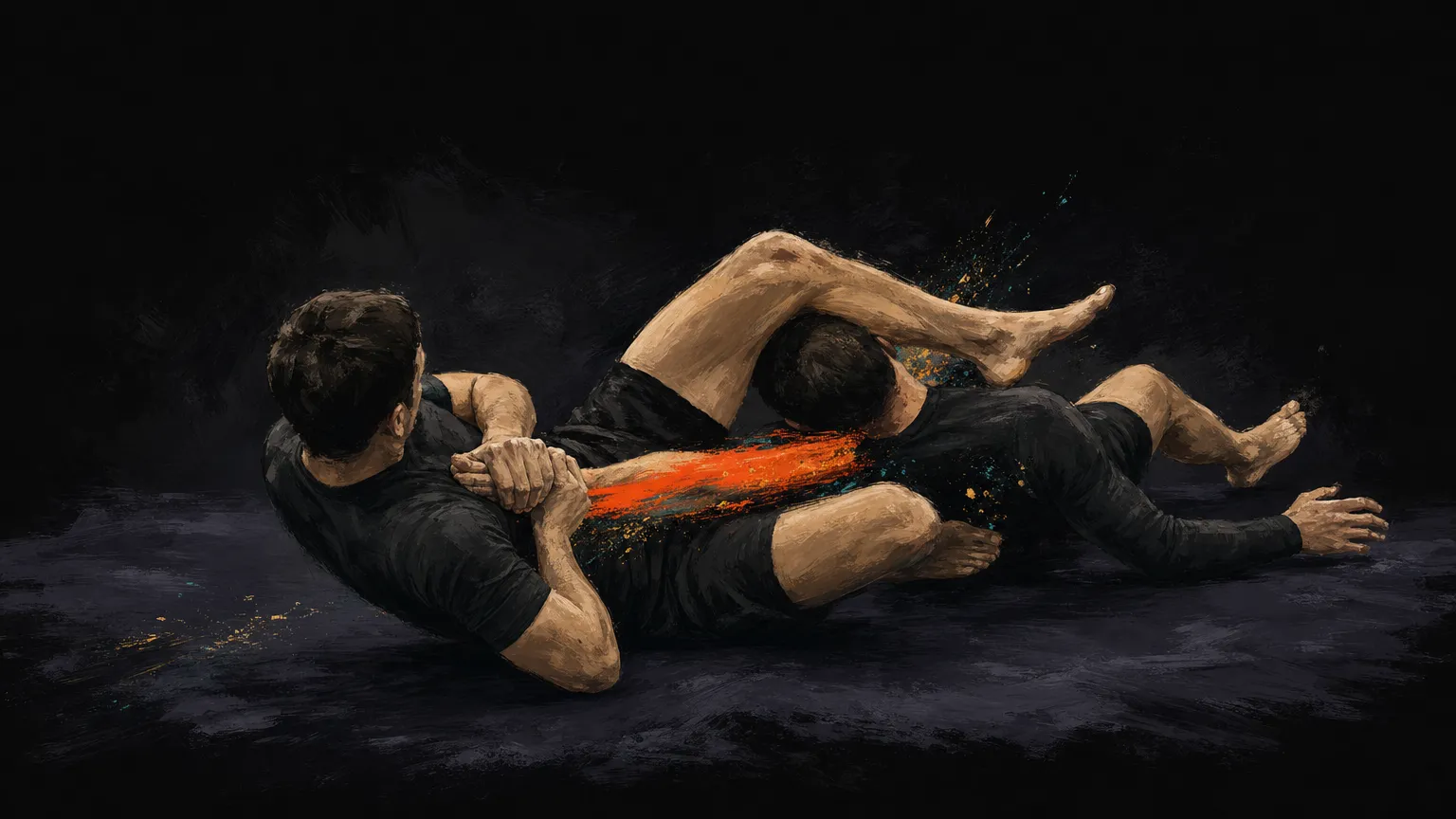
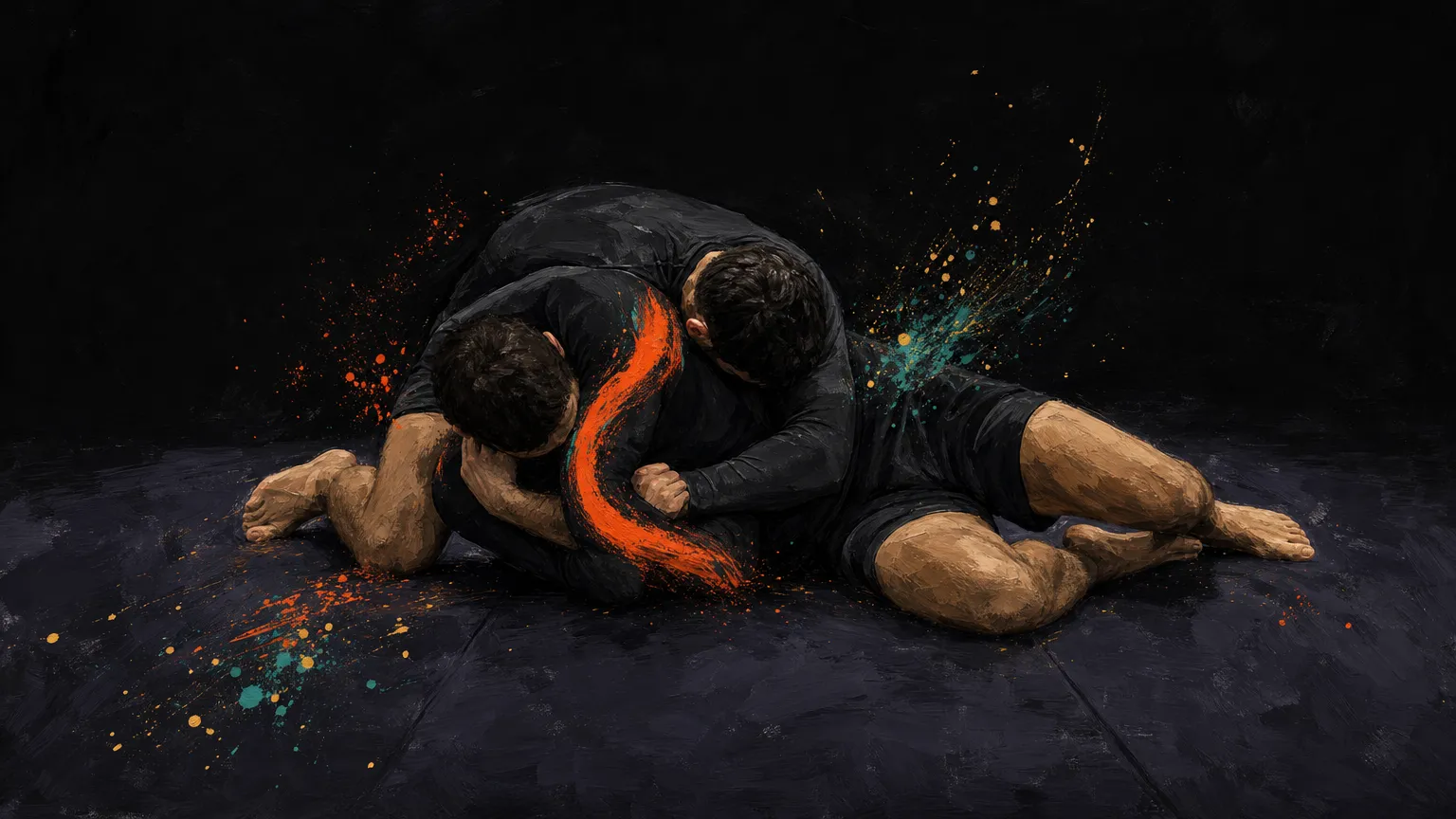
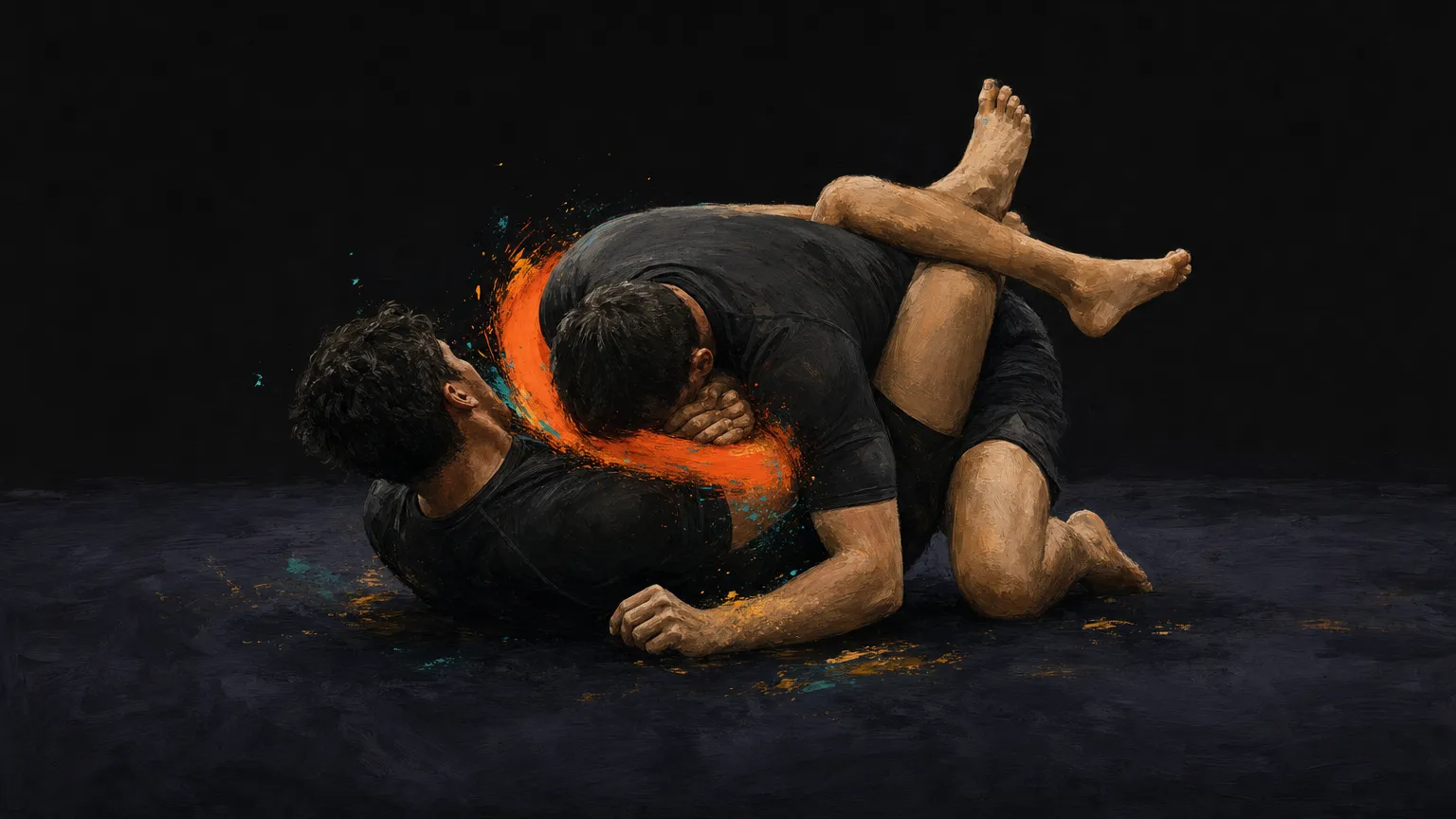
The Peruvian necktie is a choke from the front headlock. You trap your opponent's head and one arm, lock your hands under their chin, then sit down to the side and drape your legs over their back. The weight of your legs adds to the squeeze.
It's a head-and-arm choke, and people file it in different places: Wikipedia's Tony DeSouza page calls it a modified guillotine, while Jiu-Jitsu Legacy calls it essentially an arm triangle. Jiu-Jitsu Legacy explains it like an arm triangle: the trapped shoulder presses one side of the neck and your forearm the other. It's at its best against an opponent in turtle, where most people only look for the back.
The Peruvian necktie in one sentence: a head-and-arm choke from the front headlock, finished by sitting to the side and draping your legs over their back.
Why It's Called the Peruvian Necktie
It's named after Tony DeSouza, an MMA fighter with two stints in the UFC, as Jits Magazine records; Wikipedia describes him as Peruvian. Bloody Elbow attributed the hold to him as early as 2009, describing him as best known as B.J. Penn's wrestling coach.
Its cousin, the Japanese necktie, is named after Shinya Aoki. Both begin as a head-and-arm choke from the front headlock.
How to Finish the Peruvian Necktie
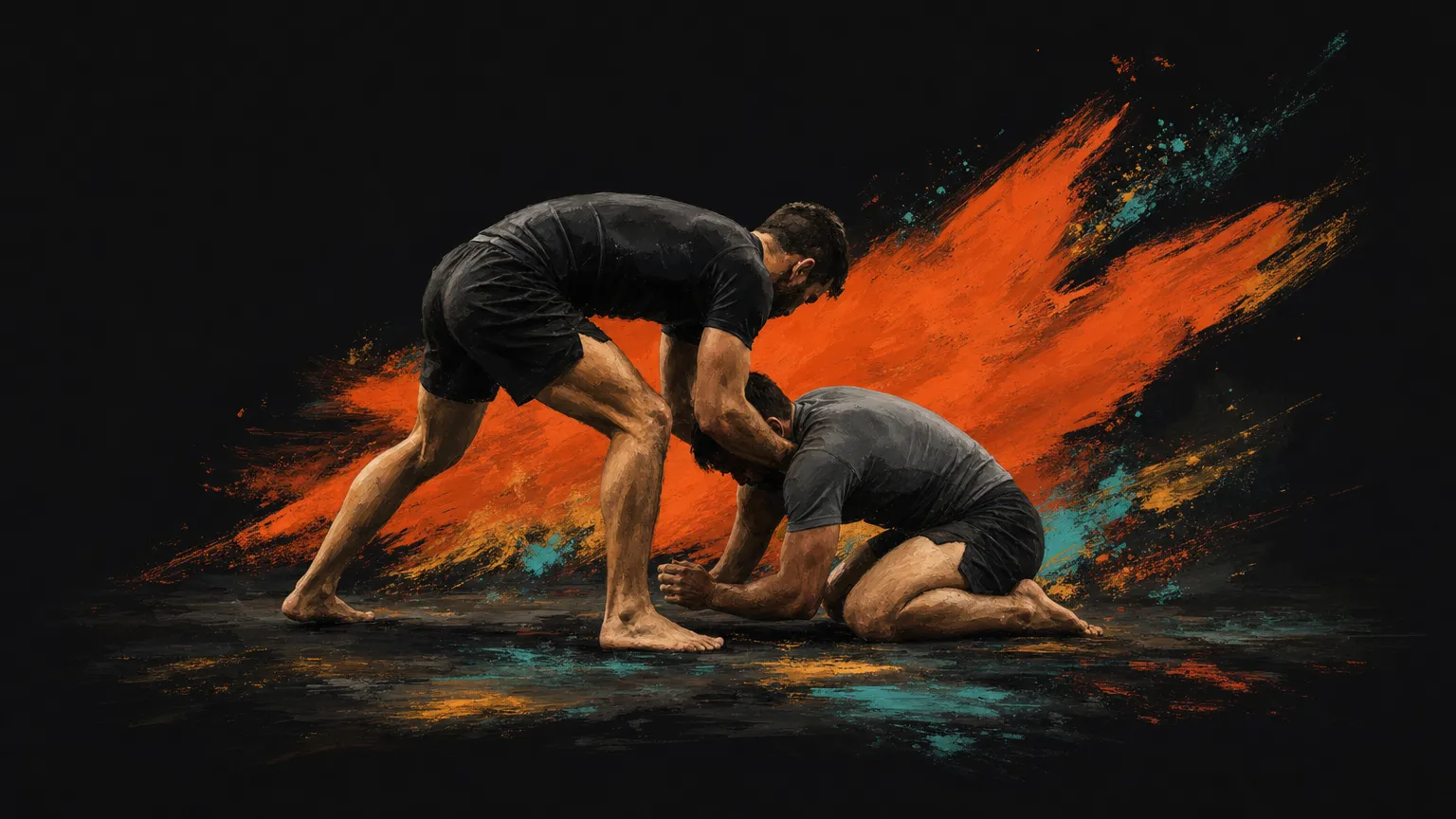
- Get the front headlock. Your opponent is bent over or turtled in front of you. Wrap your arm around their head with one of their arms trapped inside, as you would for an anaconda.
- Lock your hands under their chin. A palm-to-palm, Gable or S-grip all work.
- Sit down to the side of the trapped arm. Get your head close to their hips first, then sit at an angle. The angle matters more than the grip.
- Throw your leg over their head. Swing a leg over their head and onto their back, then bring the other leg over too.
- Squeeze and push with your legs. Your legs press down on their back while your arms pull up.
Safety: Bloody Elbow describes the move as a combination of a choke and a crank: it puts a lot of torque on the neck, and it can be hard to tap once you're caught. Lock your arms first, bring your legs over slowly, have a third person watch when you drill it, and let go at the first tap.
Peruvian Necktie Setups
- From the turtle: the classic entry. When your opponent turtles, take the front headlock instead of chasing the back.
- From a sprawl: when they shoot for your legs and you sprawl, their head ends up under your chest, already in a front headlock.
- From the side of a turtled opponent: C.B. Dollaway's UFC finish came from controlling the side of a turtled Jesse Taylor.
The same front headlock leads to the guillotine, the anaconda and the darce, so you can switch between them as they defend.
How to Defend the Peruvian Necktie
Don't spend your energy on the grip. It's the hardest part of the hold to break. Jiu-Jitsu Legacy's advice is to beat the angle instead, before your opponent sits down: fall to the side of your trapped arm with a wrestling sit-out, extending your inside leg across the mat. You'll probably end up under side control, but there's no choke.
A few more principles help:
- Get out of the front headlock early. Every choke on this page starts there.
- Get your trapped arm out or your head free before the legs drape over.
- Tap early once their legs are on your back, because it can crank the neck as well as choke.
The Peruvian Necktie in MMA
- UFC Fight Night 14, July 19, 2008: C.B. Dollaway submitted Jesse Taylor in the first round. Wikipedia calls it the first successful Peruvian necktie in UFC history.
- WEC 45, December 19, 2009: Brad Pickett beat Kyle Dietz with it in the second round.
- UFC Fight Night 158, September 14, 2019: Misha Cirkunov handed Jimmy Crute his first defeat with it, at 3:38 of the first round.
- UFC 329, July 11, 2026: Paddy Pimblett choked out Benoît Saint Denis in 52 seconds. Sherdog records it as a Peruvian necktie, Cageside Press as a darce, and Pimblett called it a mixture of the two.
In judo, the International Judo Federation banned a version that uses the jacket skirt after Yarden Gerbi won a 2013 world title with a necktie-type choke. BJJEE reported in July 2022 that referees had been told the other versions are banned too, though the IJF hadn't issued an official statement.
Is the Peruvian Necktie Legal?
The IBJJF's table of illegal moves doesn't name it, so adults can use it. For kids aged 4 to 15, the table bans the arm triangle and a choke with a spinal lock, and the necktie is a head-and-arm choke that can crank the neck, so leave it out of kids' divisions. See our IBJJF illegal techniques by belt for the full table.
Peruvian Necktie FAQ
Why is it called the Peruvian necktie?
It's named after Tony DeSouza, a Peruvian MMA fighter who made it famous.
Is the Peruvian necktie a choke or a neck crank?
Mainly a choke, but it can crank the neck too, which is why it's best applied slowly in training.
What's the difference between the Peruvian and the Japanese necktie?
Both start as a head-and-arm choke from the front headlock. The Japanese necktie, named after Shinya Aoki, is the option Jiu-Jitsu Legacy suggests when you're too late with the second leg and your opponent rolls over.
Who did the first Peruvian necktie in the UFC?
C.B. Dollaway, against Jesse Taylor at UFC Fight Night 14 in 2008, according to Wikipedia.
Is the Peruvian necktie legal in judo?
The IJF banned the version that uses the jacket skirt, and BJJEE reported in 2022 that the other versions are banned too, though the IJF hadn't confirmed it officially.
Sources
- Submission history: the head-and-arm choke (Jits Magazine, 2020): named after Tony De Souza; the Japanese necktie and Shinya Aoki
- Judo Chop: Brad Pickett's Peruvian necktie (Bloody Elbow, 2009): DeSouza, the choke-and-crank mechanics and the Pickett finish
- Peruvian necktie: what you need to know (Jiu-Jitsu Legacy): the front headlock, the angle and the defense
- Tony DeSouza (Wikipedia) and C. B. Dollaway (Wikipedia): the hold and the first UFC finish
- Chokehold (Wikipedia): how the hold is applied
- UFC Fight Night: Silva vs. Irvin (Wikipedia): Dollaway vs Taylor
- Misha Cirkunov's Peruvian necktie (MMA Fighting, 2019)
- Paddy Pimblett (Sherdog) and UFC 329 (Cageside Press)
- IJF bans Peruvian-necktie-type chokes (BJJEE, 2022): the jacket-skirt ban, Yarden Gerbi in 2013 and the 2022 referee report
- IBJJF Books & Videos: the rule book (version 6.1) and its table of illegal moves
Building a front headlock game? Log the chokes you drill from the front headlock in your Rollbook technique journal, with notes after each session. Rollbook is free on iOS and Android.
Oss!