By Philipp — Rollbook · Updated November 6, 2026
What Is Sambo? The Soviet Martial Art, and How It Compares to BJJ
Sambo is the grappling art the Soviet Union built from judo and wrestling: throws, pins and leg locks, but no chokes. Sport and combat sambo explained, how sambo differs from BJJ, and the fighters who made it famous.
On this page
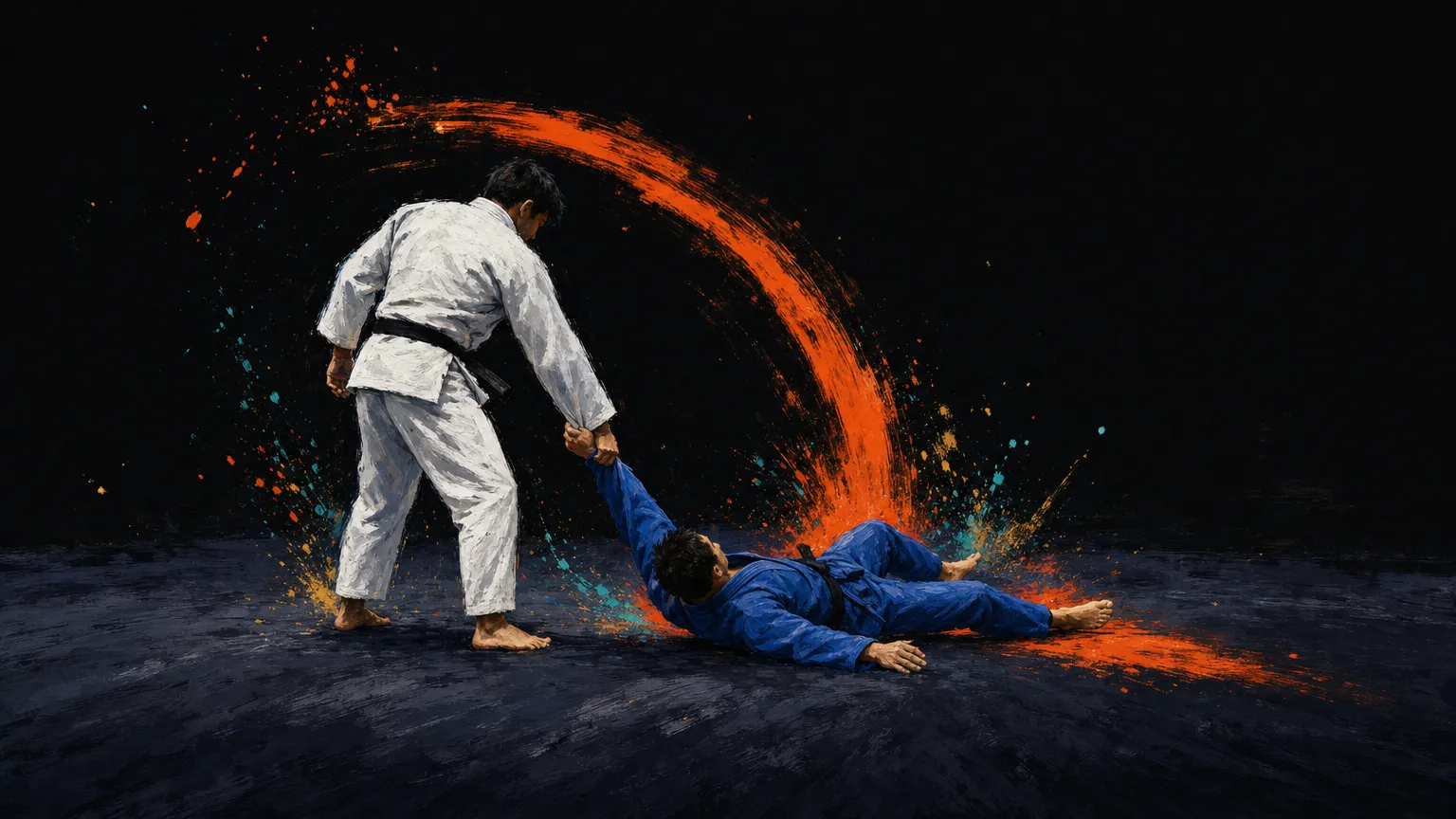
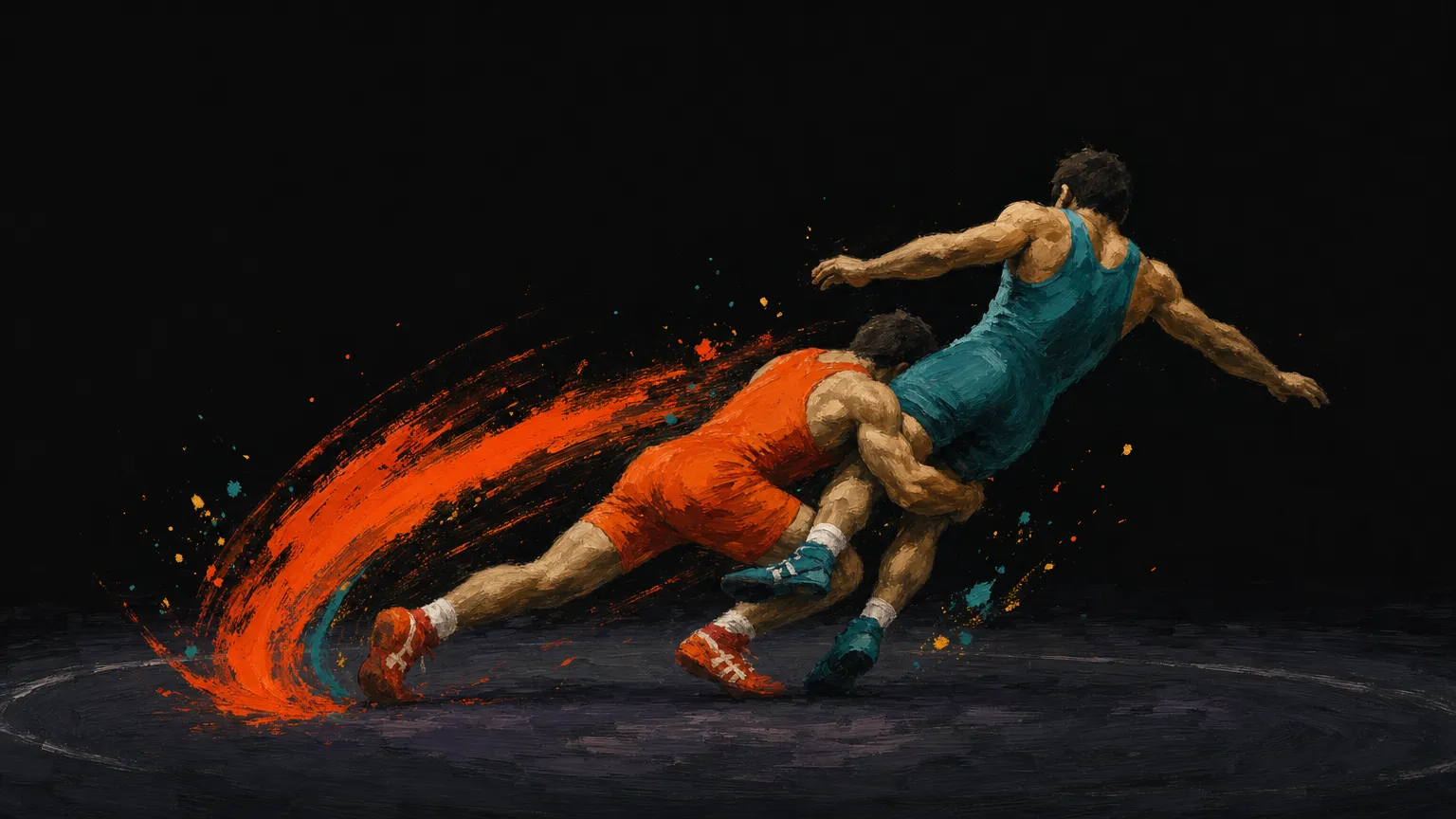
Sambo is a martial art and combat sport from the Soviet Union. The name is a Russian acronym, samozashchita bez oruzhiya, "self-defense without weapons". It mixes judo with the wrestling styles of the Soviet republics, and it's famous for two things: big throws and fast leg locks.
It comes in two main forms. Sport sambo is jacket wrestling with throws, pins and joint locks, but no strikes and no chokes. Combat sambo, built for the military, adds punches, kicks and chokes. Fedor Emelianenko, Khabib Nurmagomedov and Islam Makhachev all came out of combat sambo before conquering MMA.
This guide covers where sambo came from, how the styles work, how it compares to Brazilian jiu-jitsu, and whether it's worth training.
Where Sambo Came From
Sambo grew out of the Red Army's search for a better hand-to-hand combat system in the 1920s. Two men built it separately:
- Vasili Oshchepkov was one of the first foreigners to learn judo in Japan, where its founder, Kanō Jigorō, awarded him a second-degree black belt.
- Viktor Spiridonov, a World War I veteran, drew on catch wrestling, Greco-Roman and the folk wrestling styles of the Soviet republics. A bayonet wound had left his left arm weak, so his style relied on movement more than strength.
Their students cross-trained, and the two systems merged. Anatoly Kharlampiev, a student of Oshchepkov, pushed the new art through the Soviet sports bureaucracy, and on 16 November 1938 the All-Union Sports Committee recognized sambo as an official sport. That date is still treated as its birthday.
Oshchepkov didn't live to see it. Arrested during Stalin's Great Purge and accused of spying for Japan, he died in prison in 1937. Judo was then banned in the Soviet Union for decades. When it joined the Olympics in 1964, Soviet sambo players entered the judo events and won four bronze medals.
Sport Sambo vs Combat Sambo
Sport Sambo
Sport sambo looks like judo with wrestling's aggression and a leg-lock game on top:
- Throws decide a lot. Throw your opponent cleanly onto their back while you stay on your feet, and you win on the spot: a total victory, like ippon in judo.
- Pins score. Holding the opponent down for 10 seconds scores 2 points, 20 seconds 4 points, and only one hold-down counts per match.
- Submissions are arm locks and leg locks. A tap is also a total victory. Chokes are banned, and so are leg locks that twist the joint, like the heel hook. Straight ankle locks and kneebars are legal.
- The groundwork is short. When the action on the ground stalls, the referee stands both athletes back up.
- No score, no draw. Since FIAS's 2026 rule changes, a bout that ends with no points and no penalties goes to the athlete the referees judged more active.
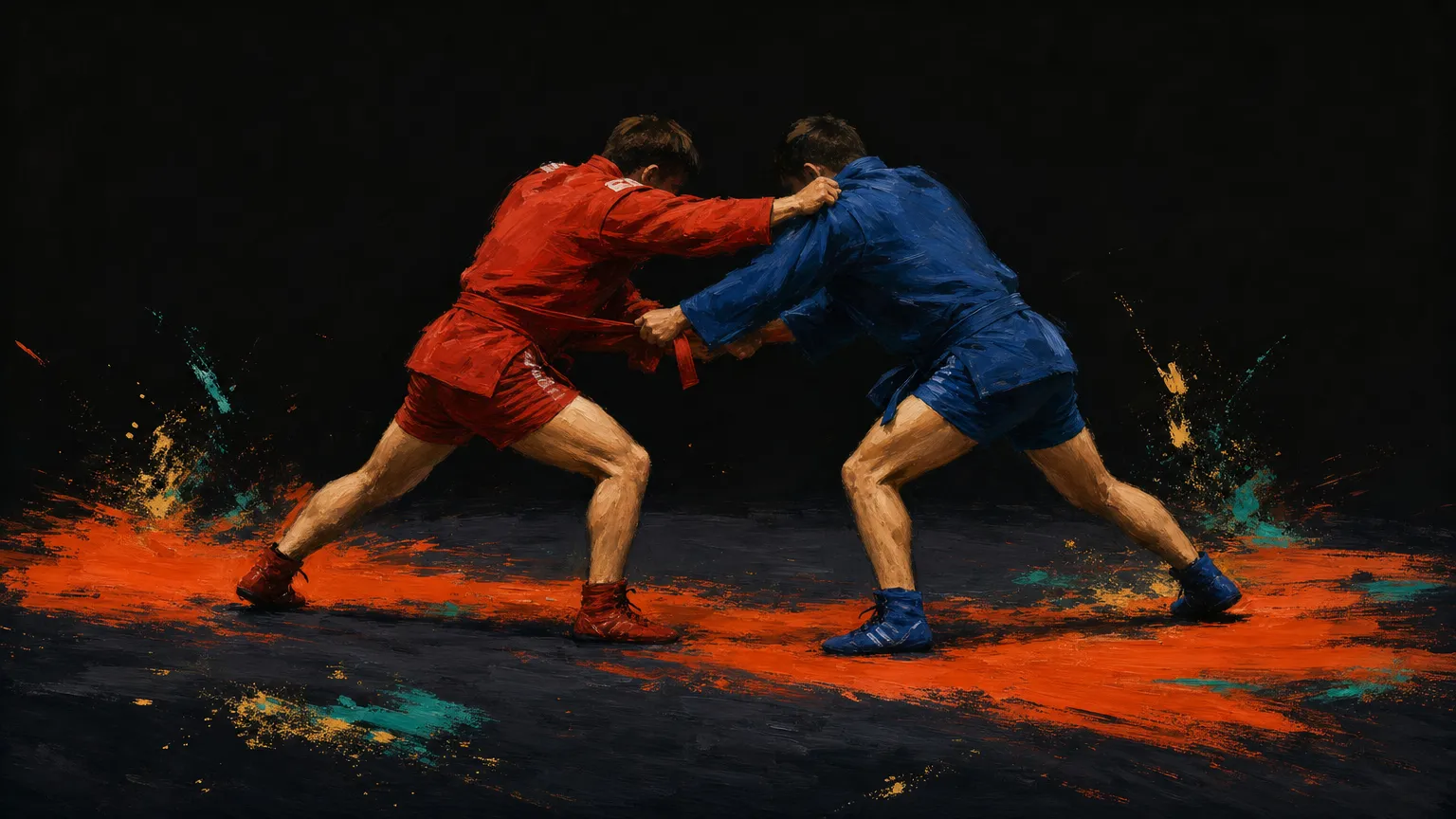
Competitors wear a tight jacket called a kurtka (or sambovka) with shoulder straps and belt loops, a belt, shorts and soft wrestling shoes. Every athlete needs a red and a blue set, one for each corner.
Combat Sambo
Combat sambo is sambo for soldiers. It allows punches, kicks, elbows, knees and headbutts on top of the throws and holds, plus chokes and leg locks, heel hooks included. Fighters wear the same jacket with gloves, headgear and shin guards. The first FIAS World Combat Sambo Championships were held in 2001.
That makes it close to modern MMA, and many Russian MMA fighters started in it:
- Fedor Emelianenko, PRIDE heavyweight champion from 2003 to 2007, won four combat sambo world titles.
- Khabib Nurmagomedov, a two-time combat sambo world champion, retired from MMA in 2020 as the undefeated UFC lightweight champion, 29–0.
- Islam Makhachev won the FIAS World Combat Sambo Championship in 2016, then UFC titles at lightweight and welterweight.
The international federation, FIAS, has named Fedor and Makhachev ambassadors for the sport.
Beach and Freestyle Sambo
Beach sambo is fought on sand, standing only, and the first scoring throw wins. Freestyle sambo, introduced by the American Sambo Association in 2004 to draw in judo and jiu-jitsu players, allows chokes and other submissions that sport sambo bans.
Sambo vs BJJ: The Key Differences
Both grew out of judo, and both love the ground, but they reward different things:
- Throws vs positions. In sambo a perfect throw ends the match. In BJJ a takedown scores 2 points and the real work starts afterwards.
- Speed vs patience. Sambo's groundwork is a short burst: hit a pin or a submission quickly, or the referee stands you up. BJJ lets the ground game run, and the guard gives the bottom player time to work.
- Chokes. Banned in sport sambo, central to BJJ: the rear naked choke and the triangle are among BJJ's most common finishes.
- Leg locks. Straight leg locks are legal for every adult sambo competitor: there are no belts, so there's no belt rule. In IBJJF, kneebars and toe holds wait until brown belt, and heel hooks are for adult brown and black belts in no-gi only. Our IBJJF illegal techniques guide has the details.
- Ranks. BJJ has belts that take years. Sambo has no belt ranks: athletes earn sports titles such as "Master of Sport" for competition results.
- Uniform. A short, tight jacket with shorts and shoes in sambo. A full gi with long pants in BJJ, or no gi at all.
That's why sambo players have a reputation for leg locks. As our piece on John Danaher's leg-lock system notes, leg locks existed in sambo and catch wrestling long before BJJ's no-gi scene embraced them.
Is Sambo Better Than BJJ?
Neither is better. They're built for different goals.
- Choose sambo if you want throws, fast and aggressive grappling, leg locks from day one, or a path to MMA through combat sambo.
- Choose BJJ if you want a deep ground game, chokes, the guard, a belt system that tracks your progress, and gyms in almost every city.
That last point decides it for most people. Outside the former Soviet Union, sambo clubs are much harder to find than BJJ gyms, though some MMA and BJJ gyms teach sambo's throws and leg locks. Our gym directory lists BJJ and MMA gyms near you.
Is Sambo an Olympic Sport?
No. The International Olympic Committee granted sambo provisional recognition in 2018, but it has never been on the Olympic program. It has been part of the World Games, most recently in 2025, and of the European Games.
What Is Sambo FAQ
What does sambo stand for?
Samozashchita bez oruzhiya, Russian for "self-defense without weapons". In the US it was long spelled "sombo".
What is combat sambo?
The military version of sambo. It allows strikes, chokes and leg locks, heel hooks included, on top of sport sambo's throws, pins and joint locks, with gloves, headgear and shin guards.
Is sambo the same as judo?
No, but it's close. Oshchepkov, one of sambo's founders, was a judo black belt, and many throws are the same. Sambo adds wrestling, leg locks and shorter, more aggressive groundwork, and bans chokes in its sport form.
Does sambo have belts?
No. Sambo athletes wear a red or blue jacket that shows their corner, not a rank. Instead of belts, sambo awards sports titles like "Master of Sport" for competition results.
Is sambo good for MMA?
Combat sambo is a natural starting point for MMA, because it already mixes strikes, throws and submissions. Fedor Emelianenko, Khabib Nurmagomedov and Islam Makhachev all came from it.
Sources
- Sambo (martial art) (Wikipedia): the name, the founders, the 1938 recognition, sport, combat and freestyle sambo, the uniform and Master of Sport titles, and the 2018 IOC recognition
- Vasili Oshchepkov (Wikipedia): his judo rank and his arrest and death in 1937
- Sombo wrestling history and basic rules (USA Wrestling): total victory, hold-down points and illegal holds in sport sambo
- EuroSambo: the sport, combat and beach styles, and what each one judges
- FIAS: International SAMBO Rules updates (September 2026): the current rules, including the "activity" decision
- Fedor Emelianenko, Khabib Nurmagomedov and Islam Makhachev (Wikipedia): their combat sambo and MMA titles
Adding sambo leg locks to your game? Log the entries and finishes you drill in your Rollbook technique journal and see which ones land in sparring. Rollbook is free on iOS and Android.
Oss!