By Philipp — Rollbook · Updated November 4, 2026
BJJ Brown Belt: How Long It Takes and What Changes at Brown
Brown belt is the last stop before black. How long it takes, with the IBJJF minimums and real timelines, what a brown belt should know, the leg locks that become legal, and what it takes to earn a black belt.
On this page
What the Brown Belt Means
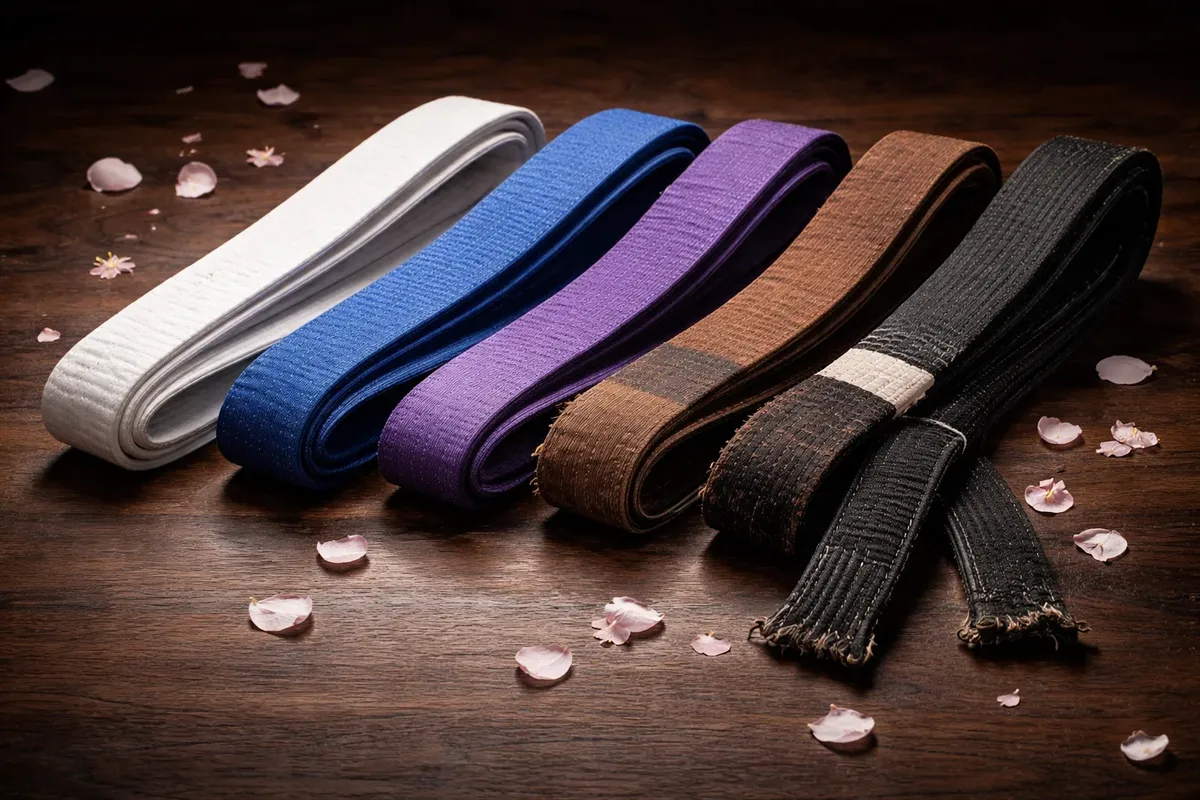
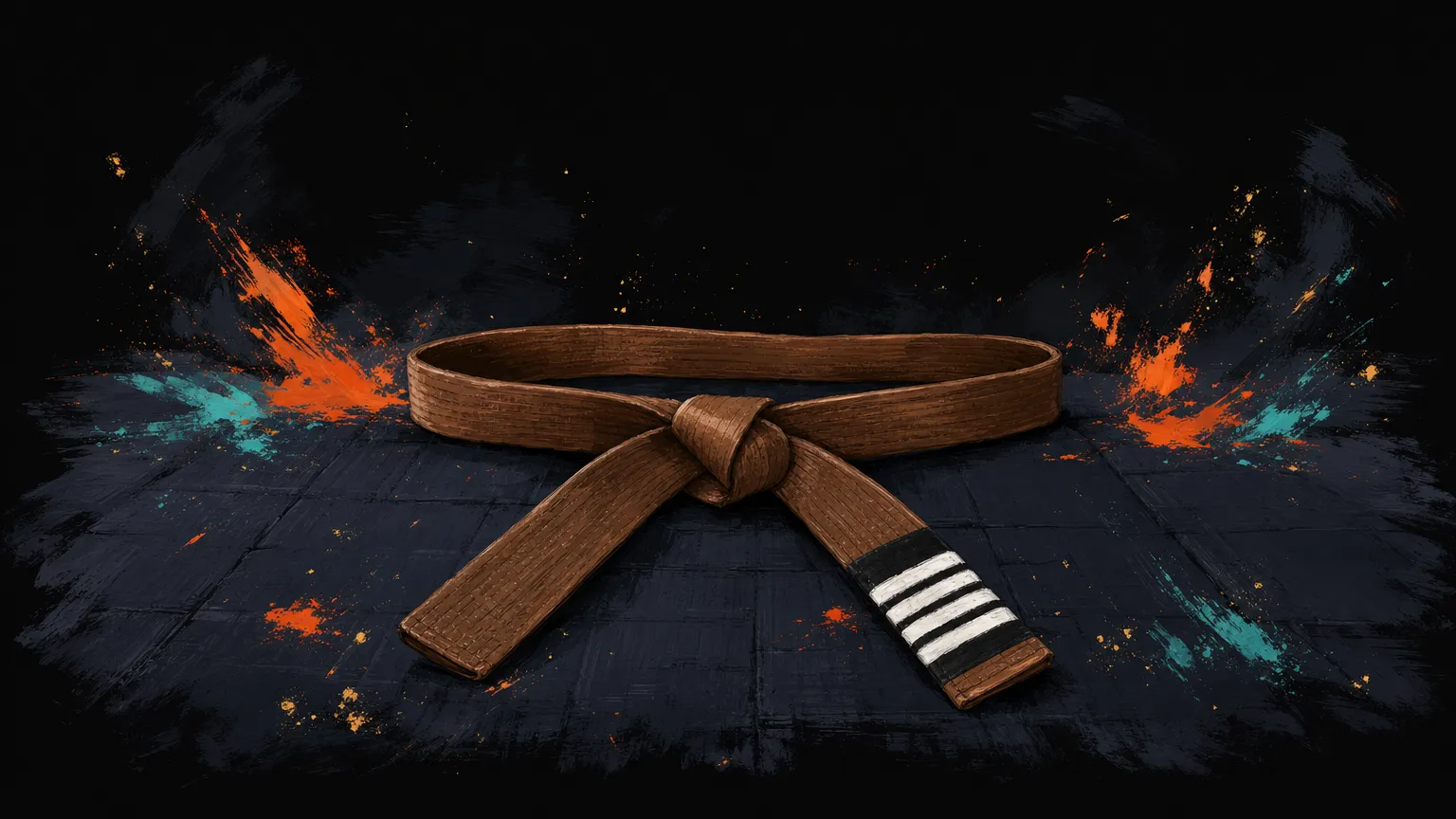
Brown is the fourth adult belt in BJJ and the last one before black. It's usually the shortest colored belt, and the most focused. A brown belt already has a complete game. The job now is to close the remaining holes, sharpen the details, and get ready to teach every part of jiu-jitsu.
How long does it take? Under IBJJF rules you must be at least 18 and spend at least 1.5 years at purple belt. Most people spend 2 to 3 years at purple, so brown typically comes 5 to 9 years after the first class. Then most people spend 1 to 2 years at brown before black.
The short version: at purple your game came together. At brown it gets tight: fewer holes, better details, less wasted energy, and the leg locks open up in competition.
How Long Does It Take to Get a Brown Belt?
| Brown belt | Time |
|---|---|
| IBJJF minimum age | 18 |
| Minimum time at purple | 1.5 years |
| Typical time at purple | 2–3 years |
| From first class | 5–9 years |
| Minimum time at brown | 1 year |
The minimums are a floor. Your professor decides when you're ready, and the IBJJF only refuses to recognize a promotion that comes too early. An adult who wins the IBJJF World Championship at purple belt has no minimum time at purple, but must still be 18. A juvenile purple belt, aged 16 or 17, has to wait for the adult division before moving up. Our IBJJF graduation requirements guide lists every exception.
What a Brown Belt Should Know
Every professor has their own standard, but most look for these:
- No weak positions. A brown belt can work from anywhere: guard, top, half guard, turtle, the back, and the legs. They don't panic in any of them.
- An A-game and a B-game. When the main plan is shut down, a second complete plan takes over.
- Efficient rolling. Brown belts win with timing and position, not strength. They roll for five minutes without gassing and still finish in the last thirty seconds.
- A real leg lock game. In no-gi IBJJF events, adult brown belts may use heel hooks for the first time. You need to attack and defend them, not just know they exist. Our leg lock guide and heel hook defense guide cover both sides.
- The details of the basics. The difference between a brown belt's armbar and a blue belt's is in the small things: the angle, the grip, the timing. Brown is where those get polished.
- Teaching a whole class. Many brown belts run classes. You should be able to explain any position, spot a student's mistake, and fix it.
What Changes at Brown Belt in Competition
Brown belt is where the IBJJF rules open up. These techniques become legal for adult brown and black belts:
| Newly legal at brown | Where |
|---|---|
| Knee bar | Gi and no-gi |
| Toe hold | Gi and no-gi |
| Biceps slicer | Gi and no-gi |
| Calf slicer | Gi and no-gi |
| Heel hooks | No-gi only |
| Knee reaping | No-gi only |
Adult brown belt matches last 8 minutes, one minute longer than at purple. Masters divisions are shorter.
The leg locks change the game. A purple belt who never trained leg locks can get heel-hooked in their first no-gi match at brown. If you compete, start drilling leg lock defense well before your promotion. Our IBJJF illegal techniques guide has the full table for every belt, and our calf slicer and knee bar guide covers the two compression locks.
The Brown Belt Years
Brown belt brings its own pressures:
- Black belt is in sight. It's easy to count months instead of training. The belt comes when your game is ready, not when the 12 months are up.
- Everyone wants to beat you. Purple belts measure themselves against you, and black belts expect more.
- More teaching. Many brown belts help run the academy, and less of their mat time is their own.
- The body keeps score. Most brown belts have trained for 5 to 9 years. Recovery, mobility and smart sparring matter more every year; see our stretching and mobility guide.
How to Get From Brown to Black
Black belt has an IBJJF minimum age of 19 and needs at least 1 year at brown. A brown belt who wins the adult IBJJF World Championship has no minimum time at brown, and since June 2026 can receive the black belt at 18.
For the IBJJF to recognize the black belt, the promotion has to be signed by a black belt professor who holds at least two IBJJF-certified degrees. To get the IBJJF black belt certificate, the new black belt also needs:
- an active IBJJF membership
- a first aid or CPR certificate
- a certificate from an IBJJF referee training program, rules seminar or rules webinar, dated within the past 12 months
Our black belt guide covers what comes next, from the first degree to the coral belt.
Brown Belt FAQ
How long does it take to get a brown belt in BJJ?
Usually 5 to 9 years from your first class. Under IBJJF rules an adult needs at least 1.5 years at purple belt, and most people spend 2 to 3.
What is the minimum age for a brown belt?
18 under IBJJF rules. A juvenile purple belt has to reach the adult division first.
How long do you stay at brown belt?
At least 1 year under IBJJF rules, and usually 1 to 2 years. The only exception is the adult Brown Belt World Champion, who has no minimum.
Can you skip brown belt?
No. Under IBJJF rules everyone goes through brown belt. World champions can skip the minimum time at a belt, never the belt itself.
Are heel hooks legal at brown belt?
In IBJJF no-gi events, yes, for adult brown and black belts, along with knee reaping. In the gi, heel hooks stay illegal at every belt.
Why is the brown belt so short?
Because most of the work is already done. Brown belt is for refining a complete game, not building a new one, so most people spend 1 to 2 years there compared with 2 to 3 at purple.
Sources
- IBJJF Graduation System: minimum ages and times, the black belt requirements and the June 2026 revision
- IBJJF Books & Videos: the rules book, match times and the illegal techniques table
- IBJJF graduation requirements: every exception to the minimum times
Closing in on black belt? Rollbook keeps a belt timeline of every stripe and promotion, and shows how many days and logged sessions you have at your current belt. Rollbook is free on iOS and Android.
Oss!