By Philipp — Rollbook · Updated November 4, 2026
BJJ Purple Belt: How Long It Takes and What Purple Belts Know
Purple belt is where your jiu-jitsu starts to connect. How long it takes, with the IBJJF minimums and real timelines, what a purple belt should know, what changes in competition, and how to get to brown.
On this page
What the Purple Belt Means
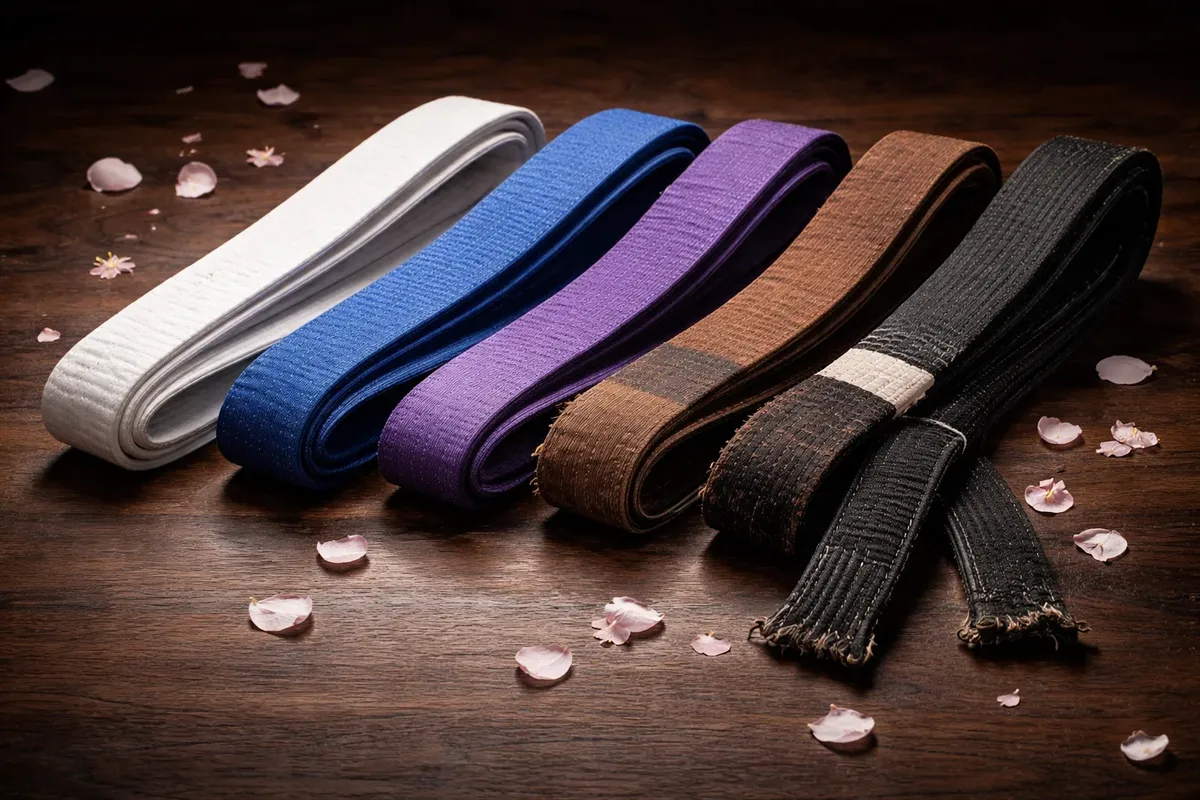
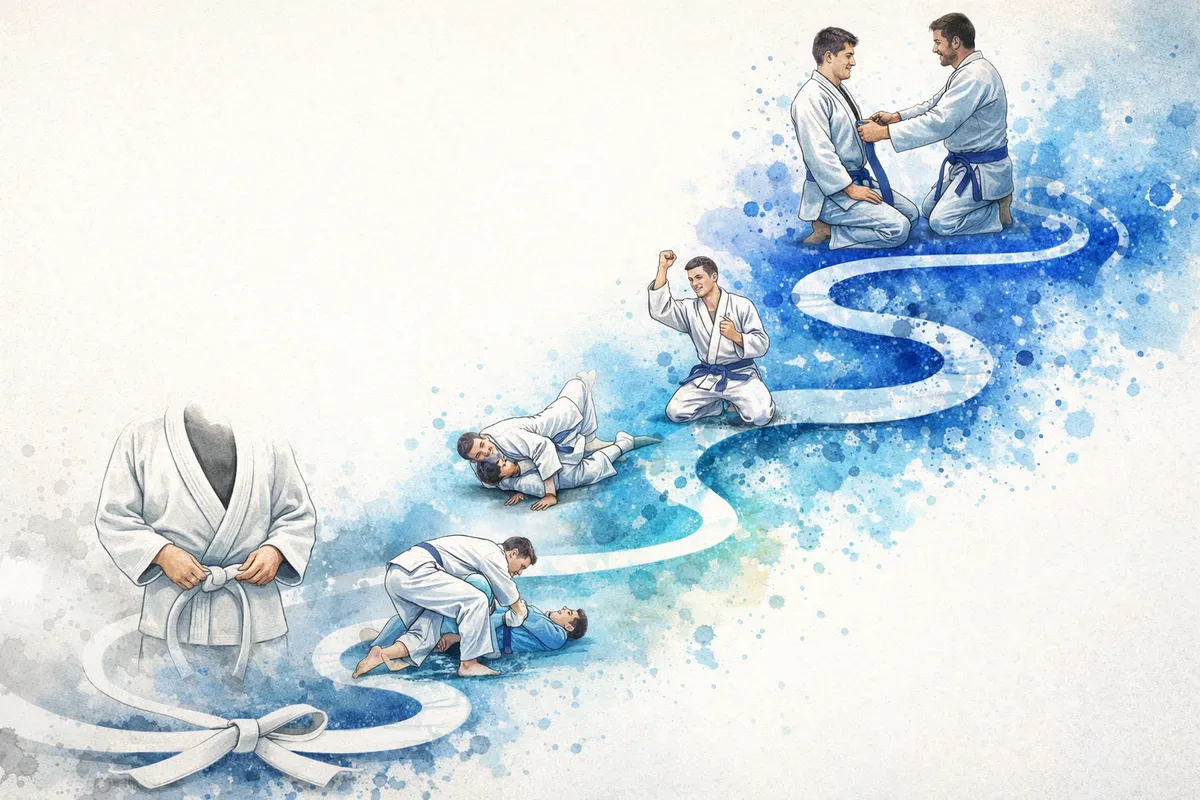
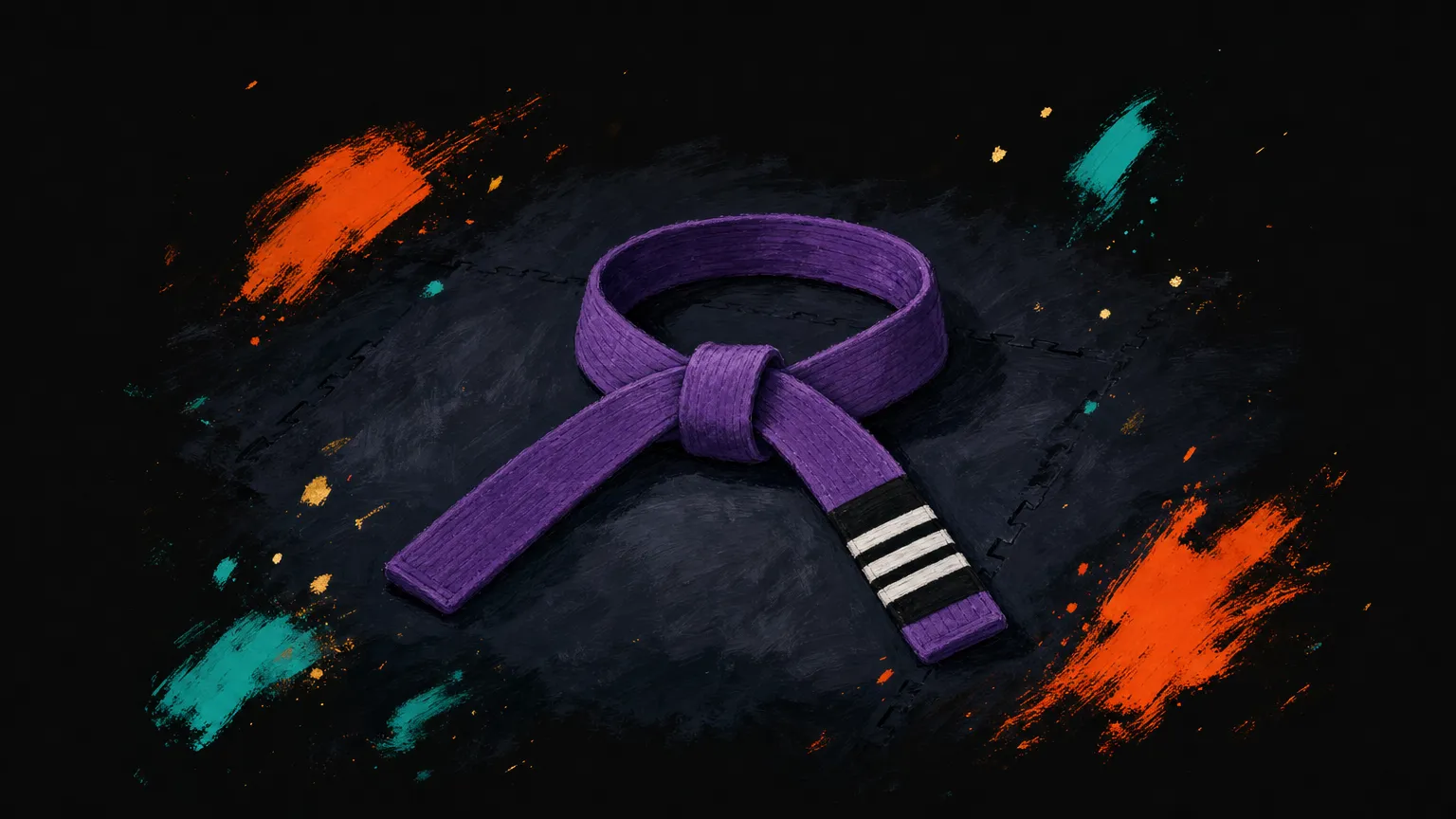
Purple is the third adult belt in BJJ, after white and blue and before brown and black. It's where most people start calling you an advanced student. At blue belt you collected techniques; at purple they start to connect. You have a game of your own, your attacks chain into each other, and on a good night you give the brown belts real trouble.
How long does it take? Under IBJJF rules you must be at least 16, and an adult has to spend at least 2 years at blue belt. Most people spend 2 to 4 years at blue. Add the 1 to 2 years most people spend at white, and purple usually comes 3 to 6 years after the first class.
The short version: purple belt means your techniques work together. You don't just know an armbar, a triangle and an omoplata; you know how one leads into the next.
How Long Does It Take to Get a Purple Belt?
| Purple belt | Time |
|---|---|
| IBJJF minimum age | 16 |
| Minimum time at blue | 2 years |
| Typical time at blue | 2–4 years |
| From first class | 3–6 years |
| Minimum time at purple | 1.5 years |
The IBJJF minimums are a floor, not a schedule. Your professor decides when you're ready, and the IBJJF only refuses to recognize a promotion that comes too early. The 2-year rule applies to adults. Juvenile athletes aged 16 and 17 have no minimum time at white or blue belt, and an adult who wins the IBJJF World Championship at blue belt has no minimum either. Former kids and juvenile belts get shorter minimums too; our IBJJF graduation requirements guide lists them.
What moves the date most:
- How often you train. Three or four sessions a week moves much faster than one or two.
- Consistency. A year of steady training beats two years of stops and starts.
- Your background. Wrestlers and judoka tend to move faster, because takedowns and top pressure come built in.
- Your academy. Some gyms promote by curriculum, others by feel, and standards differ between affiliations.
What a Purple Belt Should Know
No federation publishes a purple belt curriculum. Every professor has their own standard, but these are the skills most of them look for:
- An A-game. You have a guard you can play against anyone, with sweeps and submissions that link together, and a passing style that works on people your size.
- Chains, not single moves. Your attacks flow: armbar to triangle to omoplata from guard, or a back take that sets up the choke. Our triangle choke guide shows a full chain.
- Escapes that turn into attacks. At blue belt, escaping mount or side control was the goal. At purple, the escape is the start of your offense.
- A second passing style. If you pass with pressure, you also have a looser, faster option, and the reverse. Our guard passing guide covers both.
- Leg lock literacy. At purple you can't use heel hooks in IBJJF events, but you'll meet them in no-gi rolls and submission-only events. Know the entries and the defenses.
- A plan for the start of the match. You have a takedown or a guard pull you trust, and you know the scoring.
- The ability to explain it. Many academies let purple belts help with the beginners' class. If you can teach a technique to a white belt, you understand it.
Purple Belt in Competition
Under IBJJF rules, adult purple belt matches last 7 minutes, one minute longer than at blue. Masters divisions are shorter; see our IBJJF rules guide for every time.
The legal techniques are the same as at blue belt. Wrist locks are legal, and knee bars, toe holds, calf slicers, biceps slicers and heel hooks are still banned until brown belt. Our IBJJF illegal techniques guide has the full table.
Juvenile competitors aged 16 and 17 can hold a purple belt too. But brown belt has a minimum age of 18, so a juvenile purple belt has to wait for the adult division before moving up.
The Purple Belt Plateau
Purple belt can be frustrating in a new way. The blue belts you used to tap now know your game and set traps for it. The browns and blacks can see your A-game coming. Progress feels slower, because every gain is a detail rather than a whole new technique.
What helps:
- Pick one position per quarter. Spend three months on one guard, one pass or one escape, and drill it until it holds up against everyone.
- Look at where you get stuck. Write down after each class where you lost position or got tapped. After a month, the pattern is obvious.
- Roll to learn, not to win. Start in your worst positions on purpose. Your weaknesses are your professor's checklist for brown belt.
- Compete if you enjoy it. Results show you and your professor where your game stands against people at your belt.
How to Get From Purple to Brown
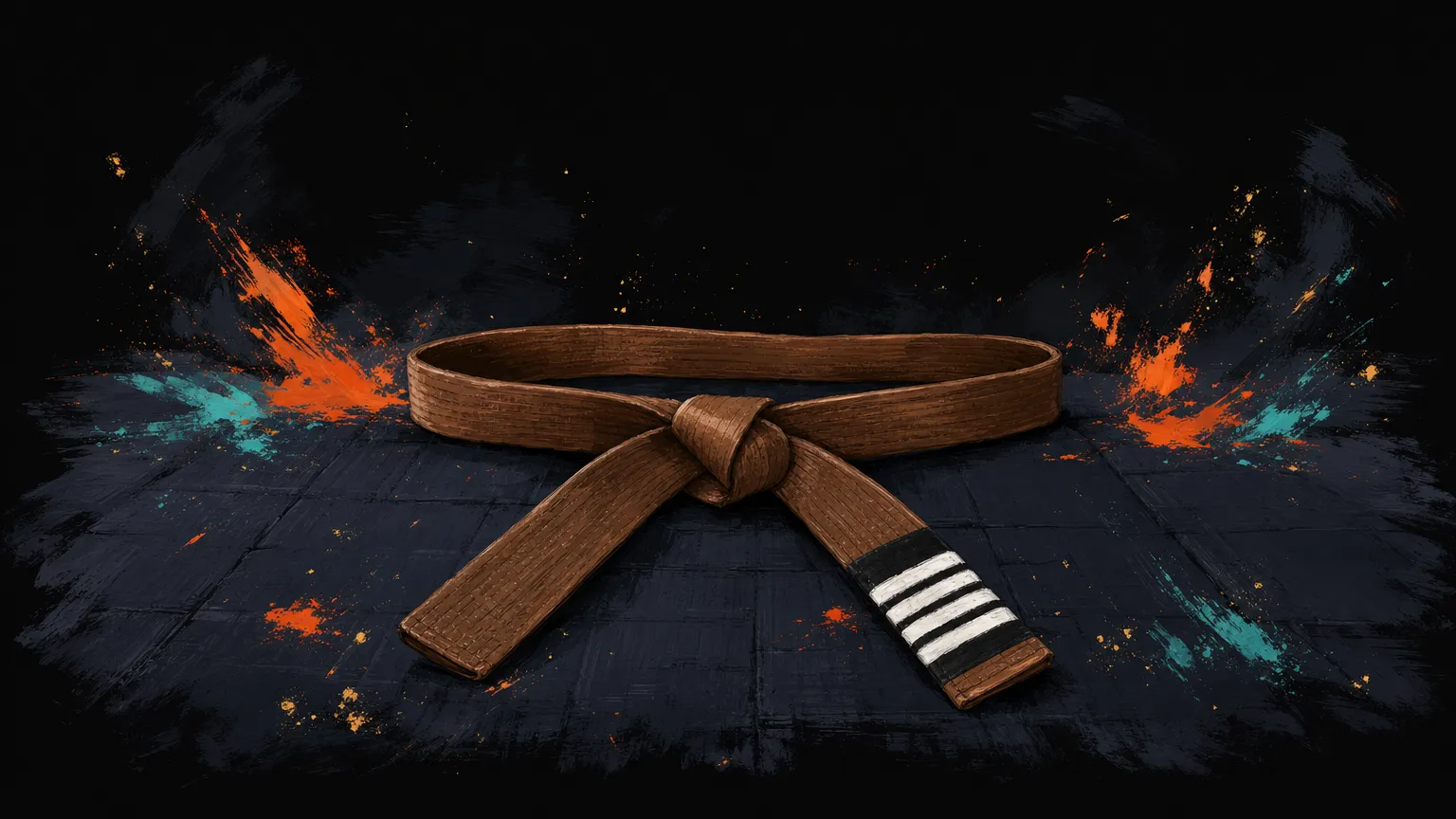
Brown belt has an IBJJF minimum age of 18 and needs at least 1.5 years at purple. The only exception to the time is the adult IBJJF Purple Belt World Champion, who has no minimum. Most people spend 2 to 3 years at purple.
What professors usually want to see before brown:
- Few obvious holes. No position where a good purple belt can reliably shut you down.
- Consistency against purple and brown belts, not just the newer students.
- Leadership. You help newer students, warm the class up, and keep the room safe.
Our brown belt guide covers what changes at the next belt, including the leg locks that become legal.
Purple Belt FAQ
How long does it take to get a purple belt in BJJ?
Usually 3 to 6 years from your first class. Under IBJJF rules an adult needs at least 2 years at blue belt, and most people spend 2 to 4.
What is the minimum age for a purple belt?
16 under IBJJF rules. In the year a kid turns 16, grey, yellow and orange belts convert to blue, and a green belt can go to blue or straight to purple, at the professor's discretion.
How many stripes do you need before purple belt?
Most academies give up to four stripes at blue belt, and a fourth stripe usually means purple is close. The IBJJF divides each colored belt into four degrees but leaves it to the professor whether to use them, so some gyms don't use stripes at all.
Is purple belt an advanced belt?
Yes. Most people consider purple belt the start of the advanced ranks, because your techniques connect into a game of your own.
Can a purple belt teach BJJ?
Many academies let purple belts help with beginners' or kids' classes. Belt promotions are a different matter: the IBJJF requires every white to brown belt's membership to be approved by an IBJJF-affiliated black belt professor.
How long do you stay at purple belt?
At least 1.5 years as an adult under IBJJF rules, and usually 2 to 3 years.
Sources
- IBJJF Graduation System: minimum ages and times, stripes, and the June 2026 revision
- IBJJF Books & Videos: the rules book, match times and the illegal techniques table
- IBJJF graduation requirements: every exception to the minimum times
Counting down to purple? Rollbook keeps a belt timeline of every stripe and promotion, and shows how many days and logged sessions you have at your current belt. Rollbook is free on iOS and Android.
Oss!