By Philipp — Rollbook · Updated November 6, 2026
The Arm Triangle Choke: How to Finish It, Setups and Escapes
The arm triangle chokes your opponent with their own shoulder and your arm. How it works, how to finish it from mount and side control, the setups, the mistakes that make it fail, how to escape it, and its judo roots in kata-gatame.
On this page
What Is the Arm Triangle?
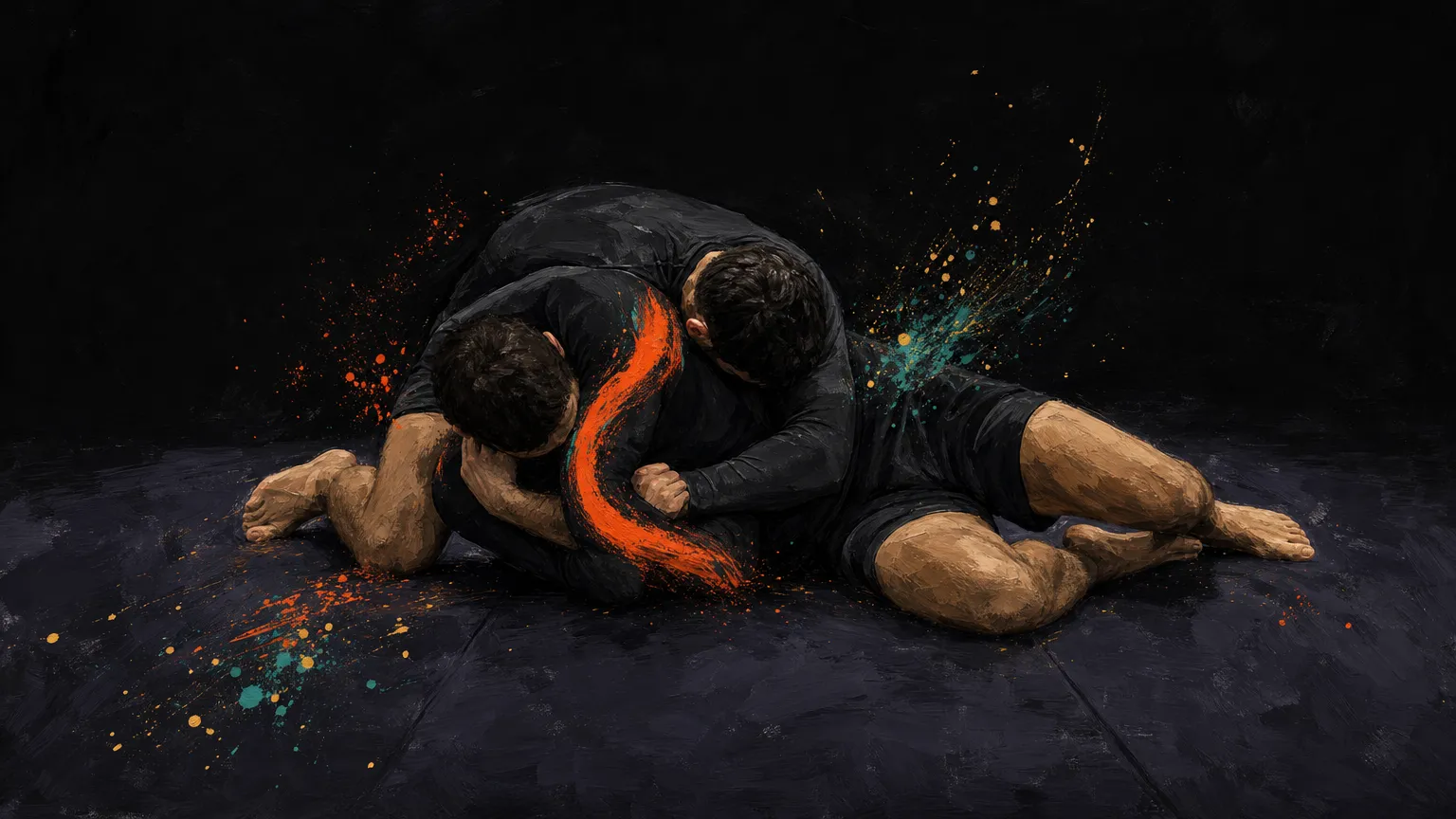
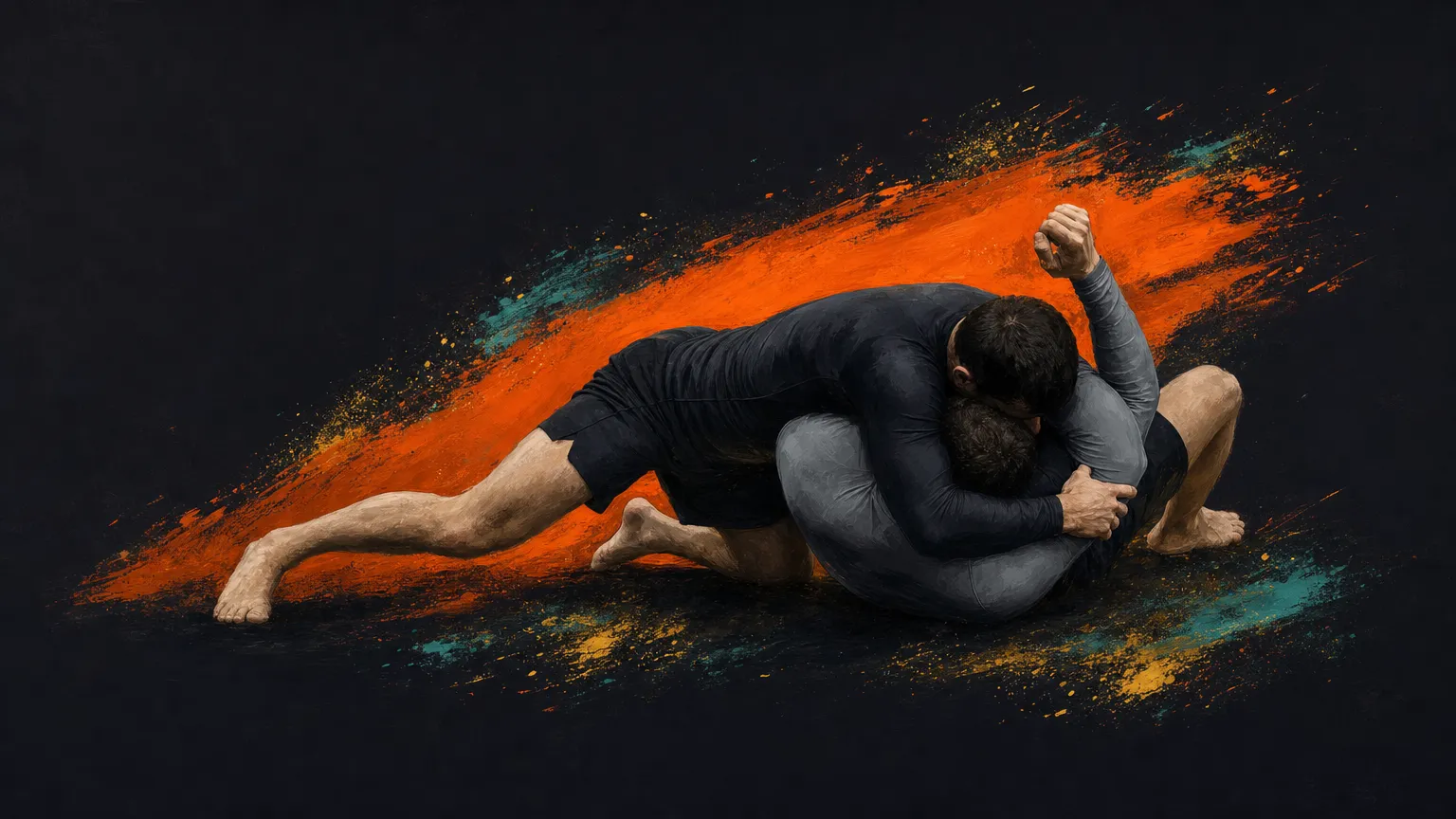
The arm triangle is a blood choke. You trap your opponent's head and one of their arms together inside your arms, so their own shoulder presses one side of their neck and your arm presses the other. That shuts off the carotid arteries on both sides.
It's also called the head and arm choke or the side choke. It works like the triangle choke, with your arms instead of your legs. The same family includes the darce and the anaconda, which you hit from the front headlock. This guide covers the classic version from mount and side control. Our guide to BJJ submissions covers every other choke and lock.
The arm triangle in one sentence: their arm pushed up against their head, your head pinning it there, your hands locked around their head and arm, and your body beside them, driving their shoulder into their neck.
Where It Comes From: Kata-Gatame
Judo knows the position as kata-gatame, the shoulder hold. It's one of the pinning techniques (osaekomi-waza) of Kodokan judo and a variation of the scarf hold, kesa-gatame: when the person underneath frees the arm you were holding, you push that arm up against their head and pin it there with your head and shoulder.
In judo, kata-gatame is mainly a pin that scores by holding it, though squeezing it can also win as a choke. In BJJ and MMA it's mostly used as a choke, and that's where the names arm triangle and head and arm choke come from. For more on how the two arts differ, see our BJJ vs judo guide.
How to Finish the Arm Triangle From Mount
- Push the arm across. When your opponent pushes on your chest with a straight arm, push their elbow up and across their face, so their upper arm ends up against the side of their neck.
- Pin it with your head. Drop your head to the mat right next to theirs, with the side of your head against their arm, so the arm can't come back down.
- Wrap and lock. Slide your arm under their neck, around their head and the trapped arm, and lock your hands palm to palm.
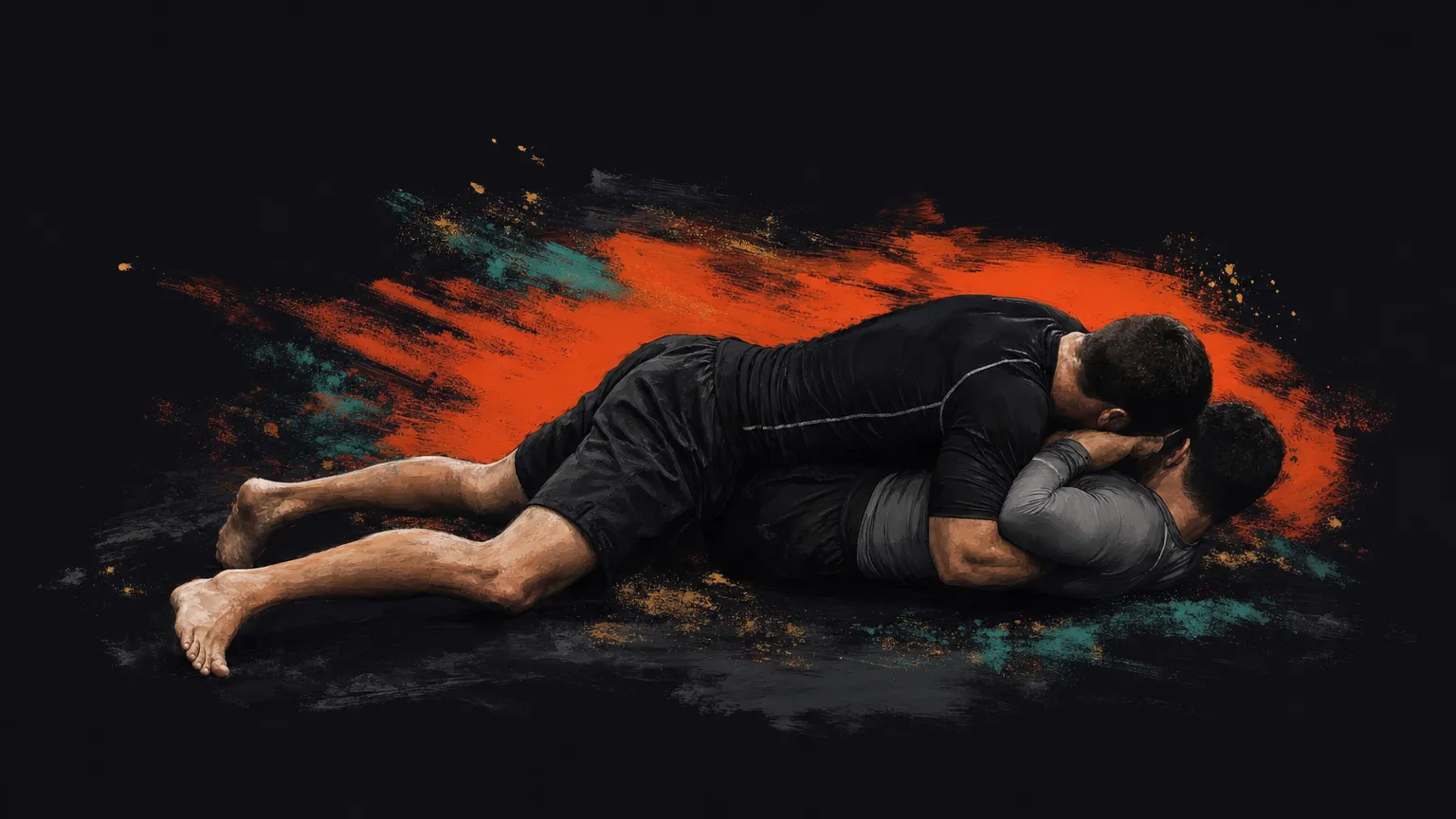
- Step off to the side. Slide off the mount to the side of their trapped shoulder and drop your hips to the mat. You're now beside them, chest to chest, with your chest driving their shoulder into their neck: kata-gatame.
- Squeeze. Spread your legs wide for base, keep your hips low and squeeze your elbows together. The pressure comes from your chest and hips, not just your arms.
- Let go at the tap. A tight arm triangle can put someone to sleep in seconds.
Safety: The arm triangle is a blood choke, and people can go out before they realize they're in trouble. Squeeze steadily in training, watch your partner, and let go the moment they tap or go limp.
Arm Triangle Setups
From Mount
The classic entry. People trying to escape the mount push on your chest or hips with a straight arm. That arm is the one you push across their face. The longer you can hold the mount, the more often they'll give it to you.
From Side Control
When your opponent's near arm comes up to push your head or your face away, push it up against their head and pin it there with your head. That's judo's move from the scarf hold to kata-gatame, and you're already on the side you finish from.
From Top Half Guard
You can lock the arm triangle while they still have one of your legs trapped in half guard, but it rarely finishes there. Lock your hands first, then free your leg and slide off to the side to finish.
From the Front Headlock: the Darce and the Anaconda
When their head and one arm are in front of you, after a sprawl or when they turtle, the same idea becomes the darce or the anaconda. They thread the choking arm differently. Our darce guide shows both.
Common Arm Triangle Mistakes
- Staying in mount when it won't finish. Some arm triangles finish from mount, but most need you to step off to the side, where your chest can drive their shoulder into their neck.
- The arm isn't across far enough. If there's space between their shoulder and their neck, push the elbow further across before you lock your hands.
- Lifting your head. Your head keeps their arm in place. If it comes up, they pull the arm back out.
- Squeezing with your arms only. Drop your hips and drive with your chest. Arm strength alone burns out fast.
- Locking too early. Pin the arm with your head before you go for the lock, or they'll slip out while you grip.
How to Escape the Arm Triangle
Before it's locked:
- Don't push on the person mounting you, or holding you in side control, with a straight arm. Keep your elbows in and your frames short.
- If your arm gets pushed across your face, pull your elbow back down toward your hip right away, before their head drops next to yours.
Once their hands are locked:
- Keep them where they are. Hook their leg with yours so they can't step off the mount or out of half guard. Without the side position, the choke stays much weaker.
When it's locked from the side:
- Tap. Once their hips are down and their chest is driving into you, you have seconds, not minutes.
Is the Arm Triangle Legal in IBJJF?
From age 16 up, yes, at every belt, in the gi and in no-gi. IBJJF's table of illegal techniques bans the arm triangle for its two youngest age groups, 4 to 12 and 13 to 15. The ban covers the whole family, including the darce and the anaconda. For every banned technique by belt and age, see our IBJJF illegal techniques guide.
Arm Triangle vs Triangle Choke
Both are blood chokes that use your opponent's own shoulder against one side of their neck:
- Triangle choke: you squeeze with your legs, usually from guard, with one of their arms inside your legs and the other outside.
- Arm triangle: you squeeze with your arms, usually from the top, with their arm pinned against their head.
One more choke from the top works on a similar idea: the Von Flue choke, where the arm your opponent wraps around your neck in a guillotine ends up working against them.
Arm Triangle FAQ
Is the arm triangle the same as the head and arm choke?
Yes. Arm triangle, head and arm choke and side choke all describe the same family: their head and one arm trapped together. In judo, the position is kata-gatame.
Why can't I finish the arm triangle from mount?
Sometimes you can, but from mount there's usually still space between their shoulder and their neck, and they can keep pushing on your head. Step off to the side of their trapped shoulder and drop your hips.
Is the arm triangle a blood choke?
Yes. Their shoulder and your arm press the carotid arteries on both sides of the neck, cutting the blood flow to the brain.
Is the arm triangle legal for kids?
Not in IBJJF. It's banned for ages 4 to 12 and 13 to 15. From 16, it's legal at every belt.
How do you escape the arm triangle?
Pull your trapped arm back down before they lock their hands, and keep them in mount or half guard by hooking a leg. Once it's locked from the side, tap.
What's the difference between the arm triangle, the darce and the anaconda?
All three trap the head and one arm. The arm triangle is done from the top, from mount or side control. The darce and the anaconda come from the front headlock and thread the choking arm through differently.
Sources
- Arm triangle choke (Wikipedia): the mounted arm triangle, the side choke, and the darce and anaconda variations
- Kata gatame (Wikipedia): judo's shoulder hold, a Kodokan pinning technique, and its use as a choke
- IBJJF Books & Videos: the rules book and the "Illegal moves by age and category" table (January 2024 edition)
Working on your top game? Log your mount and side control rounds in your Rollbook technique journal, and see how often the arm triangle lands in sparring. Rollbook is free on iOS and Android.
Oss!