By Philipp — Rollbook · Updated November 5, 2026
BJJ Submissions: Every Choke, Arm Lock and Leg Lock Explained
The BJJ submissions you'll meet on the mat, from the rear naked choke to the buggy choke and the heel hook: how each one works, where it's done from, and at which belt IBJJF lets you use it.
On this page
How BJJ Submissions Work
A submission ends the match when your opponent taps, says "tap" or the referee stops it. Almost every submission in BJJ is a choke or a joint lock.
- Chokes squeeze the neck. A blood choke presses the carotid arteries on both sides and can put someone to sleep in seconds. An air choke presses the windpipe.
- Joint locks force a joint past its range. Some straighten it, like the armbar on the elbow. Others twist it, like the kimura on the shoulder or the heel hook on the knee.
- Compression locks, the bicep and calf slicers, crush a muscle against a bone.
Submissions decide a lot of matches at the top level. At ADCC 2026, 50 of the 103 matches outside the absolute ended in a submission. Chokes from back control (19), straight ankle locks (6) and triangles (6) were the most common.
This guide covers the submissions you'll meet most often, grouped by type. Each one links to our full guide where we have one, and says at which belt and age IBJJF allows it. For the positions and slang around them, see our BJJ terms glossary.
Safety: Tap early, and let go the moment your partner taps. A choke can put someone out in seconds, and a joint lock can injure a shoulder or a knee before it hurts. Apply every submission slowly in training.
Chokes
Rear Naked Choke
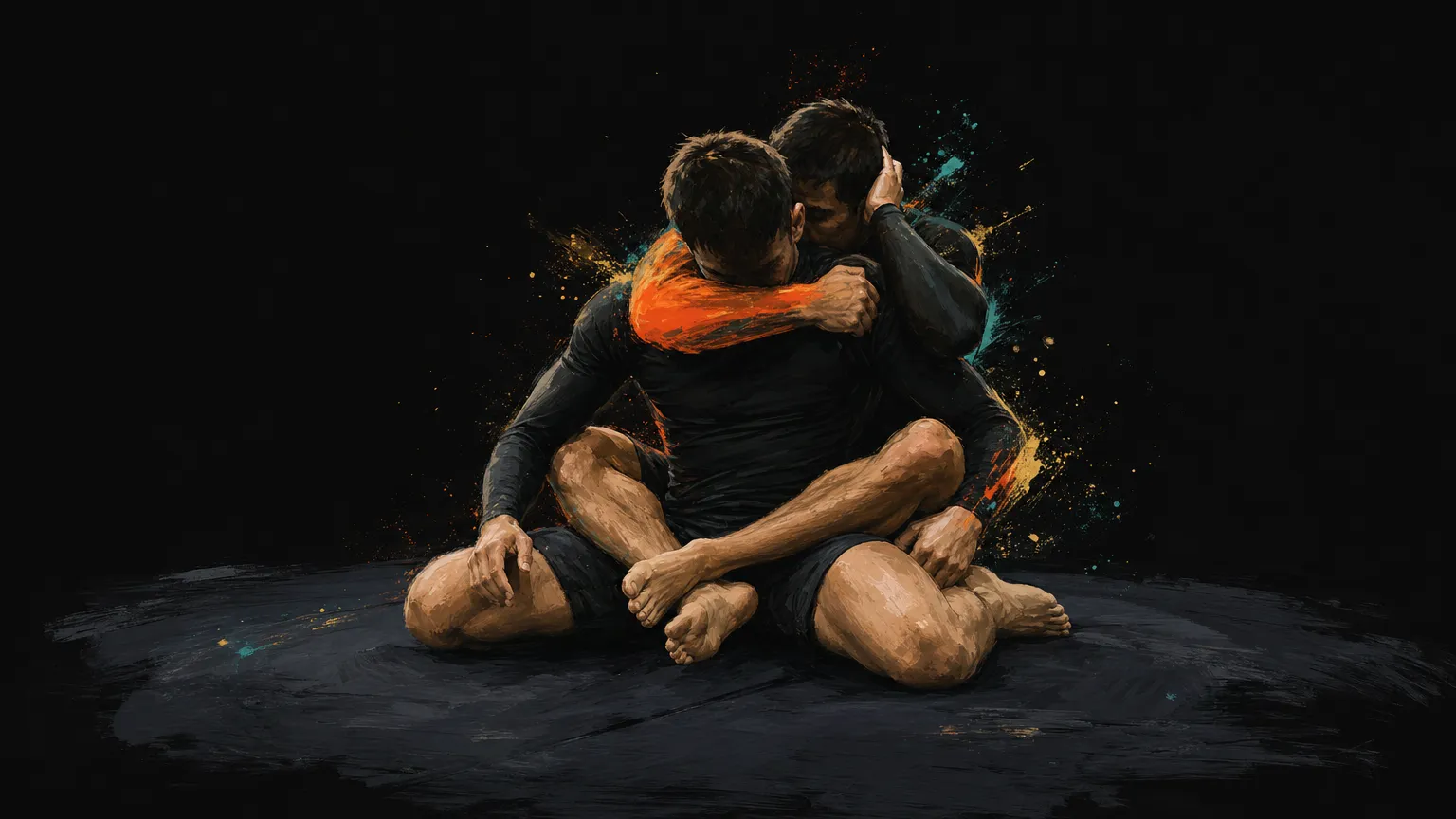
A choke from behind. Your arm wraps their neck with your elbow under their chin, your hand grips your other biceps, and that hand goes behind their head. It's the main finish from back control: four of the nine ADCC 2026 finals ended with one. Legal at every age in IBJJF. Full guide: rear naked choke.
Guillotine
A choke from the front. Their head goes under your armpit, your forearm under their chin, and your hands lock. It works standing, from closed guard, half guard and mount, with arm-in, high-elbow and ten-finger versions. IBJJF bans it for kids aged 4 to 15. Full guide: guillotine.
Triangle Choke
A choke with your legs. Their head and one arm are trapped inside a figure-four of your legs, and their own shoulder presses one side of their neck. It's the classic finish from closed guard. IBJJF bans the triangle when you pull the head for kids aged 4 to 15. Full guide: triangle choke.
Arm Triangle
The same idea with your arms. You trap their head and one arm together, so their shoulder and your arm squeeze the two sides of the neck. From mount, you scoop their head with their arm pushed up beside it, lock your hands, then step off to the side to finish. In judo, the side version comes from the kata-gatame hold. IBJJF bans it for kids aged 4 to 15. Our arm triangle guide covers the finish and the escapes.
Darce and Anaconda
Two arm triangles. The darce usually comes from top half guard, side control or a turtled opponent, the anaconda from the front headlock. In the darce, your arm goes under their armpit first and your hand comes out past the far side of their neck. In the anaconda, your arm goes under the neck first and your hand comes out through their armpit, and you finish with a roll. As arm triangles, both are banned for kids aged 4 to 15. Full guide: darce and anaconda.
Ezekiel
A forearm choke that even works from inside someone's guard. One arm goes behind their head with its hand gripping your other sleeve, and your other forearm drives across their throat. Without a gi, you grip your forearm or wrist instead. In judo it's sode guruma jime, the "sleeve wheel choke". It's named after the judoka Ezequiel Paraguassu, who used it at Carlson Gracie's academy in 1988 while preparing for the Seoul Olympics. IBJJF bans it for kids aged 4 to 15. Our Ezekiel guide covers the gi and no-gi grips.
Cross Collar Choke
The basic gi choke. Both hands grip deep in their collar with your wrists crossed, and tightening the cross presses your wrists into both sides of the neck. It works from mount and closed guard. From mount, it was the signature finish of Roger Gracie's career: see Roger Gracie's mount. The cross collar choke from closed guard is in our closed guard attack system.
Bow and Arrow Choke
A gi choke from the back. One hand grips deep in their collar, the other grabs their leg or pants, and you stretch your body out to the side so their body bends like a bow. It's a favorite gi finish from back control.
North-South Choke
A choke from north-south, with your chest on theirs and your head toward their feet. Your arm wraps under their neck and your shoulder and chest drive into it. It was Marcelo Garcia's second signature finish: he submitted Masakazu Imanari with it in 2025. See our Marcelo Garcia breakdown.
Von Flue Choke
The counter to a guillotine. When your opponent holds an arm-out guillotine after you've passed to side control on the side away from their choking arm, you lock your hands and drive your shoulder into their neck. It's named after Jason Von Flue, who put Alex Karalexis to sleep with it in the UFC in 2006. Our guillotine guide shows when it happens, and our Von Flue guide how to finish it.
Gogoplata
A shin choke from guard, usually from a high guard such as rubber guard. You slip one shin in front of their throat, lock your hands behind their head and pull. The name comes from gogó, Portuguese for the Adam's apple area. Eddie Bravo popularized the locoplata, where your other foot pushes the choking foot. It's rare in MMA. Full guide: the gogoplata.
Peruvian Necktie
A modified guillotine from the front headlock. You lock an arm-in grip around their head and one arm, then drape your legs over their back, and the weight of your legs adds to the squeeze. It's named after Tony DeSouza, a Peruvian-born MMA fighter whose trademark it was. C.B. Dollaway used it to beat Jesse Taylor in the UFC. Full guide: the Peruvian necktie.
Buggy Choke
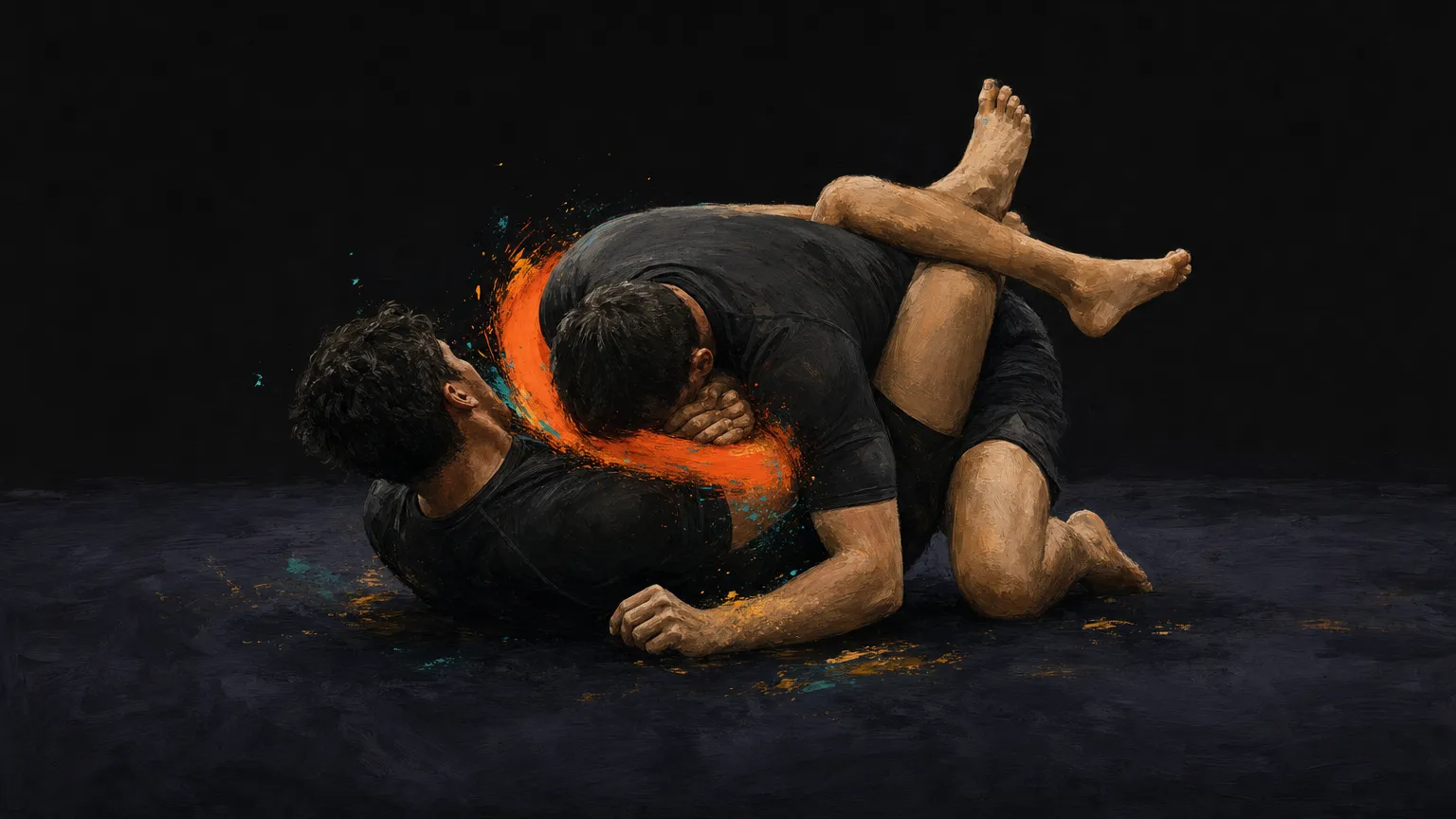
A choke from the bottom of side control, a position where nobody expects one. You turn onto your side toward them, wrap your outside arm around their head, and lock your outside leg over your arm. Your arm and leg squeeze the two sides of their neck. Who invented it is disputed: Austin Hardt, then a white belt at Ralph Gracie's academy, made it famous with a video, and the Ruotolo brothers teach a version with the legs triangled. Full guide: the buggy choke.
Arm and Shoulder Locks
Armbar
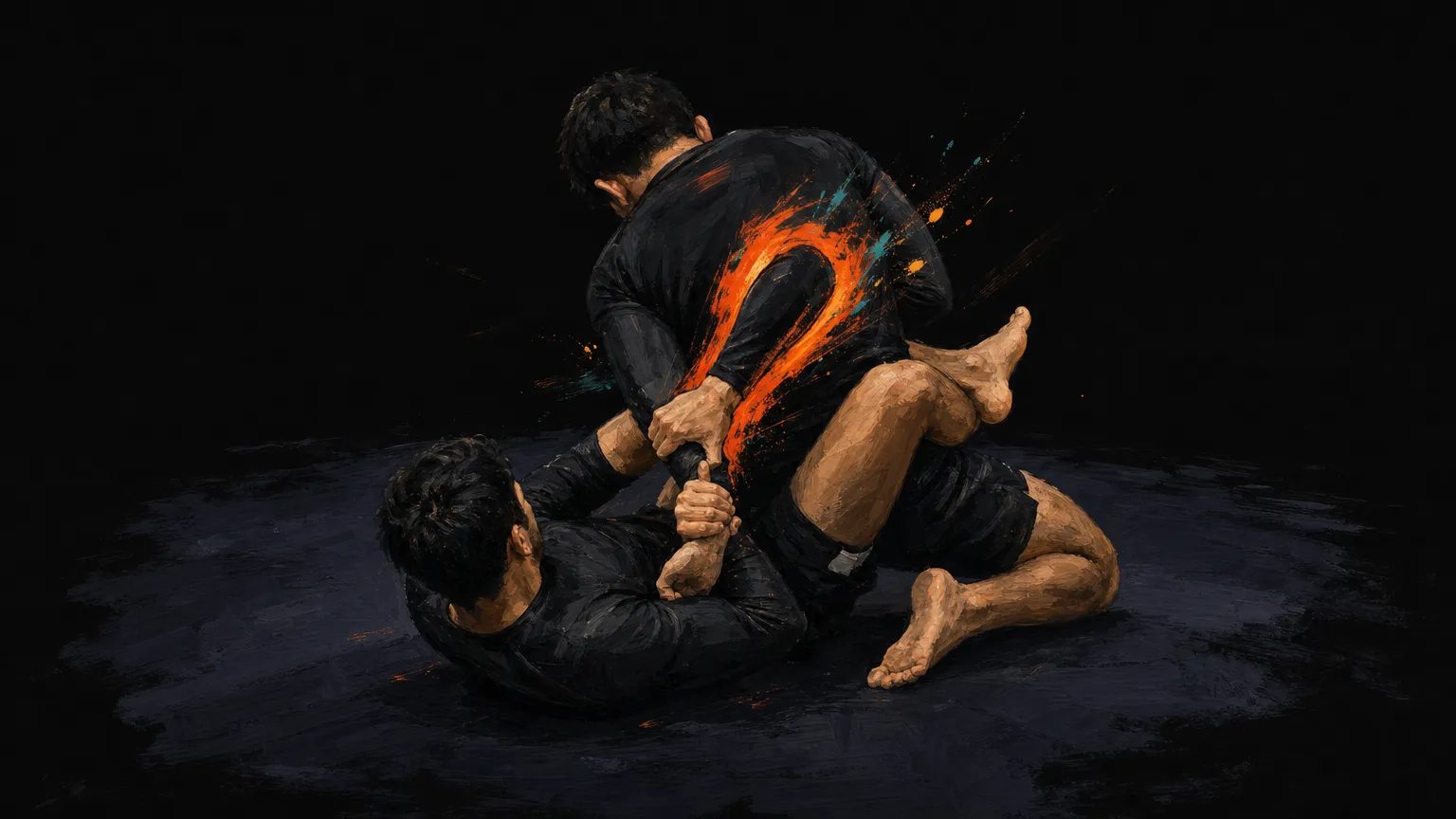
Straightens the elbow past its limit. Their arm is trapped between your thighs, their wrist held to your chest, and their elbow against your hips. Lifting your hips finishes it. In judo it's juji-gatame. You can hit it from closed guard, mount and the back. Legal at every age in IBJJF. The guard armbar and its chain with the triangle and omoplata are in our closed guard attack system.
Kimura
A shoulder lock. You grab their wrist with a figure-four grip and turn their bent arm up behind their back. It works from guard, half guard, side control, north-south and the back. It's named after Masahiko Kimura, who broke Hélio Gracie's arm with it in 1951. Legal at every age. Full guide: kimura.
Americana
The kimura's mirror image, also called the keylock. Their arm is pinned on the mat near their head with the elbow bent, and you slide their hand toward their hip while lifting the elbow. It's usually done from mount or side control. Legal at every age. Our kimura guide compares the two.
Omoplata
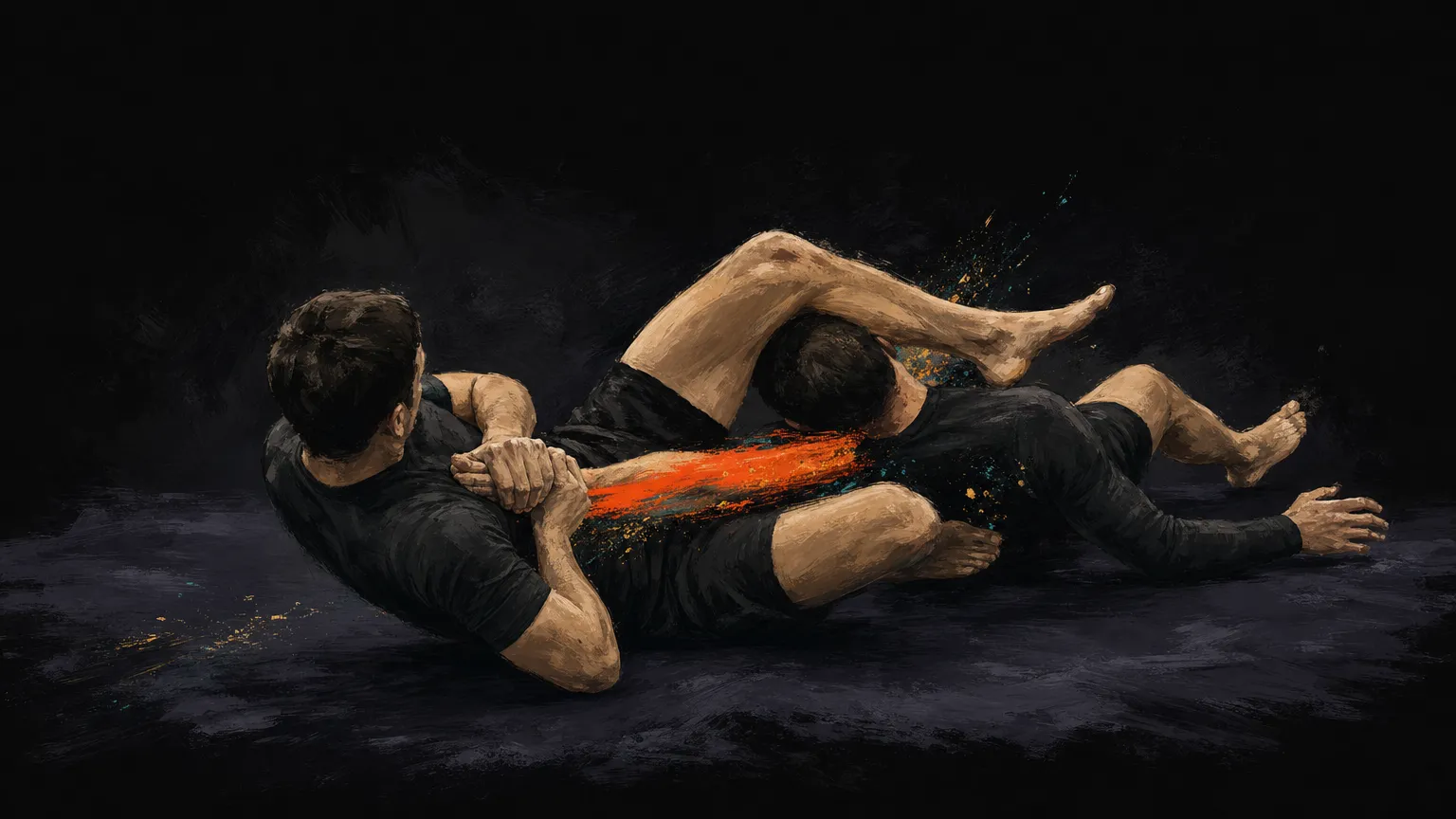
A shoulder lock with your legs. From guard, one leg goes under their armpit and over their back as you turn toward their legs. Their arm ends up trapped by your legs, and leaning forward pushes it away from their back, straining the shoulder. In judo it's ashi-sankaku-garami, in catch wrestling the coil lock. IBJJF bans it for kids aged 4 to 15. Our omoplata guide covers the setups and the defense.
Wrist Lock
Bends the wrist past its range, often from a grip you already have. IBJJF bans it for kids, juveniles and adult white belts, and allows it from adult blue belt.
Bicep Slicer
A compression lock. You put your forearm or shin in the crook of their elbow and fold the arm over it, crushing the biceps. IBJJF allows it only for brown and black belts.
Leg Locks
Straight Ankle Lock
Their foot goes in your armpit and your forearm under their Achilles tendon. Driving your hips forward bends the foot down and strains the ankle. It's the first leg lock most people learn: six ADCC 2026 matches ended with one. IBJJF allows it from age 16 at every belt and bans it for kids aged 4 to 15. Full guide: leg locks.
Kneebar
The armbar of the leg. You trap their leg between your legs, their kneecap facing you, and straighten it with your hips. IBJJF allows it only for brown and black belts. Full guide: calf slicer and kneebar.
Toe Hold
A figure-four grip on the foot that twists the ankle. In judo it's ashi-dori-garami. IBJJF allows it only for brown and black belts.
Heel Hook
Twists the foot, and the twist travels up to the knee. That makes it the most restricted submission in IBJJF: only adult brown and black belts can use it, and only in no-gi. See our heel hook defense guide before you train it.
Calf Slicer
A compression lock on the lower leg. Your shin goes behind their knee and you fold their leg over it, crushing the calf. IBJJF allows it only for brown and black belts. Full guide: calf slicer and kneebar.
Which Submissions Are Legal at Your Belt?
IBJJF's table of illegal moves opens up the submissions in steps:
- Kids (4 to 15): the rear naked choke, the triangle (without pulling the head), collar chokes, the armbar, the kimura and the americana. No leg locks, wrist locks, guillotines, arm triangles, Ezekiels or omoplatas, and kids aged 4 to 12 can't stretch the legs apart.
- Juveniles (16 and 17) and adult white belts: add the guillotine, the arm triangle and its cousins, the Ezekiel, the omoplata and the straight ankle lock.
- Adult blue and purple belts: add wrist locks.
- Brown and black belts: add the kneebar, the toe hold and both slicers. Heel hooks and knee reaping are legal only in adult no-gi, not in masters.
- Every age: no slams, no neck cranks (a spinal lock without a choke), no bending fingers back and no scissor takedown.
The table lists only what it bans. For a submission it doesn't name, such as the gogoplata or the Peruvian necktie, ask the event before a kids match. For every ban by belt and age, see our IBJJF illegal techniques guide.
BJJ Submissions FAQ
What is the most common submission in BJJ?
At the top level, chokes from the back. At ADCC 2026, chokes from back control made up 19 of the 50 submissions, and four of the nine finals ended with a rear naked choke.
What's the difference between a choke and a joint lock?
A choke squeezes the neck, cutting off blood to the brain or air to the lungs. A joint lock forces an elbow, shoulder, wrist, knee or ankle past its range. A choke ends in a tap or a nap, a joint lock in a tap or an injury.
Which submissions are illegal for white belts?
In IBJJF events, adult white belts can't use wrist locks, kneebars, toe holds, heel hooks, bicep or calf slicers, or squeeze the kidneys or ribs with their legs. Slams and neck cranks are banned at every belt.
Is a neck crank legal in BJJ?
Not in IBJJF events. A spinal lock without a choke is illegal at every age and belt. Other organizers write their own rules, so check the rulebook.
How many submissions are there in BJJ?
There's no fixed number, because every grip and position adds new variations. This guide covers the 25 you'll meet most often.
Sources
- Armlock (Wikipedia): juji-gatame, the americana or keylock, and the omoplata as ashi-sankaku-garami
- Leglock (Wikipedia): the straight ankle lock, kneebar, toe hold and heel hook
- Sode guruma jime (Wikipedia): the Ezekiel choke and Ezequiel Paraguassu
- Arm triangle choke (Wikipedia): the arm triangle from mount and the anaconda
- Gogoplata (Wikipedia): the name and the locoplata
- Tony DeSouza (Wikipedia): the Peruvian necktie and C.B. Dollaway's win with it
- Jason Von Flue (Wikipedia): the 2006 choke that gave the Von Flue its name
- Buggy choke (LowKick MMA): the disputed invention and the Ruotolo version
- IBJJF Books & Videos: the rules book and the "Illegal moves by age and category" table (January 2024 edition)
- ADCC 2026 results: the submission count and the most common finishes
Building your submission game? Log every submission you hit, and every one you get caught in, in your Rollbook technique journal. You'll see which ones you actually finish in sparring. Rollbook is free on iOS and Android.
Oss!