By Philipp — Rollbook · Updated November 6, 2026
The Omoplata: How It Works, Setups and Defense in BJJ
The omoplata is a shoulder lock you apply with your legs, mostly from guard. How it works, how to finish it before your partner rolls out, the best setups, how to defend it, and why it still sweeps when it doesn't finish.
On this page
What Is the Omoplata?
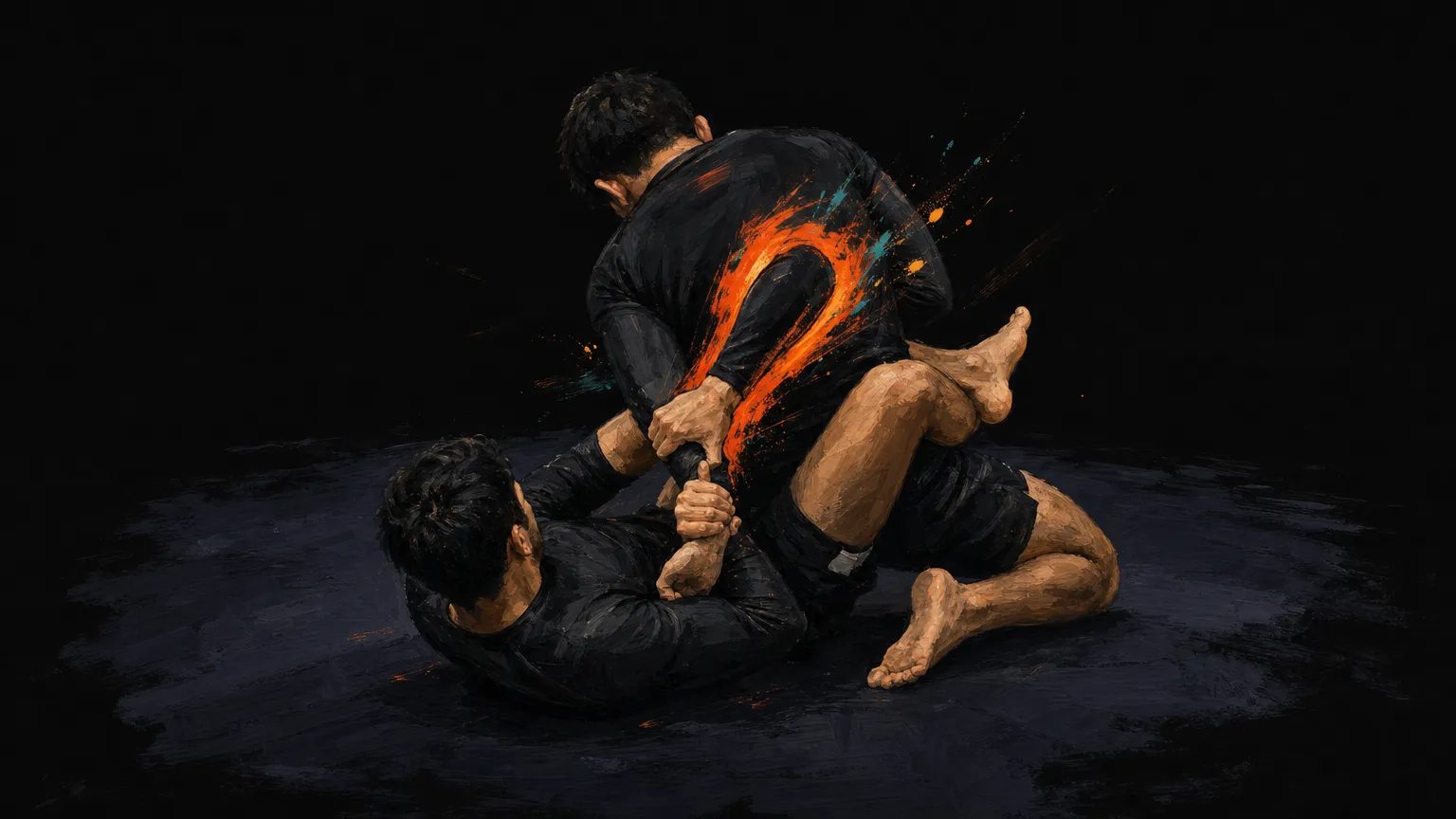
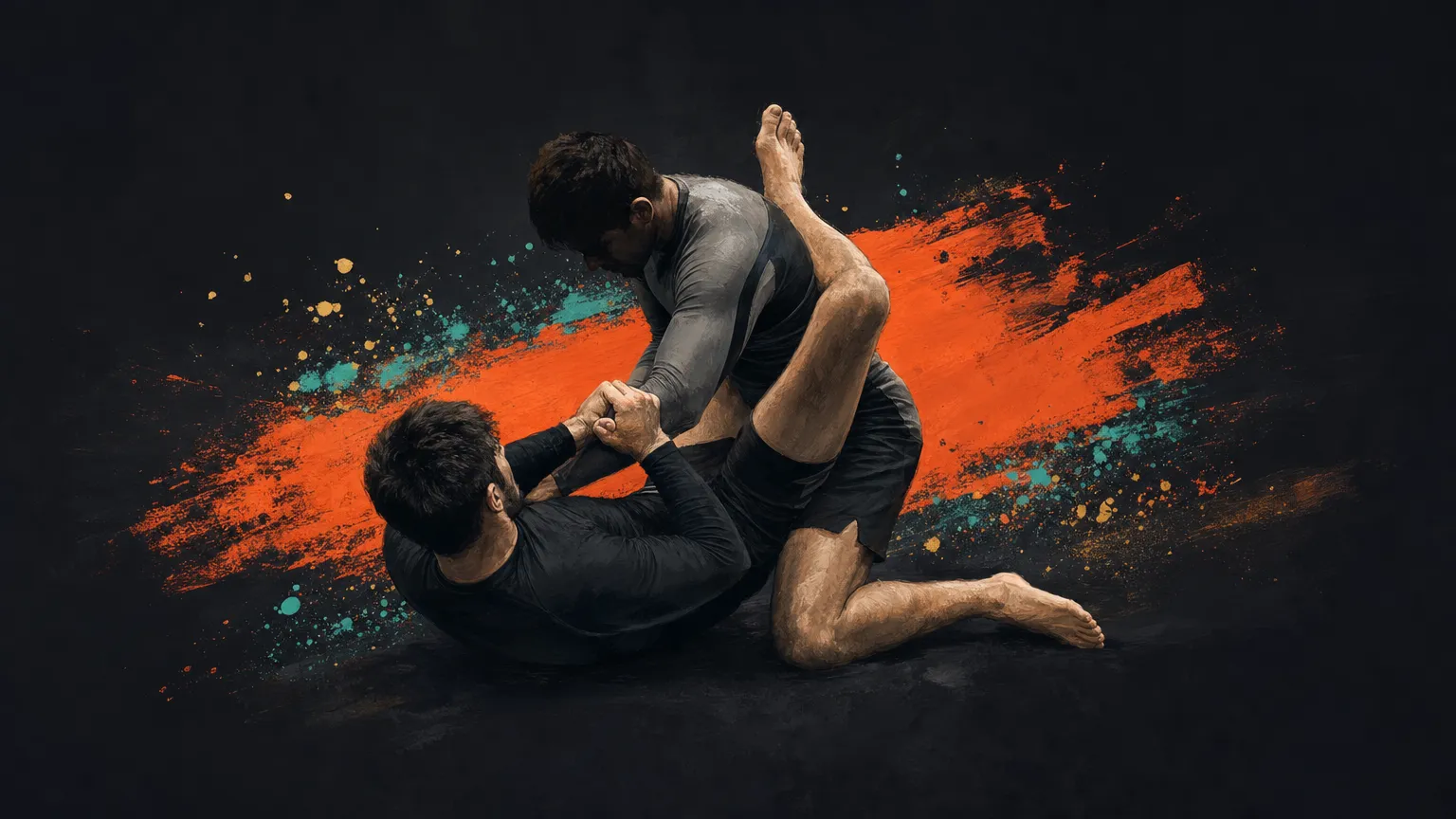
The omoplata is a shoulder lock you apply with your legs. From guard, you swing one leg over your opponent's shoulder and turn toward their legs, so their arm ends up trapped between your legs, bent at the elbow. When you sit up and lean forward, their arm is pushed away from their back and the shoulder twists inward, the same way it does in a kimura.
The omoplata is harder to finish than most locks, because your opponent can often roll out of it. But even when it doesn't finish, it sweeps them or opens up other attacks, which is why guard players love it. Our guide to BJJ submissions covers every other choke and lock.
The omoplata in one sentence: your leg over their shoulder, their bent arm trapped between your legs, their body flattened to the mat, and you sitting up and leaning forward.
Where the Name Comes From
Omoplata is Portuguese for shoulder blade. Judo calls the technique ashi-sankaku-garami, and catch wrestlers call it the coil lock. Tsunetane Oda, a judo groundwork specialist who died in 1955, was filmed demonstrating it.
You won't see it in a judo match, though, because judo competition allows chokes and elbow locks only (more in our BJJ vs judo guide). In MMA it took until August 2014 for the first omoplata finish in the UFC, when Ben Saunders submitted Chris Heatherly with it.
How to Finish the Omoplata
- Control the arm. From closed guard, grip the wrist or sleeve of the arm you want to attack and keep it close to your body.
- Turn sideways. Open your guard, put your other foot on their hip and push off, turning your body sideways to them. This gives your leg room to come up.
- Get your leg over the shoulder. Swing the leg on the side of their trapped arm over the back of their shoulder. Their arm is now caught between your legs.
- Turn toward their legs. Keep turning until your chest faces their hips and legs.
- Flatten them. Reach your near arm over their back and grab their far hip or belt, like a seatbelt. Then scoot your hips out until their shoulder drops and they fall flat on their stomach, which takes away the roll.
- Sit up and lean. Sit up, cross your feet or lock your legs, and keep their trapped hand tight to your hip. Then lean forward slowly, toward their hips. The pressure builds in the shoulder as you go.
Safety: The omoplata puts your legs, the strongest part of your body, against someone's shoulder. Lean in slowly in training and stop the moment your partner taps. A torn shoulder can take months to heal.
Omoplata Setups
From Closed Guard
The classic entry. When your opponent posts a hand on your chest or on the mat, grab that wrist, turn sideways and bring your leg over. It works best when their posture is already broken and their arm is close to your body.
From the Triangle and the Armbar
The omoplata, the triangle and the armbar form the best-known chain in guard. When your opponent postures out of a triangle or stacks you hard, let go of the lock and spin under the trapped arm into the omoplata. When they defend the omoplata, the armbar or the triangle is often back on. Our closed guard attack system shows the full chain.
From the Kimura Grip
If you have a kimura grip from guard but can't finish it, keep hold of the wrist and throw your leg over their shoulder. Both locks attack the same shoulder in the same direction, so the omoplata is often waiting right behind a failed kimura.
From Lasso and Rubber Guard
In lasso guard, your leg is already wrapped around their arm, which puts you halfway to an omoplata. Eddie Bravo's rubber guard, the guard 10th Planet Jiu-Jitsu is known for, keeps your leg high on their back, and the omoplata is one of its main attacks.
As a Sweep
When your opponent rolls forward to escape, roll with them and you'll come up on top. Many guard players go for the omoplata knowing that either the lock or the sweep will land.
Common Omoplata Mistakes
- Not flattening them. If their hips stay up, they roll out. Grab the far hip and scoot your hips out until they're flat before you sit up.
- Losing the wrist. If you let go while you turn, they pull their arm out. Keep hold of it until your leg is over the shoulder.
- Staying square. With your hips facing them, your leg can't get over their shoulder. Turn sideways first.
- Loose legs. With your legs open, they can posture up and pull the arm free. Keep your legs locked over the shoulder.
- Leaning too hard, too fast. That's how shoulders get hurt in training. Slow pressure finishes just as well.
How to Defend the Omoplata
Before their leg comes over:
- Keep your elbows in. Don't leave a hand posted on their chest or on the mat inside their guard.
- Watch for them turning sideways with a grip on your wrist. That's the moment to pull your arm back and posture up.
Once their leg is over your shoulder:
- Roll forward early. Tuck your head and roll over your trapped shoulder before they flatten you. You'll probably give up a sweep, but your shoulder is safe.
- Stay on your knees. Keep your hips up and your weight forward: as long as you're on your knees you can still roll, and once you're flat you can't.
When you're flat and they're sitting up:
- Tap. Once your hips are down and they're leaning forward, there's no safe escape left.
Is the Omoplata Legal in IBJJF?
From age 16 up, yes, at every belt, in the gi and in no-gi. IBJJF's table of illegal techniques bans the omoplata for kids aged 4 to 15, along with the arm triangle, the Ezekiel and the frontal guillotine. Juveniles (16 and 17) and adult white belts can use it. For every banned technique by belt and age, see our IBJJF illegal techniques guide.
Omoplata vs Kimura
Both are bent-arm shoulder locks that twist the shoulder inward:
- Kimura: a figure-four grip with your arms. It works from almost everywhere: guard, half guard, side control, north-south and the back.
- Omoplata: your legs instead of your arms, mostly from guard. Your legs are far stronger than their arm, but your opponent can roll out, so it's harder to finish and more often turns into a sweep.
The two work well together. When they defend the kimura from guard, the omoplata is often right there, and when they fight the omoplata, the kimura grip can be back on.
Omoplata FAQ
What does omoplata mean?
Shoulder blade, in Portuguese.
What is the omoplata called in judo?
Ashi-sankaku-garami. Catch wrestlers call it the coil lock. Judo competition allows elbow locks but no shoulder locks, so you won't see it in a judo match.
Is the omoplata legal for kids?
Not in IBJJF. It's banned for kids aged 4 to 15. From 16, it's legal at every belt.
Why doesn't my omoplata finish?
Usually because they roll out. Grab their far hip, scoot your hips out until they're flat, and only then sit up and lean forward.
How do you escape the omoplata?
Roll forward over your trapped shoulder before they flatten you, and keep your hips up so the roll stays open. Once you're flat and they're leaning forward, tap.
Who scored the first omoplata finish in the UFC?
Ben Saunders, against Chris Heatherly at UFC Fight Night 49 in August 2014.
Sources
- Armlock: the omoplata (Wikipedia): the judo and catch wrestling names, how the lock works, the seatbelt grip and Tsunetane Oda
- Ben Saunders (Wikipedia): the first omoplata finish in the UFC, against Chris Heatherly in 2014
- IBJJF Books & Videos: the rules book and the "Illegal moves by age and category" table (January 2024 edition)
Working on your guard? Log which setups land your omoplata in sparring in your Rollbook technique journal, and see which chains work for you. Rollbook is free on iOS and Android.
Oss!