By Philipp — Rollbook · Updated November 6, 2026
The Ezekiel Choke: How It Works in the Gi and No-Gi
The Ezekiel is a sleeve choke you can hit from mount, from inside someone's closed guard and even from underneath. How it works with and without the gi, the setups, how to defend it, and how a Brazilian judoka at Carlson Gracie's gym gave it its name.
On this page
What Is the Ezekiel Choke?
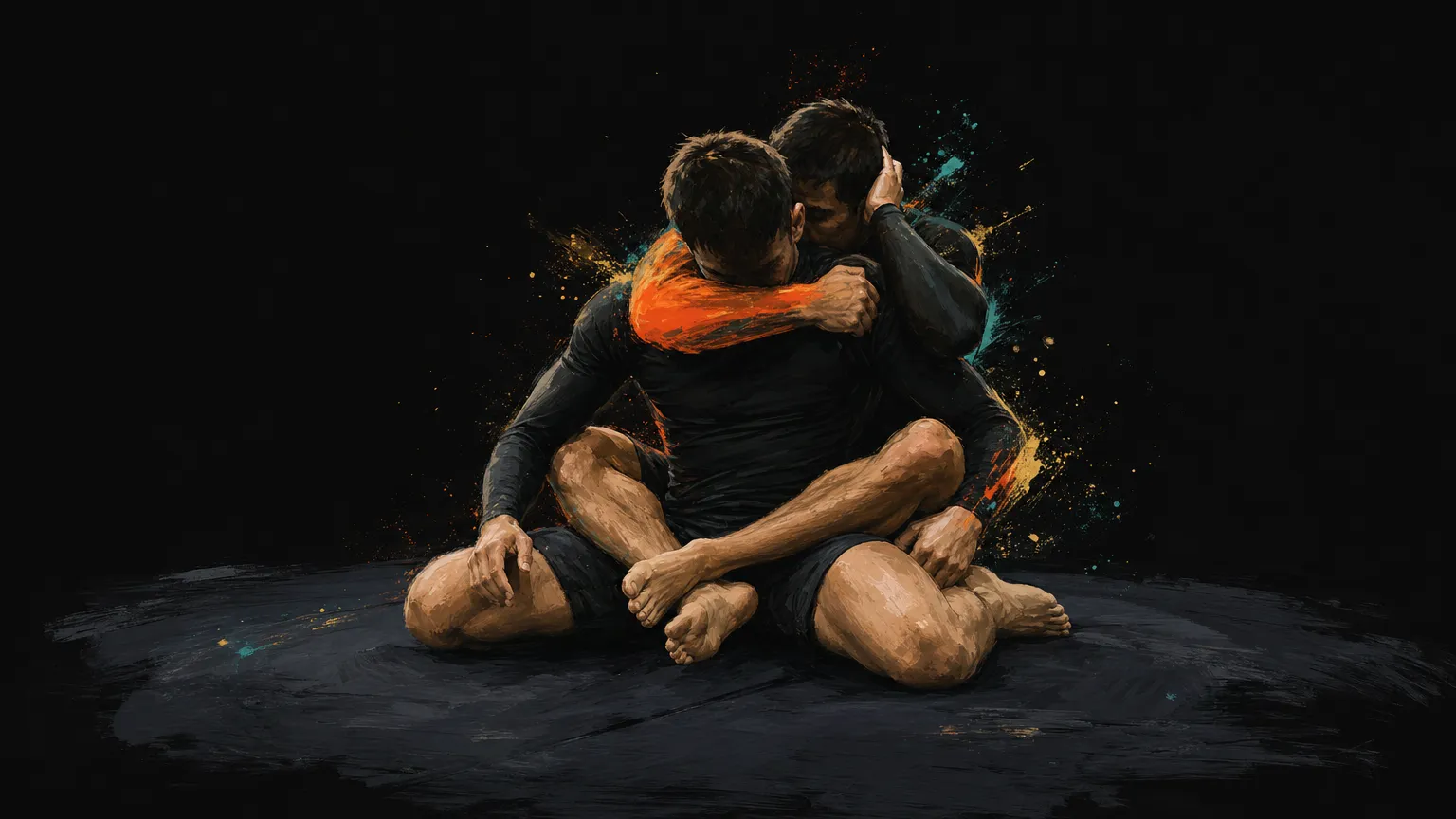
The Ezekiel is a forearm choke. One arm goes behind your opponent's head, and that hand grips your other sleeve. Your other forearm comes across the front of their neck, and closing your arms together squeezes the neck from front and back.
What makes it special is where it works. You don't need a grip on your opponent's collar, only on your own sleeve, so it works when they're defending their collar. And it works from places where chokes usually don't: from inside someone's closed guard, and even from underneath the mount. Without a gi, you grip your own forearm instead of the sleeve. Our guide to BJJ submissions covers every other choke and lock.
The Ezekiel in one sentence: one hand gripping your other sleeve behind their head, the blade of your other forearm across their throat, and both arms closing like scissors.
Why It's Called the Ezekiel
In judo, the choke is sode guruma jime, the sleeve wheel choke. BJJ named it after Ezequiel Paraguassu, a Brazilian judoka.
In 1988, Paraguassu trained at Carlson Gracie's gym in Copacabana, Rio de Janeiro, to sharpen his groundwork before the Seoul Olympics. He kept getting stuck in his training partners' closed guards, so he started using the judo choke from inside the guard and submitted a number of them with it. When he was asked to teach it, the students started calling it the Ezequiel choke. In English it became the Ezekiel.
How to Finish the Ezekiel From Mount
- Get an arm behind their head. From mount, slide one arm under the back of their head, as deep as you can.
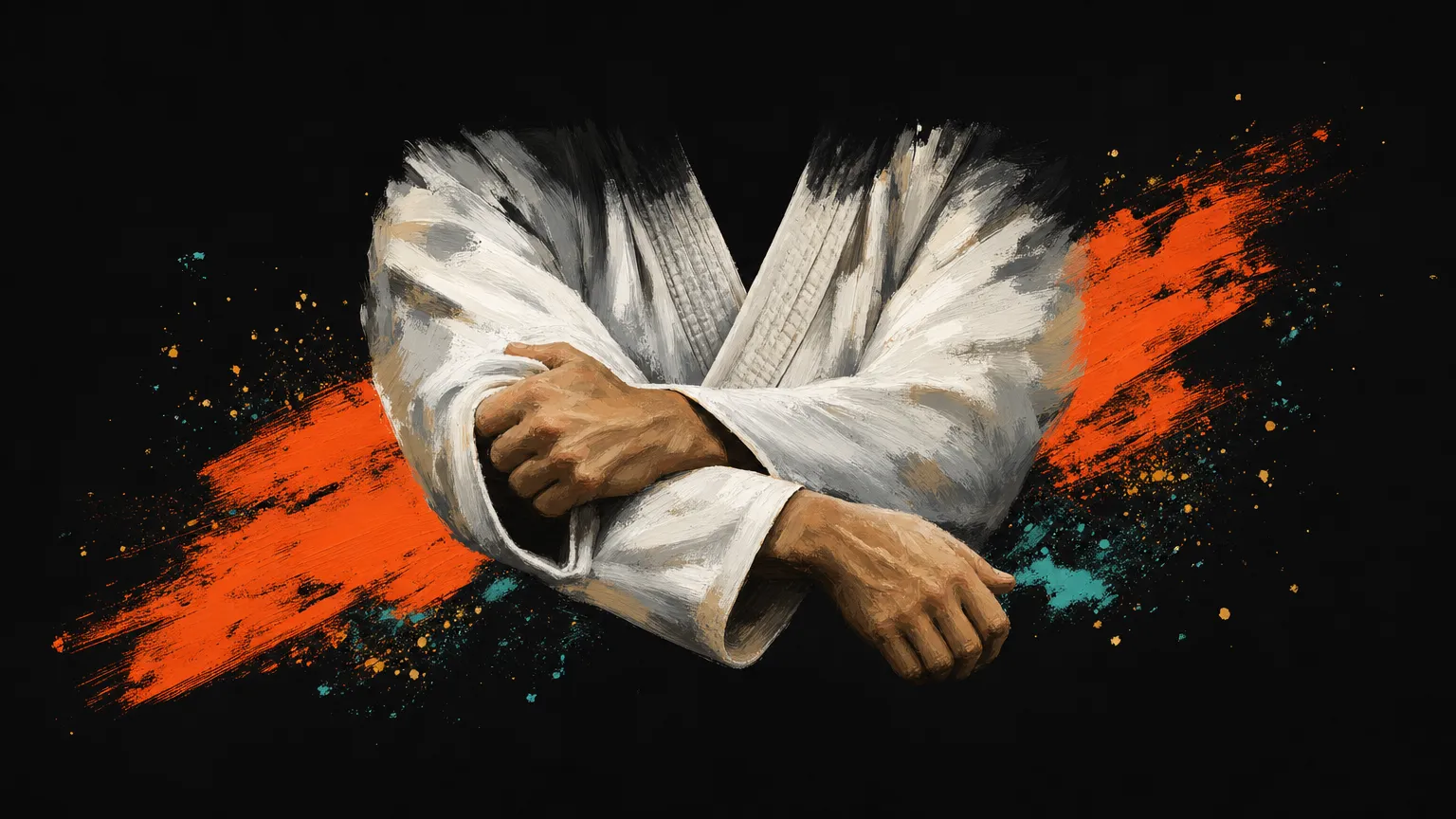
- Grip your other sleeve. With that hand, grab your other sleeve near the wrist. Most players put four fingers inside the sleeve for a secure grip.
- Bring the other forearm across. Slide the blade of your free forearm across the front of their neck, just under the chin.
- Close the scissors. Pull the arm behind their head toward you and drive the forearm down and through, so your arms close on the neck from both sides.
- Keep your base. Both your arms are busy, so spread your knees, keep your hips heavy and your head low. Otherwise they can bridge and roll you.
Safety: A forearm across the throat is painful and can hurt the windpipe if you crush down on it. Close your arms steadily in training and let go the moment your partner taps.
The No-Gi Ezekiel
Without a sleeve to hold, the hand behind their head grips your other forearm or elbow instead. You can also press with your fist or wrist instead of the forearm. The grip is less secure, so the no-gi version needs a tighter squeeze, but it works: both of the UFC fighters below won without a gi.
Ezekiel Setups
From Mount
The classic. When your opponent protects their collar against the cross collar choke, the Ezekiel is still there, because it needs no grip on their gi at all.
From Inside the Closed Guard
This is the setup Ezequiel Paraguassu made famous, and one of the few chokes the top player can hit from inside someone's closed guard. When the bottom player breaks your posture and pulls you down, your arms are already near their head. Slide one hand behind their head, grip your other sleeve and bring the forearm across. Keep your elbows tight while you do it, because an arm left loose in someone's guard can be attacked. Our closed guard attack system shows the bottom player's side of this position.
From Underneath the Mount
It's rare, but it works. In January 2017, Aleksei Oleinik won a UFC fight with an Ezekiel from underneath Viktor Pešta's mount, without a gi.
The Ezekiel in MMA
The Ezekiel is rare in MMA, which makes the people who use it stand out:
- Aleksei Oleinik has more MMA wins with the Ezekiel than anyone. In the UFC he won with it twice: against Viktor Pešta at UFC Fight Night 103 in January 2017, from underneath the mount, and against Júnior Albini at UFC 224 in May 2018.
- Alexander Volkov finished Tai Tuivasa with an Ezekiel from the top at UFC 293 in Sydney in September 2023, in the second round.
Common Ezekiel Mistakes
- A shallow arm behind the head. If only your fingers are under their head, you have no leverage. Get the arm in deep first.
- A loose sleeve grip. Grip close to the wrist with your fingers inside the sleeve, or the choke slips.
- Crushing instead of closing. Driving the forearm straight down hurts, but it often doesn't finish. Pull the back arm toward you while the front forearm cuts through.
- Losing your base. With both arms committed, a high mount is easy to roll. Keep your knees wide and your hips heavy.
- Leaving an arm long in their guard. From inside closed guard, a loose arm gives them an armbar or a triangle.
How to Defend the Ezekiel
Before the grip:
- Keep your chin down and your hands up near your neck when someone is on top of you.
- Don't let them slide an arm behind your head. If they get one there, push that elbow away before they grab their sleeve.
When you have someone in your closed guard:
- When you break their posture, control their arms too, not just their head. A top player with free hands can slide one behind your head.
Once the forearm is across your throat:
- Block the forearm with both hands before it closes, and escape the mount if you can.
- If it's closing and you can't stop it, tap. Fighting it out risks your throat.
Is the Ezekiel Legal in IBJJF?
From age 16 up, yes, at every belt, in the gi and in no-gi. IBJJF's table of illegal techniques bans the Ezekiel for kids aged 4 to 15, along with the arm triangle, the omoplata and the frontal guillotine. For every banned technique by belt and age, see our IBJJF illegal techniques guide.
Ezekiel FAQ
Why is it called the Ezekiel choke?
After Ezequiel Paraguassu, a Brazilian judoka who used it at Carlson Gracie's gym in Rio in 1988 while preparing for the Seoul Olympics.
What is the Ezekiel called in judo?
Sode guruma jime, the sleeve wheel choke. It's also known as the sleeve choke.
Does the Ezekiel work in no-gi?
Yes. Grip your other forearm or elbow instead of your sleeve. Aleksei Oleinik's and Alexander Volkov's UFC wins with it were both without a gi. Our no-gi vs gi guide covers which other chokes change without the gi.
Can you do an Ezekiel from inside someone's guard?
Yes. That's how it got its name: Ezequiel Paraguassu used it to escape the closed guards at Carlson Gracie's gym.
Is the Ezekiel legal for kids?
Not in IBJJF. It's banned for kids aged 4 to 15. From 16, it's legal at every belt.
Can you do the Ezekiel from the bottom?
Yes, though it's rare. Aleksei Oleinik won a UFC fight with one from underneath the mount in 2017.
Sources
- Ezekiel choke (Wikipedia): sode guruma jime, the no-gi grip, Ezequiel Paraguassu at Carlson Gracie's gym, and the choke in MMA
- Aleksei Oleinik (Wikipedia): his UFC wins with the Ezekiel in 2017 and 2018
- Alexander Volkov (Wikipedia): the Ezekiel against Tai Tuivasa at UFC 293
- IBJJF Books & Videos: the rules book and the "Illegal moves by age and category" table (January 2024 edition)
Training in the gi? Log your mount and closed guard rounds in your Rollbook technique journal, and see which chokes land for you in sparring. Rollbook is free on iOS and Android.
Oss!