By Philipp — Rollbook · Updated November 6, 2026
Japanese Jiu-Jitsu vs BJJ: Jujutsu, Judo and the Brazilian Art Compared
Japanese jujutsu and Brazilian jiu-jitsu share a name but not much else. Where the samurai art and the Brazilian one split, how they train and compete, and how to tell which one a gym teaches.
On this page
"Jiu-jitsu" on a gym sign can mean two very different things. Japanese jujutsu is a family of old Japanese fighting systems: throws, joint locks, strikes and weapon defenses, trained mostly in set forms. Brazilian jiu-jitsu (BJJ) is a modern grappling sport built around ground fighting and live sparring.
They share a name and a distant ancestor, but BJJ didn't come straight from the old schools. It came through judo. This guide explains how the three are related, how Japanese jiu-jitsu and BJJ differ in practice, and how to tell which one a gym teaches.
Same Name, Different Arts
Jūjutsu (柔術) means roughly "the yielding art": jū is gentle or supple, jutsu an art or technique. The idea is to use an attacker's force against them rather than meet it head on.
The spellings are all the same word:
- Jujutsu is the modern standard romanization.
- Jiu-jitsu and ju-jitsu are older spellings, from when the word first reached the West and English speakers wrote it down by ear. Ju-jitsu is still common in France, Canada and the UK, jiu-jitsu in Germany and Brazil.
- Jujitsu is how most Americans say it, whatever the spelling.
BJJ kept other Japanese words too, from the greeting oss to the judo names of its chokes. Our BJJ terms glossary lists them.
You'll often read that jujutsu is 2,000 years old. It isn't. The word itself only appeared in the 17th century, as a blanket term for many grappling methods. One of the oldest schools still taught, Takenouchi-ryū, was founded in 1532.
What Japanese Jujutsu Is
Jujutsu developed in feudal Japan as a way to beat an armed and armored samurai with no weapon, or only a short one. Punches don't do much against armor, so the old schools focused on throws, joint locks, pins and chokes, with strikes used mainly to set them up.
There was never one jujutsu. By the end of the Edo period in 1868, more than 2,000 schools (ryū) existed, each with its own techniques. Today they fall into two groups:
- Koryū, the old traditional schools, often teaching weapons alongside empty-hand techniques. Takenouchi-ryū, for example, also teaches staff, sword and restraining rope.
- Gendai jujutsu, modern schools founded since the late 1800s, which often borrow from judo and include strikes for self-defense.
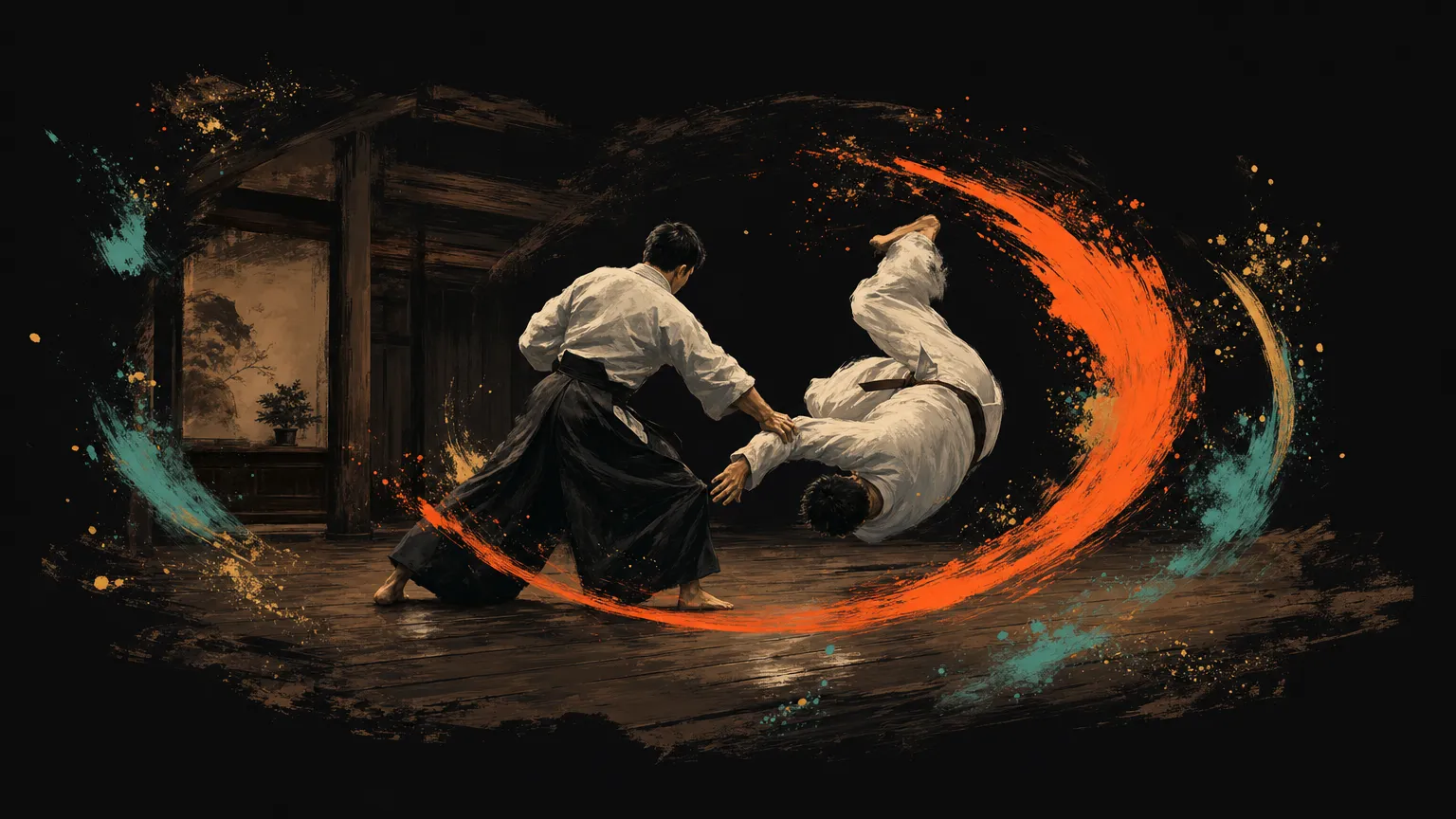
Most Japanese jujutsu is trained cooperatively in pairs, much of it through pre-arranged forms (kata), because many techniques are too dangerous to apply at full speed. Students learn to fall safely so they can take the throws.
Outside Japan you'll meet styles like Danzan-ryū, founded in Hawaii around 1925 by Seishiro Okazaki and most common on the US West Coast, and sport ju-jitsu, run by the Ju-Jitsu International Federation (JJIF).
How Judo and BJJ Branched Off
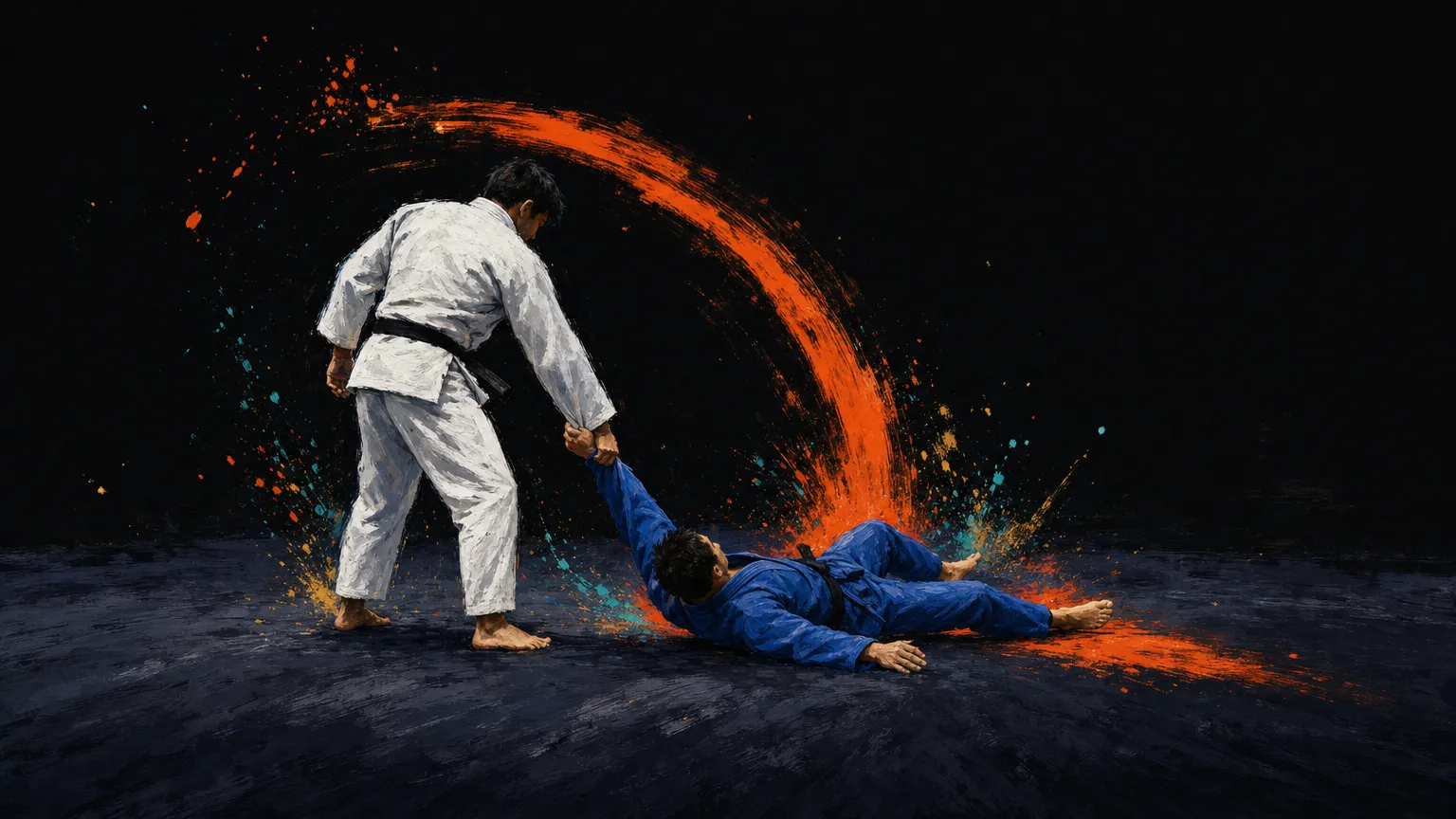
In 1882 Kanō Jigorō founded judo, building it from two jujutsu schools, Tenjin Shin'yō-ryū and Kitō-ryū. He removed the strikes and weapons from free practice and made randori, live sparring, the center of training. He chose a new name partly because jujutsu had a poor reputation in Japan at the time.
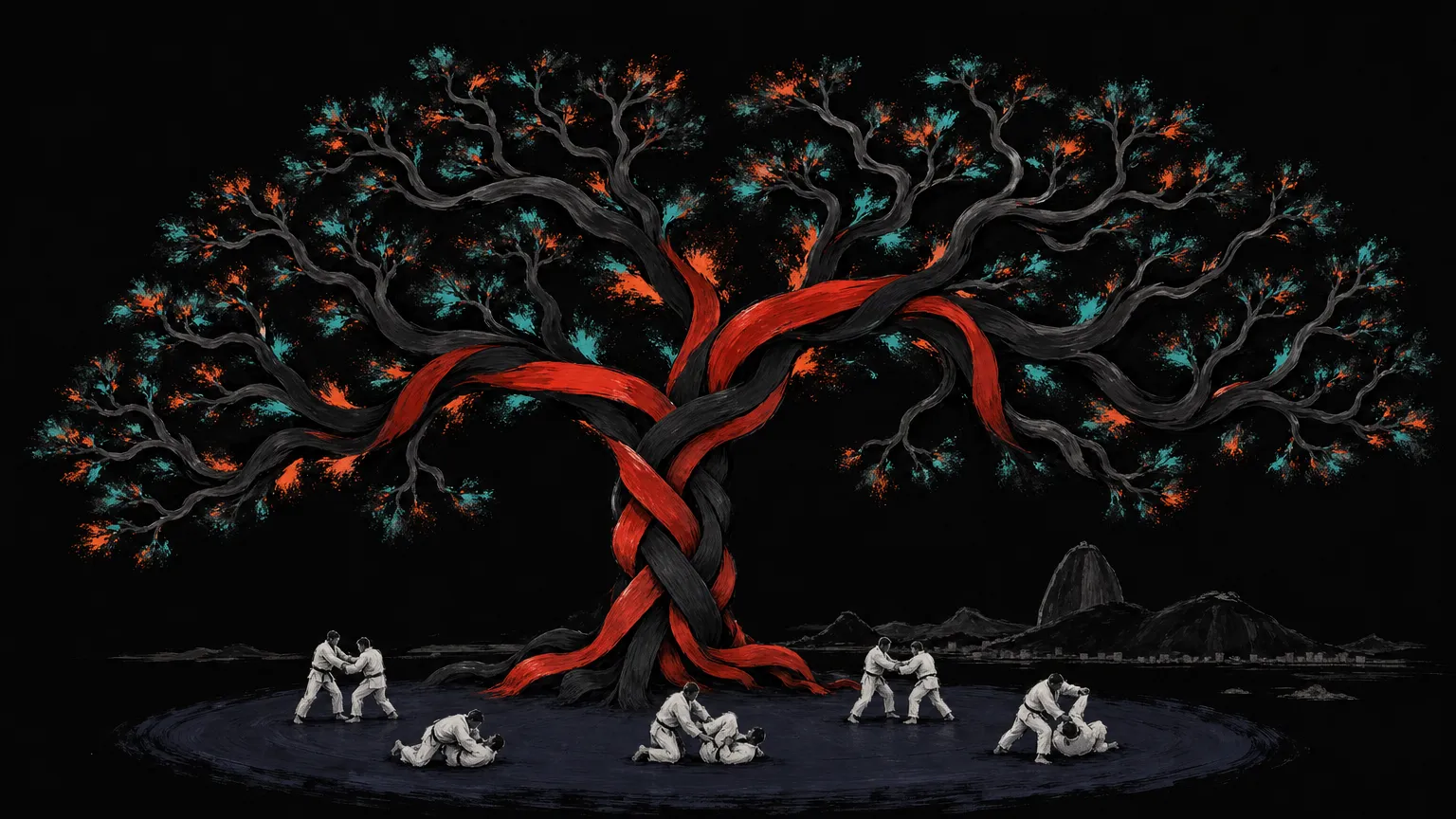
Abroad, though, judo kept being called jiu-jitsu, or "Kano jiu-jitsu". When the Kodokan judoka Mitsuyo Maeda reached Brazil in 1914, the newspapers announced his art as jiu-jitsu. Carlos Gracie started learning it in 1917, and the Gracie family turned it into a style built on groundwork and leverage. Our Gracie family tree tells that story, and our guide to jiu-jitsu vs judo covers how BJJ and judo drifted apart.
So BJJ is a grandchild of jujutsu, through judo. Its biggest inheritance from judo is live sparring against a resisting partner as the center of training, where most of the old schools relied on kata.
Japanese Jiu-Jitsu vs BJJ: The Key Differences
- Focus: Japanese jujutsu covers the whole fight: standing, throws, joint locks, strikes and often weapons. BJJ specializes in the ground: positions, escapes and submissions.
- Training: jujutsu trains mostly through kata and cooperative drills. BJJ trains through drilling and rolling, sparring at full resistance in nearly every class.
- Strikes and weapons: part of most jujutsu curricula. In BJJ, strikes appear in self-defense classes and as the open-palm strikes of Combat Jiu-Jitsu, but not in standard sport BJJ.
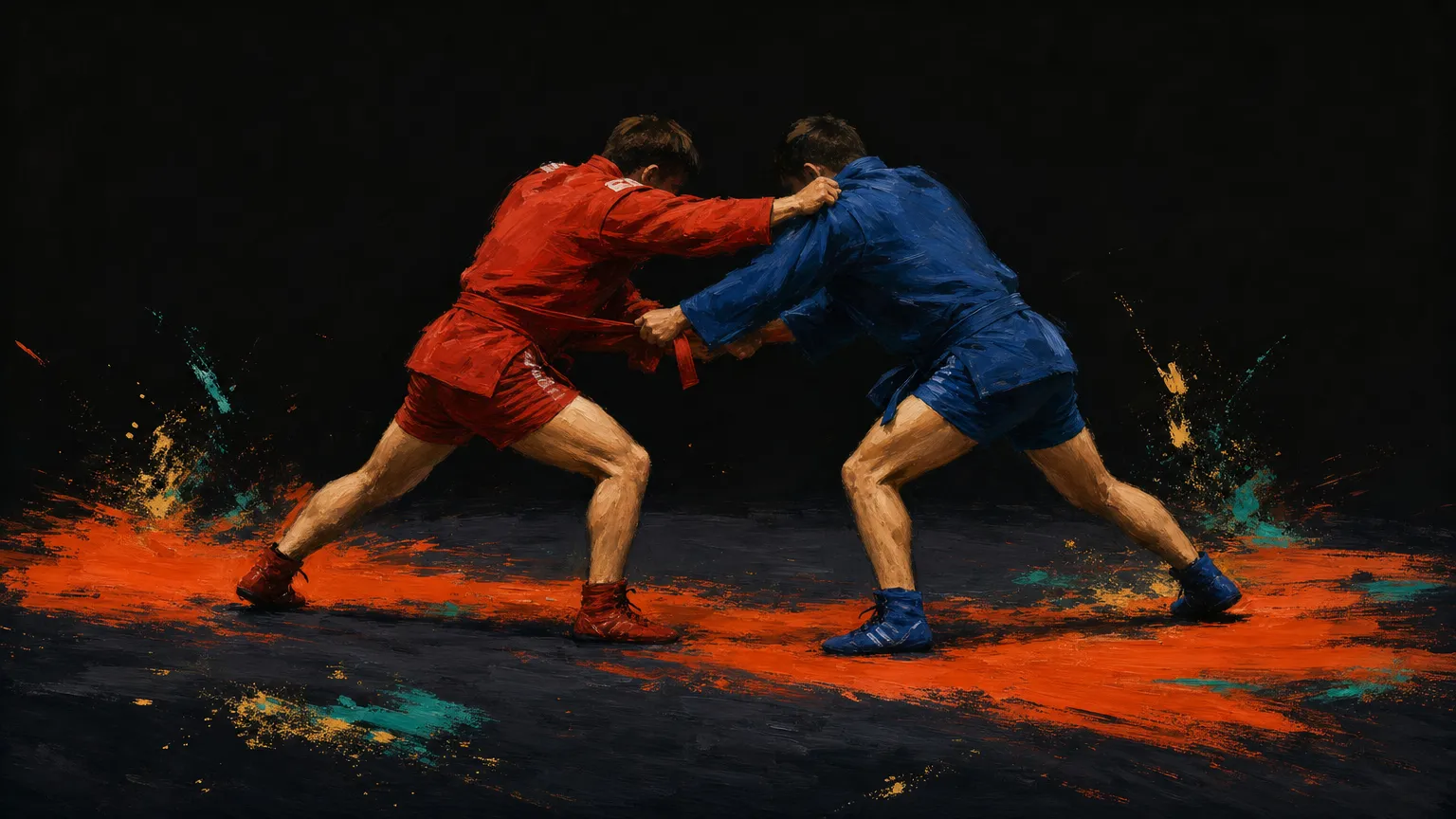
- Competition: many jujutsu schools don't compete. JJIF's sport ju-jitsu has three formats: Fighting System (strikes, throws and submissions), Duo (a pair demonstrating set self-defense techniques) and Ne-Waza, a grappling format very close to BJJ. BJJ has a big competition circuit of its own, run under rule sets like IBJJF's and ADCC's.
- Ranks: modern jujutsu schools usually use the kyu–dan grades that judo made famous, with colored belts that vary by school. BJJ has five adult belts, white, blue, purple, brown and black, each taking years. Our belt progression guide explains them.
- Uniform: both wear a jacket and pants, and some jujutsu schools add a hakama, the pleated trousers. BJJ is also trained without the gi.
Which Is Better for Self-Defense?
Both can be, and the gym matters more than the label.
BJJ's strength is live sparring. Because you practice against people who resist at full strength, you know what works for you. It came to fame in 1993, when Royce Gracie won the first UFC against bigger fighters from boxing, karate, wrestling and other styles. He won the second and fourth too. Its weakness is that sport BJJ ignores strikes, and some gyms skip the self-defense curriculum altogether.
Japanese jujutsu covers more situations: strikes, grabs, standing escapes and weapons. But a technique you've only practiced in kata against a cooperative partner is hard to trust under pressure.
So ask the same question of any gym: do students spar or roll live against resistance, at least some of the time? If yes, the training will hold up better than any style name.
How to Tell Which One a Gym Teaches
Look past the sign:
- The timetable. "Rolling", "open mat", "no-gi" and "competition team" point to BJJ. "Kata", "self-defense curriculum", "weapons" and "ryū" point to Japanese jujutsu.
- The belts. BJJ adults wear white, blue, purple, brown or black. Adults in yellow, orange or green belts usually means a Japanese-style school. BJJ kids' belts use those colors too, so look at the adults.
- The lineage. BJJ gyms usually name their lineage back to the Gracies or another BJJ family. Jujutsu schools name their ryū.
- A trial class. Sitting in on one class answers everything.
If BJJ is what you're after, our gym directory lists BJJ gyms near you, and our beginner's guide covers your first months.
Japanese Jiu-Jitsu vs BJJ FAQ
Is Japanese jiu-jitsu the same as BJJ?
No. They share a name and a distant ancestor, but Japanese jujutsu is a broad system of throws, joint locks, strikes and weapons trained mostly in set forms, while BJJ is a grappling sport focused on the ground and trained through live sparring.
Which came first?
Japanese jujutsu, by centuries. Judo grew out of it in 1882, and BJJ grew out of judo in Brazil from 1917 on.
Is jujutsu the same as judo?
No. Judo is one school that grew out of jujutsu. Kanō dropped the strikes and weapons from free practice so judoka could spar at full speed, and judo became a sport, Olympic since 1964.
Jujutsu, jiu-jitsu or jujitsu: which spelling is right?
All of them. Jujutsu is the modern romanization of the Japanese word. Jiu-jitsu and ju-jitsu are older spellings that stuck, and Brazilian jiu-jitsu kept the one Maeda's art was billed under in 1914.
Is Japanese jiu-jitsu still practiced?
Yes. Old schools like Takenouchi-ryū are still taught in and outside Japan, modern styles are common in Europe and the US, and JJIF's sport ju-jitsu has been part of the World Games since 1997.
Sources
- Jujutsu (Wikipedia): the meaning and spellings of the word, its samurai origins, koryū and gendai schools, the 2,000 schools of the Edo period and sport ju-jitsu
- Takenouchi-ryū (Wikipedia): its founding in 1532 and its weapons curriculum
- Judo (Wikipedia): Kanō's schools, randori and why he chose a new name
- Brazilian jiu-jitsu (Wikipedia): "Kano jiu-jitsu", Maeda in Brazil and Royce Gracie's UFC wins
- Ju-Jitsu International Federation (Wikipedia): JJIF and the World Games since 1997
- Danzan-ryū (Wikipedia): Seishiro Okazaki and the Hawaiian style
Starting BJJ? Log every class, roll and technique in your Rollbook training journal, and watch your game build up belt by belt. Rollbook is free on iOS and Android.
Oss!